Maraṇasati: Death Awareness Meditation in Buddhism
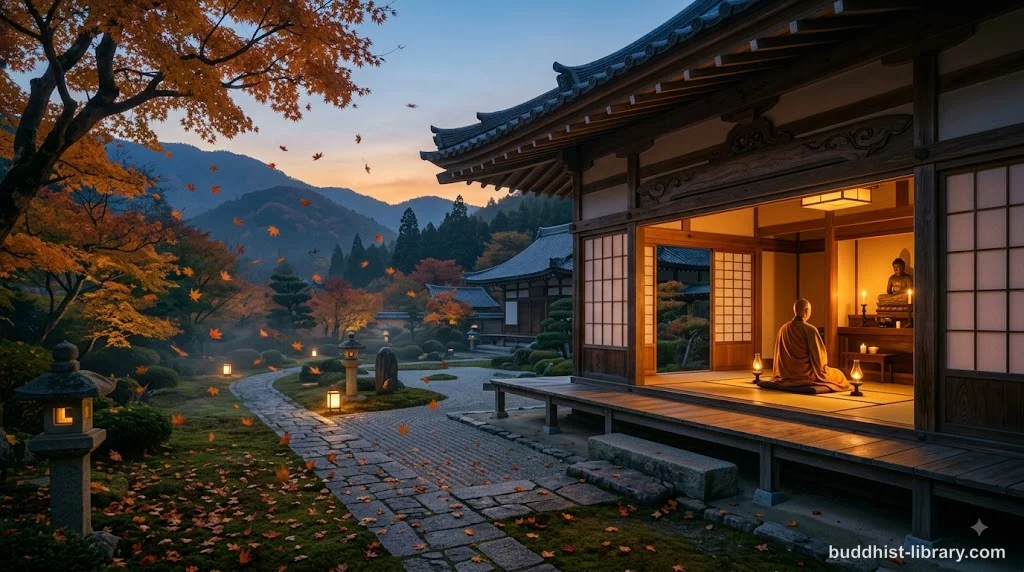
Maraṇasati — mindfulness of death — is the Buddhist meditation practice of deliberately contemplating your own mortality to cultivate wisdom, urgency, and freedom from clinging. Far from being morbid, this ancient technique transforms denial into clarity, helping practitioners live more fully by facing the one certainty we all share: death is inevitable, and the time of death is uncertain.
The Buddha didn’t teach death awareness to frighten his followers. He taught it because ignoring death keeps us trapped in delusion — planning as if we had infinite time, clinging to what must be released, postponing what truly matters. Maraṇasati cuts through that fog with uncommon clarity.
Why Did the Buddha Teach Death Meditation?
In the Aṅguttara Nikāya, the Buddha identifies Maraṇasati as one of the core recollections (anussati) for developing wisdom and hastening awakening. The practice appears throughout the Pali Canon, particularly in:
- The Satipaṭṭhāna Sutta (MN 10), where charnel ground contemplations form part of body mindfulness
- Aṅguttara Nikāya 6.19–20, where the Buddha praises daily death reflection
- The Dhammapada (verses 47–48), warning against deluded immortality thinking
The purpose is threefold: to overcome fear through familiarity, to generate urgency (saṃvega) in practice, and to loosen attachment to body, possessions, and identity. When you truly internalize that death could come today, trivial concerns dissolve and what matters becomes luminous.
How Does Maraṇasati Work?
The practice operates on a simple but profound insight: death is certain, but the time of death is uncertain. This asymmetry is the crack through which wisdom enters.
Traditional instructions include several contemplations:
Reflection on Inevitability
“I am of the nature to die. I have not gone beyond death. All that is mine, beloved and pleasing, will become otherwise, will separate from me.”
This isn’t pessimism — it’s reality. Denying it doesn’t make you safer; it makes you deluded. Accepting it doesn’t make you depressed; it makes you awake.
Reflection on Uncertainty
“Death will come. I do not know when. It could be today, this hour, this breath.”
This contemplation cuts procrastination at the root. If death could arrive in the next moment, what excuse remains for postponing practice, delaying forgiveness, or nursing petty resentments?
Reflection on the Body’s Nature
Some practitioners study anatomy, contemplate decomposition, or visit cemeteries (following the Buddha’s charnel ground practices). The body — so carefully groomed, so fiercely protected — is revealed as a temporary assemblage already in the process of dissolution.
Modern practitioners may adapt this by reflecting on medical realities: blood, bones, organs, and processes that function without “you” controlling them, that will one day cease.
What Are the Benefits of Death Awareness Practice?
Far from inducing despair, regular Maraṇasati produces measurable shifts:
Reduced anxiety: Counter-intuitively, facing death directly decreases death anxiety. Avoidance breeds fear; familiarity breeds calm. Studies on mortality salience support this — deliberate contemplation differs from unconscious dread.
Clarified priorities: Imagining yourself on your deathbed crystallizes what truly matters. Would you regret not checking email enough? Or not loving enough, not practicing enough, not forgiving?
Increased appreciation: Knowing this moment is unrepeatable makes it precious. The taste of tea, the warmth of sun, the presence of loved ones — all luminous when held against the background of impermanence.
Deepened renunciation: Attachment loses its grip when you recognize you can’t take anything with you. Possessions, status, even this body — all borrowed, all temporary.
Strengthened right effort: The Buddha taught four right exertions. Death awareness fuels them all. Time is short. The work is urgent.
The practice doesn’t negate life — it intensifies it.
How Do You Practice Maraṇasati?
Daily Reflection (5–10 Minutes)
Find a quiet space. Sit comfortably. Bring to mind:
- Certainty: “Death will come. There is no escape. This body will die.”
- Uncertainty: “I do not know when. It could be today. This breath could be among my last.”
- Release: “What am I clinging to? What would I regret not doing? What can I release now?”
Let the contemplation settle into your body, not just your thoughts. Notice resistance, fear, sadness — all normal. Don’t force anything; cultivate gentle, clear seeing.
Five Daily Remembrances
The Buddha’s classic reflection (AN 5.57):
- I am subject to aging; I have not gone beyond aging.
- I am subject to illness; I have not gone beyond illness.
- I am subject to death; I have not gone beyond death.
- All that is mine, beloved and pleasing, will become otherwise, will separate from me.
- I am the owner of my kamma, heir to my kamma; whatever I do, for good or for evil, to that will I fall heir.
Recite these each morning. Let them inform your day.
Charnel Ground Contemplation (Advanced)
In the Buddha’s time, monks would meditate in charnel grounds, observing decomposing bodies in stages. Modern equivalents include:
- Studying anatomy or medical texts
- Contemplating photos of human remains (with appropriate mental preparation)
- Visiting cemeteries mindfully
- Reflecting on the body’s internal processes (organs, fluids, eventual decay)
This practice is powerful but intense. Approach it gradually, ideally with teacher guidance.
Deathbed Visualization
Imagine yourself on your deathbed. Not morbidly, but clearly:
- Who would you want beside you?
- What would you regret not saying or doing?
- What achievements would seem hollow?
- What simple moments would you treasure?
Now act on those answers while you still can.
How Does Death Awareness Relate to Other Buddhist Practices?
Maraṇasati doesn’t stand alone — it weaves through the entire path:
Impermanence (Anicca): Death is the ultimate impermanence. Contemplating it deepens understanding of all conditioned phenomena as unstable.
Non-Self (Anattā): If “you” die, what dies? The practice reveals the conventional self as a process, not an entity — a helpful fiction that dissolves at death.
The Five Aggregates: Death awareness shows each aggregate (body, feeling, perception, mental formations, consciousness) as impermanent and ownerless. What remains when they disperse?
Right View: Understanding death correctly — neither nihilistically nor eternalistically — is central to Right View. Death is real, but “you” are not what you think.
The Four Noble Truths: Dukkha arises partly from clinging to what must end. Maraṇasati reveals this directly, motivating the path to cessation.
What Are Common Misconceptions About Death Meditation?
“It’s depressing”: No — it’s clarifying. Depression arises from helplessness and hopelessness. Maraṇasati arises from courage and realism, producing urgency and appreciation.
“It’s only for monks”: The Buddha taught these reflections to laypeople explicitly (e.g., in the Sigālovāda Sutta instructions). You don’t need to renounce the world to face its truths.
“It’s unhealthy to dwell on death”: There’s a difference between obsessive rumination and mindful contemplation. Maraṇasati is structured, intentional, balanced — not compulsive worry.
“It conflicts with enjoying life”: The opposite. By fully accepting death, you’re freed to fully embrace life. Denial creates background anxiety; acceptance creates foreground vitality.
When Shouldn’t You Practice Maraṇasati?
While generally beneficial, death awareness meditation isn’t appropriate for everyone at all times:
- Active suicidal ideation: If you’re in crisis, stabilize first with professional support before contemplating mortality.
- Unprocessed trauma: Those with PTSD or recent loss should approach slowly, ideally with a therapist or experienced teacher.
- Severe anxiety disorders: Start with gentler practices like breath meditation before moving to death contemplation.
The practice should feel clarifying, not destabilizing. If it amplifies distress rather than bringing calm urgency, pause and seek guidance.
How Do Buddhist Traditions Approach Death Awareness Differently?
Theravāda: Emphasizes Maraṇasati as one of the ten recollections, often paired with charnel ground contemplation and the Five Daily Remembrances. The approach is direct and analytical.
Mahāyāna: Includes death awareness within broader impermanence teachings, often paired with compassion practices — contemplating not just your death but all beings’ mortality to generate bodhicitta.
Vajrayāna: Incorporates elaborate death meditations (e.g., the Six Bardos in Tibetan Buddhism), using visualizations of the death process to prepare for the moment of dying and to recognize the clear light of mind.
All share the core insight: facing death is essential to living wisely.
What Resources Support Death Awareness Practice?
Primary sources:
- Satipaṭṭhāna Sutta (MN 10) — includes charnel ground contemplations
- Aṅguttara Nikāya 6.19–20, 8.73 — death awareness discourses
- The Five Remembrances (AN 5.57) — daily recitation
Modern teachers (Access to Insight / Dhamma Talks):
- Ṭhānissaro Bhikkhu: Meditations on Death and various dhamma talks
- Ajahn Chah: teachings on impermanence and death in Food for the Heart
- Stephen Levine: A Year to Live (secular/Buddhist blend for modern audiences)
Practice support: Many meditation centers offer retreats on death and dying. The practice is safest when part of a balanced path including loving-kindness (mettā) and equanimity (upekkhā).
Why Does Death Awareness Lead to Liberation?
At the deepest level, Maraṇasati points to the Deathless (Amata) — not immortality of the self, but the unconditioned reality beyond birth and death. By thoroughly understanding death, you understand the conditioned. By understanding the conditioned, you can realize the Unconditioned.
The Buddha’s final words, according to the Mahāparinibbāna Sutta, were: “Decay is inherent in all compounded things. Work out your salvation with diligence.”
Not pessimism. Not nihilism. Clear seeing — and the urgency that comes from it.
When you know deeply that death is certain but its time uncertain, two responses become impossible: complacency and despair. What remains is the path — vivid, immediate, unpostponable.
Read more:
- Impermanence (Anicca): Why Everything Changes — Maraṇasati is the sharp edge of impermanence practice; this article explores the broader principle of anicca that underlies all Buddhist meditation.
- The Five Aggregates (Khandhas): What We Mistake for ‘Self’ — Death reveals the aggregates as impermanent and ownerless; understanding their nature dissolves the fear of losing what was never yours to begin with.
- Right Effort (Sammā Vāyāma): The Four Right Exertions in Buddhism — Death awareness generates the urgency that fuels sustained practice; learn how to channel that energy through the Buddha’s teaching on Right Effort.
📖 Source / license: Satipaṭṭhāna Sutta (MN 10), Aṅguttara Nikāya 6.19–20, Access to Insight translations by Ṭhānissaro Bhikkhu
Frequently asked questions
Is death meditation morbid or depressing?
No — Maraṇasati is a life-affirming practice that reduces anxiety by facing reality directly. The Buddha taught it to cultivate urgency, clarity, and compassion, not fear or despair.
How often should I practice death awareness meditation?
The Buddha recommended daily reflection. Even five minutes of contemplating mortality each morning can shift your priorities and deepen mindfulness throughout the day.
Can beginners practice Maraṇasati safely?
Yes, when approached gradually. Start with gentle impermanence reflections before moving to explicit death contemplation. Those with trauma or severe anxiety should practice under guidance.
What's the difference between Maraṇasati and fear of death?
Fear of death is avoidance and clinging; Maraṇasati is clear seeing and acceptance. The practice transforms unconscious fear into conscious wisdom, reducing anxiety rather than amplifying it.