What Are Uposatha Days? Buddhist Observance Practice and Meaning
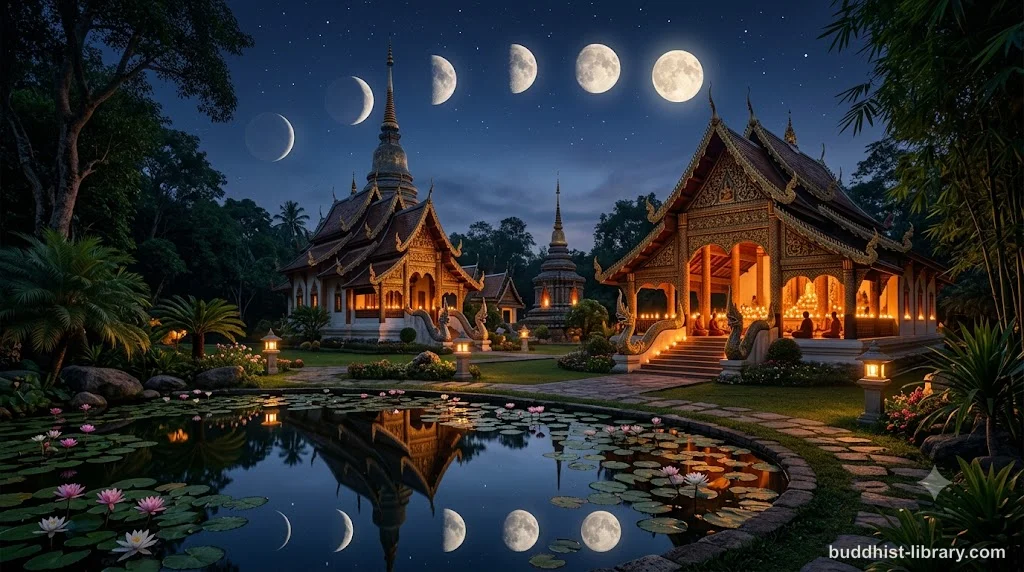
Uposatha days are sacred observance days in Buddhism—occurring on new moon, full moon, and quarter moons—when practitioners deepen their practice by taking the Eight Precepts, intensifying meditation, studying the Dhamma, and often visiting monasteries. These lunar-based rest days create rhythmic opportunities to step back from daily life and renew commitment to the path.
The word uposatha comes from the Pali upavasatha, meaning “to dwell” or “to enter into.” It refers to entering into a heightened state of practice—a temporary monastic-style retreat woven into ordinary lay life.
Why Did the Buddha Establish Uposatha Days?
The Buddha didn’t invent the concept—he adapted it. Pre-Buddhist Indian traditions already observed lunar rest days for religious rituals. The Buddha transformed this cultural practice into a tool for spiritual development.
In the early Saṅgha, Uposatha served two functions:
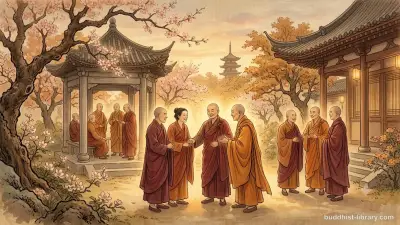
- For monastics: A gathering every new and full moon for communal recitation of the Pāṭimokkha (monastic code), confession of offenses, and renewal of commitment to the Vinaya.
- For laypeople: A day to visit monasteries, take additional precepts, listen to Dhamma teachings, and practice more intensively.
The Uposatha Sutta (AN 3.70) describes three levels of Uposatha observance—that of cowherds (mere ritual), that of the Jains (ascetic but lacking wisdom), and the Uposatha of the Noble Ones (grounded in virtue, concentration, and insight). Only the third leads to liberation.
The Buddha emphasized that Uposatha isn’t about gaining merit through ritual performance. It’s about creating conditions for mental purification and insight to arise.
What Happens on Uposatha Days?
The Four Monthly Uposatha Days
Uposatha observance follows the lunar calendar:
- New moon (Amāvāsī)
- Full moon (Puṇṇamā)
- Waxing eighth day (Aṭṭhamī, roughly one week after new moon)
- Waning eighth day (Aṭṭhamī, roughly one week after full moon)
The new moon and full moon are considered the most important—these are when monastics gather for Pāṭimokkha recitation and when laypeople typically visit monasteries.
Taking the Eight Precepts
Laypeople traditionally take the Eight Precepts (Aṭṭha Sīla) on Uposatha days, stepping beyond the usual Five Precepts to adopt a lifestyle closer to monastic practice for 24 hours.
The Eight Precepts are:
- Abstain from killing any living being.
- Abstain from taking what is not given.
- Abstain from all sexual activity (not just misconduct—complete celibacy for the day).
- Abstain from false speech.
- Abstain from intoxicants that cloud the mind.
- Abstain from eating after noon (solar noon or midday meal as the last food until dawn).
- Abstain from entertainment, beautification, and adornment (dancing, singing, music, perfumes, cosmetics, jewelry).
- Abstain from luxurious or high beds (traditional interpretation: sleeping on a simple mat or low bed).
These precepts simplify life, reduce sensory distraction, and create mental space for meditation and reflection.
Monastery Visits and Dhamma Talks
In Buddhist countries, laypeople often spend the entire Uposatha day at the monastery. A typical schedule might include:
- Dawn: Arrive at the monastery, take the Eight Precepts from a monk or nun.
- Morning: Group meditation, chanting, Dhamma talk.
- Before noon: Final meal (often offered to monastics and shared communally).
- Afternoon: Personal meditation practice, Dhamma study, walking meditation.
- Evening: Group chanting, guided meditation, questions and answers with a teacher.
- Night: Sleep at the monastery or return home to continue observance.
This immersive environment makes it easier to maintain mindfulness and restraint throughout the day.
Home Observance
If you can’t visit a monastery, home observance is equally valid. Structure your day to mirror monastic routine:
- Take the Eight Precepts in the morning (recite them aloud or listen to a recording).
- Eat a light breakfast and a simple meal before noon—no food after midday.
- Turn off devices, avoid entertainment, wear simple clothing without adornment.
- Dedicate the day to meditation (sitting, walking, lying down), Dhamma reading, and contemplation.
- Maintain mindful silence as much as possible.
The key is intention and sincerity, not location.
Why the Restrictions? Understanding the Purpose
No Eating After Noon
Eating once or twice before noon reduces digestive heaviness, making afternoon and evening meditation sharper. The body feels lighter; the mind less sluggish. In hot climates (where Buddhism originated), this rhythm also aligns with avoiding heavy meals during the hottest part of the day.
The restriction also cultivates restraint and mindfulness—noticing when the impulse to snack arises, seeing craving directly.
No Entertainment or Beautification
These precepts remove distractions that scatter attention. Entertainment pulls the mind outward into narratives and emotions. Beautification reinforces vanity and body-identification. By dropping these for a day, you see how much mental energy they consume.
It’s not about rejecting beauty or joy—it’s about temporarily releasing dependence on external stimulation to discover inner stillness.
Simple Sleeping Arrangements
High or luxurious beds symbolize comfort-seeking and attachment to sensory pleasure. Sleeping on a simple surface is a gentle austerity—reminding you that the body needs rest, not luxury.
(Modern interpretation: sleep on a mat on the floor, or on a simple bed without excessive pillows or soft bedding.)
How Uposatha Supports the Path
Uposatha creates a rhythm of intensification within lay practice. Just as athletes cycle between training and recovery, spiritual practitioners benefit from cycling between engaged worldly life and retreat-like simplification.
It Trains Restraint (Saṃvara)
The Eight Precepts are a training ground for sense restraint—the ability to notice impulses without acting on them. This skill transfers directly to daily life: when anger arises, you’re more likely to pause before reacting; when craving arises, you’re more likely to see it clearly rather than be swept away.
It Deepens Concentration (Samādhi)
A day structured around meditation and simplicity allows deeper states of concentration (samādhi) to develop. Without the pull of entertainment, meals, conversation, and obligations, the mind has fewer footholds for distraction.
It Provides Direct Insight into Impermanence and Non-Self
When you abstain from eating, beautification, and comfort for a day, you see directly how much of your sense of self is constructed around these habits. The “self” that “needs” a snack at 3 PM or “needs” to look a certain way is revealed as a construct—impermanent, unsatisfying, not-self (anattā).
It Renews Motivation
Stepping into a monastery environment or a day of retreat at home reconnects you with the Saṅgha (spiritual community) and the larger tradition. You remember why you practice. It’s a reset—a chance to renew aspiration and clarify intention.
Uposatha Across Buddhist Traditions
Theravāda
Uposatha is most visibly practiced in Theravāda countries (Sri Lanka, Thailand, Myanmar, Cambodia, Laos). Monasteries hold public Uposatha observances, and laypeople commonly take the Eight Precepts on full moon and new moon days. Some devout laypeople observe every Uposatha day each month.
Mahāyāna
In East Asian Mahāyāna traditions, the lunar calendar is still honored, but the formal Eight Precepts observance is less common among laypeople. Instead, special days (often tied to Bodhisattva birthdays or enlightenment anniversaries) function similarly—days of vegetarianism, temple visits, and intensified practice.
Some Zen centers and Pure Land temples observe Uposatha-like days with extended meditation, sutra chanting, and precept renewal.
Vajrayāna
Tibetan Buddhism observes Tsok days (10th and 25th of the lunar month), which have overlapping functions—communal practice, offering rituals, and intensified meditation. Full moon and new moon may also be marked with special practices or teachings.
Ngakpas (non-monastic Vajrayāna practitioners) may observe simplified precepts similar to the Eight Precepts on significant lunar days.
How to Start Observing Uposatha in Your Life
You don’t need to dive into full-day monastery observance immediately. Start small and build gradually.
Option 1: Observe One Full-Moon Uposatha Per Month
Choose the full moon day. Take the Eight Precepts in the morning. Structure your day around meditation and Dhamma study. Eat before noon. Avoid screens and entertainment. Reflect in the evening on what you noticed.
Option 2: Visit a Monastery on Uposatha Days
If there’s a Theravāda monastery nearby, check their schedule. Most hold Uposatha observances open to the public. Arrive early, participate in the precept-taking ceremony, stay for the Dhamma talk and meditation sessions.
Option 3: Partial Observance at Home
If a full day feels overwhelming, start with a half-day—take the Eight Precepts from morning until evening (eating before noon, meditating in the afternoon, but returning to normal activity by sunset). Gradually extend to a full 24-hour period.
Option 4: Create Your Own Monthly Retreat Day
Even if you don’t follow the lunar calendar strictly, pick one day per month as your personal “retreat day.” Take the Eight Precepts, simplify, meditate, study. The regularity matters more than the exact lunar timing.
Common Challenges and How to Work with Them
”I get too hungry without eating after noon.”
It’s uncomfortable at first—that’s part of the point. The discomfort teaches you about craving and the mind’s habitual narratives (“I need food”). Drink water, tea, or fruit juice (traditional Theravāda allows certain liquids). The hunger will pass. If you have health conditions requiring regular meals, modify the precept or consult a teacher.
”I live with non-Buddhist family—how do I observe Uposatha?”
Explain what you’re doing and why. Take the precepts privately in your room. Participate in family meals before noon. Use headphones if family members watch TV in the evening. Adapt the spirit of the precepts to your situation—it’s about simplification and mindfulness, not rigid isolation.
”I can’t take a full day off work.”
Observe Uposatha on a weekend day or a day off. Alternatively, take a “working Uposatha”—observe the precepts before and after work (meditate in the morning, eat before noon if possible, skip evening entertainment). It won’t be as deep as a full retreat day, but it still plants seeds.
”I don’t live near a monastery.”
Home observance is valid and traditional. Use online resources: listen to Dhamma talks from Access to Insight, Dhammatalks.org, or recorded monastery teachings. Join virtual Uposatha observances if available (some monasteries stream their programs).
The Uposatha Sutta: The Buddha’s Teaching
In the Uposatha Sutta (AN 3.70), the Buddha describes the Uposatha of the Noble Ones. After outlining the Eight Precepts, he gives meditation instructions:
“And how, householder, is the Uposatha of the Noble Ones observed?
Here, a noble disciple recollects the Tathāgata thus: ‘The Blessed One is an Arahant, fully enlightened, perfect in knowledge and conduct, well-gone, knower of the worlds, unsurpassed trainer of those to be tamed, teacher of gods and humans, the Awakened One, the Blessed One.‘
As they recollect the Tathāgata, their mind becomes clear, joy arises, and the hindrances are abandoned…”
The sutta continues with recollection of the Dhamma, the Saṅgha, one’s own virtue, one’s generosity, and the qualities of the devas (beings of radiant mind). These recollections—later formalized as the six recollections (Buddhānussati, Dhammānussati, Saṅghānussati, Sīlānussati, Cāgānussati, Devatānussati)—lift the mind into wholesome states and prepare it for meditation.
The Uposatha of the Noble Ones isn’t mechanical ritual. It’s a practice of recollection, gratitude, and cultivation of joy in the good—leading naturally to concentration and insight.
FAQ
How often do Uposatha days occur?
Uposatha days occur four times per lunar month—on the new moon, full moon, and the two quarter moons (eighth day after new and full moon). In a solar calendar year, this creates approximately 48–52 Uposatha days annually.
Do I have to be ordained to observe Uposatha?
No. While monastics observe Uposatha with formal Pāṭimokkha recitation, laypeople are encouraged to participate by taking the Eight Precepts, visiting a monastery, listening to Dhamma talks, and deepening meditation practice.
What are the Eight Precepts taken on Uposatha?
The Eight Precepts expand the Five Precepts by adding: abstaining from eating after noon, abstaining from entertainment and beautification, and abstaining from luxurious beds. The third precept (sexual misconduct) becomes complete celibacy for the day.
Can I observe Uposatha at home if I can’t visit a monastery?
Yes. Home observance is valid and beneficial. Take the Eight Precepts in the morning (you can recite them yourself or listen to a recording), structure your day around meditation and Dhamma study, eat simply before noon, and maintain mindful silence when possible.
Is fasting required on Uposatha?
Not complete fasting—you can eat breakfast and a meal before solar noon. After noon, only water and certain liquids (tea, fruit juice in some traditions) are allowed until dawn the next day. This supports afternoon and evening meditation rather than being an ascetic ordeal.
What if I break a precept during Uposatha?
Recognize it without self-judgment, renew your commitment, and continue observing the rest of the day. The precepts are training rules, not commandments. Breaking one doesn’t invalidate the entire observance—it’s an opportunity to see attachment and craving more clearly.
Conclusion: A Rhythm of Return
Uposatha days offer something rare in modern life: permission to stop. Not productivity-driven rest or entertainment-fueled downtime, but genuine simplification—stripping away excess to see what remains.
You don’t need to be “good at meditation” to start. You don’t need perfect conditions or a pristine track record. Set aside a day. Take the precepts. Show up. The practice does the rest.
The lunar cycle will return again next month, and the month after—an endless rhythm of opportunities to deepen, reset, and remember why you’re practicing. Each Uposatha is both a retreat from the world and a return to your truest intention.
Read more:
- The Five Precepts: Buddhist Ethics in Daily Life — understanding the foundation that the Eight Precepts build upon, and how ethical conduct supports the entire path.
- What Is Samādhi? Understanding Concentration in Buddhist Meditation — learn how the simplified conditions of Uposatha create ideal ground for developing deep meditative concentration.
- Anattā (Non-Self): What the Buddha Really Meant — explore how the temporary restraints of Uposatha reveal the constructed nature of the self.orary restraints of Uposatha reveal the constructed nature of the self.
📖 Source / license: Uposatha Sutta (AN 3.70), Visuddhimagga, Bhikkhu Bodhi's translations, Access to Insight
Frequently asked questions
How often do Uposatha days occur?
Uposatha days occur four times per lunar month—on the new moon, full moon, and the two quarter moons (eighth day after new and full moon). In a solar calendar year, this creates approximately 48–52 Uposatha days annually.
Do I have to be ordained to observe Uposatha?
No. While monastics observe Uposatha with formal Pāṭimokkha recitation, laypeople are encouraged to participate by taking the Eight Precepts, visiting a monastery, listening to Dhamma talks, and deepening meditation practice.
What are the Eight Precepts taken on Uposatha?
The Eight Precepts expand the Five Precepts by adding: abstaining from eating after noon, abstaining from entertainment and beautification, and abstaining from luxurious beds. The third precept (sexual misconduct) becomes complete celibacy for the day.
Can I observe Uposatha at home if I can't visit a monastery?
Yes. Home observance is valid and beneficial. Take the Eight Precepts in the morning (you can recite them yourself or listen to a recording), structure your day around meditation and Dhamma study, eat simply before noon, and maintain mindful silence when possible.