Buddhist Approach to Anxiety and Worry: Working with Mental Restlessness
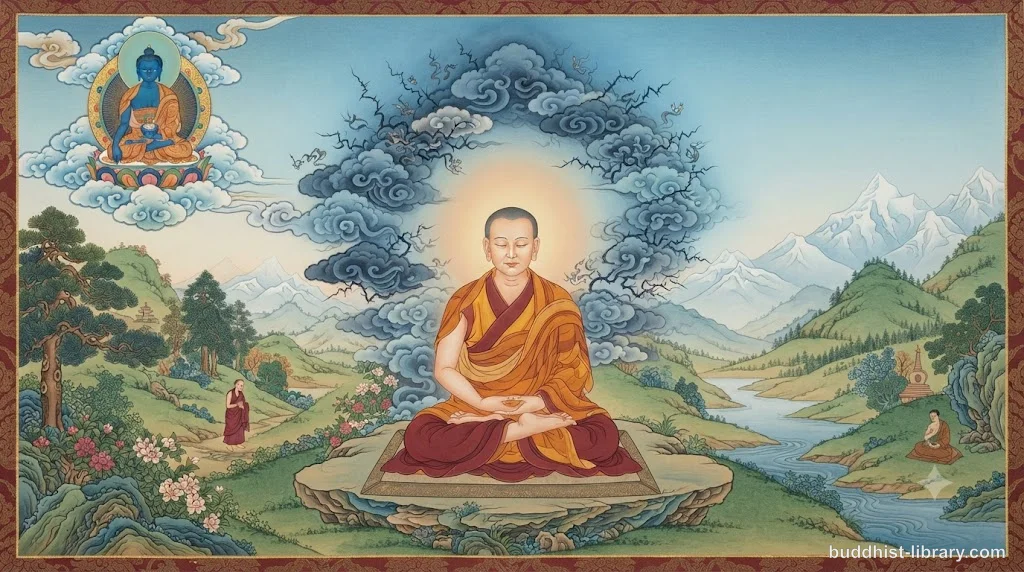
Anxiety and worry operate through repetitive thought patterns the Buddha called “mental proliferation” (papañca). Buddhist practice offers direct tools to observe these patterns without fueling them, investigate their causes, and gradually release the craving for certainty that drives anxious thinking. This isn’t suppression or positive thinking—it’s learning to change your relationship with worry itself.
Modern life breeds anxiety. The future won’t settle. The past won’t stop replaying. We spin elaborate scenarios that almost never happen.
The Buddha saw this 2,600 years ago. His responses remain startlingly practical today.
What Does Buddhism Say About Anxiety?
The Buddhist texts don’t use the word “anxiety” in the modern clinical sense, but they extensively describe uddhacca (restlessness, agitation) and kukkucca (worry, remorse)—two of the Five Hindrances that disturb meditation and daily life. Together, these mental states create the churning, unsettled quality we recognize as anxiety.
In the Satipaṭṭhāna Sutta (MN 10), the Buddha teaches direct observation of mental states:
“One knows restlessness and worry when it is present. One knows when it is absent. One knows how it arises, how it is abandoned, and how it does not arise again in the future.”
Not passive acceptance. Active investigation with a clear goal: understand worry’s mechanics so well you stop feeding it by accident.
The Buddha didn’t pathologize anxiety. Natural human tendency, yes—but only problematic when we don’t see our own role in creating and sustaining it. The mind reaching compulsively into an uncertain future, grasping for security that doesn’t exist? That’s craving (taṇhā) wearing an anxious face.
Why Do We Get Anxious? The Buddhist Analysis
Buddhist psychology identifies several factors that create and maintain anxiety:
Craving for certainty. We want to know what will happen. Control outcomes. Guarantee safety. But impermanence (anicca) means certainty never arrives. Anxiety is what happens when this craving collides with reality.
Aversion to discomfort. We push away unpleasant sensations, emotions, thoughts. The resistance itself creates a second layer of suffering—now we’re not just uncomfortable, we’re fighting discomfort, which makes it worse.
Mistaken identity with thoughts. We believe the mind’s stories about danger, catastrophe, inadequacy. We take worried thoughts as accurate reports rather than conditioned mental events.
Ignorance about mental processes. We don’t understand that thoughts are just thoughts—ephemeral mental formations (saṅkhāra) that arise and pass based on conditions. We treat them as solid truths requiring action or belief.
The Sabbāsava Sutta (MN 2) outlines seven methods for eliminating mental taints, several directly applicable to anxiety:
- Seeing clearly (understanding the nature of worry)
- Restraining (not following every anxious impulse)
- Using wisely (working skillfully with what arises)
- Enduring (tolerating discomfort without adding reactivity)
- Avoiding (removing yourself from unnecessary triggers)
- Removing (directly abandoning unhelpful patterns)
- Developing (cultivating wholesome mental states)
How to Work with Anxiety in Buddhist Practice
1. Recognize and Name the Experience
Simple awareness first. When anxiety shows up, silently note: “This is anxiety” or “Worry is present.” Not analysis. Just a clear acknowledgment that creates breathing room between you and the experience.
Ṭhānissaro Bhikkhu emphasizes this in his Five Hindrances teaching: recognition breaks the automatic flow. You’re no longer drowning in worry—you’re watching it happen.
2. Locate It in the Body
Anxiety lives in the body. Tight chest. Shallow breath. Tense shoulders. Churning stomach. Instead of staying lost in worried thoughts, drop attention into these physical sensations.
Feel the tightness directly. Its texture, intensity, where it sits. Watch it shift moment to moment. Not to make it vanish—that’s just more craving. To know it clearly.
The Kāyagatāsati teaching on body contemplation grounds awareness in direct physical experience, which interrupts the mind’s tendency to spin stories.
3. Don’t Believe Every Story
Anxious thinking treats worst-case scenarios like established facts. “This will fail. They’ll reject me. I can’t handle this.”
Here’s what Buddhist practice knows: these are thoughts. Not facts. Conditioned mental formations from old patterns, not reliable forecasts. You don’t need to believe them. You don’t need to argue with them either. Just see them as mental events—fleeting, impersonal, profoundly unreliable.
Bhikkhu Bodhi notes that this discernment—recognizing thinking as thinking—is a core aspect of Right View (sammā diṭṭhi). You stop taking anxious thoughts at face value.
4. Investigate the Craving Underneath
Most anxiety hides an unexamined demand. “I need to know what will happen.” “I must be safe.” “This uncertainty is intolerable.” Craving—wanting reality to be different than it is.
Ask directly: What do I want right now? What certainty am I clutching? What discomfort am I refusing?
Not self-criticism. Curious inquiry into suffering’s mechanics. When you see the craving clearly, something shifts. Often it releases by itself. You realize: I can’t have certainty. Demanding it creates pain. Letting go is available now.
5. Use the Breath as an Anchor
When anxious thinking spirals, the breath provides a refuge. Not as a distraction, but as a neutral object to stabilize attention.
Feel breathing happen—the coolness at the nostrils, the gentle rise and fall of the abdomen. When the mind wanders to worry (which it will, repeatedly), just return to breathing. No judgment. This is training.
The Ānāpānasati Sutta teaches mindfulness of breathing as a complete path. For anxiety, even five minutes of focused breath awareness can interrupt the thought spiral and restore a measure of calm.
6. Develop Concentration and Equanimity
Regular meditation builds samādhi (concentration) and upekkhā (equanimity)—the mental steadiness and balance that make you less reactive to anxious thoughts.
This isn’t instant. It’s cumulative training. Each time you notice worry, return to the breath, and don’t follow the story, you’re weakening old patterns and strengthening new capacities.
Equanimity practice teaches the mind to remain steady in the face of pleasant and unpleasant experiences—neither grasping nor pushing away. This directly counters anxiety’s push-pull dynamic.
7. Use Reflection and Wise Attention
Yoniso manasikāra (wise attention) means directing the mind skillfully. Instead of ruminating on worst-case scenarios, deliberately reflect on:
- Impermanence: this anxious state will pass, like everything else
- Not-self: these thoughts aren’t “me”—they’re conditioned patterns
- The Middle Way: avoiding both catastrophizing and denial
Some practitioners find it helpful to reflect on past anxieties that never materialized. How many worst-case scenarios actually happened? The mind has a poor track record at prediction. Recognizing this can loosen belief in current worries.
What About Severe Anxiety? When to Seek Professional Help
The Buddha was pragmatic. He taught a path of practice, not magical cures. If anxiety significantly impairs daily functioning—persistent panic attacks, inability to work or maintain relationships, constant intrusive thoughts—seek professional mental health support.
Buddhism complements clinical treatment; it doesn’t replace it. Medication, therapy (especially CBT or ACT, which share some Buddhist principles), and meditation can work together. The goal isn’t to prove you can handle everything through willpower alone. The goal is to reduce suffering skillfully.
The Five Precepts include Right Action—which means taking care of yourself, including seeking help when needed.
Common Mistakes When Working with Anxiety
Trying to meditate anxiety away. Meditation isn’t a technique to suppress unwanted states. If you sit down demanding calm, you’re adding craving to anxiety—which creates more tension. Meditation is about seeing clearly, not feeling good.
Judging yourself for being anxious. “I shouldn’t feel this way. I’ve been practicing for months.” This is just more suffering piled on. Anxiety is an impersonal process. It’s not a personal failure.
Expecting linear progress. Some days are worse than others. Old patterns resurface. This isn’t regression—it’s the nature of the mind. Each time you notice anxiety and work skillfully with it, you’re practicing, regardless of the immediate outcome.
Avoiding life. Buddhism teaches the Middle Way, not withdrawal. If you use meditation to hide from difficult but necessary situations, you’re creating different problems. Face what needs facing with mindfulness and wise effort.
Practical Daily Routines for Managing Anxiety
A consistent practice builds momentum. Here’s a simple daily structure:
Morning (5–10 minutes): Sit and follow the breath before the day begins. Set an intention to notice anxiety when it arises and meet it with awareness rather than reactivity.
Throughout the day: When you notice anxiety building, pause. Take three conscious breaths. Name the experience: “Anxiety is here.” Feel where it lives in the body. Then return to what you were doing without following the worried thoughts.
Evening (10–15 minutes): Longer meditation session. Practice mindfulness of mental states—observe thoughts and emotions arising and passing without interference. End with a few minutes of mettā (loving-kindness) directed toward yourself.
Weekly: Reflect on what triggered anxiety this week. What patterns do you notice? What helped? What didn’t? This isn’t obsessive analysis—just learning from experience.
The Long View: Anxiety as a Teacher
In Buddhist practice, difficult mental states aren’t obstacles to be eliminated as quickly as possible. They’re part of the path—opportunities to see the Three Characteristics (impermanence, suffering, not-self) in action.
Anxiety teaches impermanence: watch how it arises based on conditions and fades when those conditions change. It teaches dukkha: see directly how craving for certainty creates suffering. It teaches not-self: these worried thoughts happen, but they’re not “you.”
Over time, your relationship with anxiety shifts. It becomes less a terrible enemy and more a familiar visitor. You recognize its arrival earlier. You don’t believe its stories as readily. You can sit with the discomfort without adding layers of reactivity. This is freedom—not the absence of anxiety, but the end of being controlled by it.
The path isn’t always comfortable. But it works. Anxiety loses its grip gradually, through patient practice and clear seeing. Trust the process.
FAQ
Can Buddhist meditation make anxiety worse at first?
Yes, initially increased awareness can make you more conscious of anxious thoughts. This is normal—you’re noticing what was always there. The practice teaches you to observe anxiety without adding secondary worry about being anxious. Start with short sessions (5–10 minutes) and be patient. If it consistently intensifies symptoms, consult a meditation teacher or mental health professional.
Is anxiety a form of dukkha in Buddhism?
Anxiety falls under dukkha as mental suffering arising from craving, aversion, and ignorance. It’s typically rooted in craving for certainty, aversion to uncomfortable feelings, and ignorance about the impersonal nature of mental events. Buddhist practice addresses these root causes rather than just managing surface symptoms.
What’s the difference between Buddhist and clinical approaches to anxiety?
Buddhism views anxiety as a mental pattern to investigate and release through direct observation, not a disease to cure. Clinical psychology often uses medication or Cognitive Behavioral Therapy (CBT) to manage symptoms. Both approaches can work together effectively—Buddhist practices complement professional treatment for anxiety disorders and shouldn’t replace it when clinical intervention is needed.
How long does it take to see results from Buddhist anxiety practices?
Many people notice some relief within 2–4 weeks of daily practice—a bit more space around anxious thoughts, slightly better ability to not follow worry spirals. Real transformation of deep-rooted patterns typically takes months or years. The practice works cumulatively: each session builds awareness and weakens habitual reactions, even when immediate results aren’t obvious.
Should I stop anxiety medication if I start meditating?
Never discontinue prescribed medication without consulting your prescribing physician. Meditation and medication address anxiety in different ways and often work well together. If you and your doctor eventually decide to adjust medication, do it gradually under medical supervision while maintaining your practice.
What if I can’t sit still when anxious?
Try walking meditation instead. The gentle physical movement can be easier when the body is agitated. You can also practice mindfulness during daily activities—washing dishes, folding laundry, taking a shower. The key is sustained attention to present-moment experience, not the posture.
Read more:
- The Five Hindrances (Nīvaraṇa): Overcoming Obstacles to Meditation—learn about restlessness and worry as one of the five major obstacles to meditation, with specific practices to counter them.
- What Is Mindfulness (Sati) in Buddhism?—understand the foundation practice that allows you to observe anxiety without being swept away by it.
- Right Effort (Sammā Vāyāma): The Four Right Exertions in Buddhism—discover how to skillfully abandon unwholesome states like anxiety while cultivating beneficial mental qualities.
📖 Source / license: Satipaṭṭhāna Sutta (MN 10), Sabbāsava Sutta (MN 2), Five Hindrances teachings, Access to Insight (dhammatalks.org)
Frequently asked questions
Can Buddhist meditation make anxiety worse at first?
Yes, initially increased awareness can make you more conscious of anxious thoughts. This is normal. The practice teaches you to observe anxiety without adding secondary worry about being anxious. Start with short sessions and be patient with the process.
Is anxiety a form of dukkha in Buddhism?
Anxiety falls under dukkha as mental suffering arising from craving, aversion, and ignorance. It's typically rooted in craving for certainty, aversion to discomfort, and ignorance about the nature of mental events. Buddhist practice addresses these root causes.
What's the difference between Buddhist and clinical approaches to anxiety?
Buddhism views anxiety as a mental pattern to investigate and release, not a disease to cure. Clinical psychology often uses medication or CBT to manage symptoms. Both can work together—Buddhist practices complement professional treatment and shouldn't replace it for clinical conditions.
How long does it take to see results from Buddhist anxiety practices?
Many people notice some relief within 2–4 weeks of daily practice. Real transformation takes months or years. The practice works cumulatively—each session builds awareness and weakens habitual patterns, even when results aren't immediately obvious.