Buddhist Approach to Loneliness and Isolation: Understanding Connection Beyond Separation
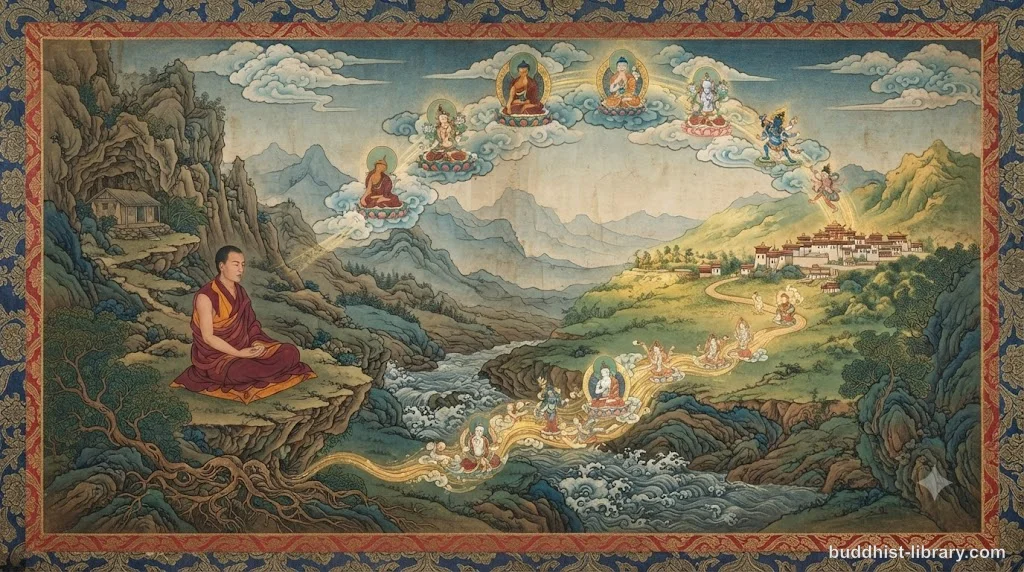
Loneliness—that ache of disconnection and isolation—isn’t treated in Buddhism as a personal failing. It’s a universal form of suffering (dukkha) arising from craving, aversion, and misunderstanding. Buddhist practice offers a path through loneliness by cultivating wise attention, compassion, and recognizing the deeper patterns that create the sense of separation.
Modern society treats loneliness like an epidemic. The Buddha taught about this same suffering 2,500 years ago. His teachings don’t promise to eliminate all feelings of being alone. They offer something different: a fundamentally changed relationship to isolation, rooted in understanding rather than struggle.
Why Do We Experience Loneliness?
From a Buddhist perspective, loneliness arises through several interconnected causes:
Craving for connection (taṇhā): We want relationships, companionship, understanding, validation. When these aren’t present or don’t meet our expectations, suffering arises. Connection is natural. But clinging to specific outcomes creates pain.
Aversion to solitude: Many experience loneliness not from actual isolation but from resistance to being alone. The mind spins stories: “I’m unlovable,” “Something’s wrong with me,” “I’ll always be alone.” These narratives amplify suffering far beyond the simple experience of solitude.
Misunderstanding self and other: The teaching of anattā (non-self) reveals that our sense of a separate, isolated self is a construction. Paradoxically, the very belief in a fundamentally separate self creates the conditions for feeling desperately alone. We’re looking for connection to bridge a gap that, at the deepest level, doesn’t exist in the way we imagine.
Social conditioning: Modern culture often equates being alone with failure, unworthiness, or abnormality. This adds layers of shame and self-judgment to the natural experience of solitude, transforming manageable aloneness into crushing loneliness.
The Difference Between Solitude and Loneliness
Buddhism makes a crucial distinction: solitude is the simple fact of being alone, while loneliness is the painful story we tell about that state.
The Buddha himself spent considerable time in solitude, particularly during his six years of ascetic practice before enlightenment and in meditation retreats throughout his teaching career. Many monastics practice alone for extended periods. This solitude serves wisdom and concentration when approached skillfully.
Loneliness, by contrast, emerges when we’re at war with the present moment—whether we’re physically alone or surrounded by people. You can feel profoundly lonely in a crowded room if you’re disconnected from genuine presence and openheartedness.
The practice isn’t to eliminate all desire for companionship or to force yourself into hermit-like isolation. It’s to meet your actual experience—whatever it is—with clear seeing and compassion.
Key Buddhist Practices for Working with Loneliness
1. Mindfulness of the Experience Itself
Instead of immediately trying to fix, escape, or rationalize loneliness, Buddhist practice invites direct investigation:
- Where do you feel loneliness in your body? Is it tightness in the chest, heaviness in the stomach, tension in the shoulders?
- What thoughts accompany the feeling? Notice the narrative without immediately believing it.
- How does the sensation change moment to moment? Loneliness, like all experiences, is impermanent (anicca).
This mindful attention doesn’t make loneliness pleasant. It transforms your relationship to it. You’re no longer overwhelmed by the story. You’re observing the actual sensations and thoughts as they arise and pass. For more on this foundational practice, see What Is Mindfulness (Sati) in Buddhism?
2. Mettā (Loving-Kindness) Practice
Mettā meditation is particularly powerful for loneliness because it directly addresses the sense of disconnection and cultivates an unconditional warmheartedness.
The traditional practice begins with directing mettā toward yourself:
May I be safe. May I be happy. May I be healthy. May I live with ease.
This self-mettā is crucial. Loneliness often comes with harsh self-judgment: “Why can’t I connect like other people?” “What’s wrong with me?” Mettā counters this with deliberate goodwill toward yourself, exactly as you are.
The practice then extends outward—to benefactors, friends, neutral people, difficult people, and eventually all beings. This systematic cultivation of connection doesn’t depend on others’ presence or reciprocation. You’re generating the quality of connection within your own heart.
3. Understanding Interconnection
The Buddha taught that all phenomena arise through interconnected conditions (dependent origination). You exist because of food grown by farmers, water from watersheds, air from forests, teachings from teachers, care from countless beings you’ll never meet.
Even in physical isolation, you’re woven into a vast web of relationship. The very atoms of your body were forged in ancient stars. The words you think were taught by others. The patterns of your mind have been shaped by culture, history, and evolution.
Contemplating this interconnection doesn’t deny the pain of loneliness. It challenges the narrative of fundamental aloneness. You are, in a very real sense, made of relationships.
4. Cultivating Kalyāṇa-mittatā (Spiritual Friendship)
The Buddha considered kalyāṇa-mittatā—noble or spiritual friendship—not as a peripheral support but as essential to the path. When asked by Ānanda whether spiritual friendship was half of the holy life, the Buddha corrected him: it’s the whole of the holy life.
Practical steps include:
- Seeking wise community: The saṅgha, whether monastic or lay, provides companionship on the path. Many Buddhist centers offer meditation groups, study groups, and community events.
- Being the friend you seek: Instead of focusing solely on receiving connection, practice offering it. Listen deeply, show up consistently, express appreciation.
- Letting go of idealized expectations: Real friendship includes imperfection, misunderstanding, and the need for patience. Clinging to fantasy versions of relationship guarantees disappointment.
5. Working with Papañca (Mental Proliferation)
Papañca refers to the mind’s tendency to spin elaborate stories and projections. Loneliness is often amplified by papañca:
- “I’ll always be alone” (projection into an imagined future)
- “Everyone else has connection except me” (comparison and exaggeration)
- “This proves I’m fundamentally unlovable” (global conclusion from limited data)
The practice of recognizing papañca means catching these proliferations and returning to direct experience: right now, in this moment, what’s actually happening? Often, the stories are far more painful than the simple sensation of solitude.
Balancing Solitude and Connection
Buddhist practice values both withdrawal and engagement, depending on what serves wisdom and compassion in the moment.
When solitude is skillful:
- You’re using it for meditation, reflection, or rest
- It deepens clarity and renews energy for engagement
- You’re not avoiding difficult relationships but taking necessary space
When seeking connection is skillful:
- Isolation has become a habit of avoidance
- You’re losing perspective through lack of feedback
- Loneliness is leading to harmful patterns (addiction, self-harm, depression)
The Middle Way applies here: neither compulsive seeking of constant company nor rigid isolation, but a flexible response to actual conditions.
Working with Shame and Self-Judgment
Loneliness often brings a secondary layer of suffering: shame about being lonely. “I shouldn’t feel this way. I should be more self-sufficient. Other people manage better.”
Buddhism offers a different perspective. Loneliness is dukkha—universal suffering that the Buddha explicitly taught about. It’s not a personal defect but a natural response to certain conditions.
This doesn’t mean passivity. You can take wise action to build connection. But it removes the toxic addition of self-blame. You can acknowledge loneliness with the same matter-of-fact clarity you’d acknowledge hunger or fatigue: a condition arising from causes, calling for appropriate response, not moral judgment.
When Loneliness Points to Depression
While Buddhist practice offers valuable tools, it’s important to distinguish ordinary loneliness from clinical depression, which may include persistent loneliness as one symptom among others (loss of interest, sleep changes, thoughts of self-harm, inability to function).
Buddhist practice complements but doesn’t replace professional mental health care when needed. The Buddha was pragmatic about seeking appropriate help for different conditions. Just as you’d see a doctor for a broken bone, severe or persistent loneliness may warrant professional support—therapy, medication, or other interventions.
Many Buddhist teachers and practitioners also work with therapists, and the two approaches can be mutually reinforcing.
The Deepest Freedom
Ultimately, Buddhist practice points toward a freedom that doesn’t depend on external circumstances—including the presence or absence of other people.
This isn’t cold indifference or forced stoicism. It’s discovering that your deepest well-being doesn’t require constant validation, companionship, or external confirmation. You can appreciate connection without desperately clinging to it. You can endure solitude without collapsing into loneliness.
This freedom emerges gradually. You won’t master it by tomorrow. But each moment you meet loneliness with mindfulness instead of panic, with self-compassion instead of judgment, you’re weakening old patterns and building new capacities.
The path doesn’t eliminate the desire for connection. Why would it? That desire is part of being human. The practice is about holding it more lightly, understanding its nature more clearly, and discovering that even in solitude, you’re never as separate as the lonely mind insists.
Read more:
- Mettā: The Practice of Loving-Kindness — a detailed guide to the core practice for cultivating connection and warmth, which directly addresses the sense of disconnection at the heart of loneliness.
- Buddhist Approach to Anxiety and Worry — explores similar patterns of mental suffering and how Buddhist practice addresses the restless, proliferating mind that often accompanies and amplifies loneliness.
- What Is Papañca? Understanding Mental Proliferation in Buddhism — understand how the mind’s storytelling tendency turns simple experiences into elaborate suffering, a key mechanism in transforming solitude into painful loneliness.
📖 Source / license: Access to Insight, Thanissaro Bhikkhu (dhammatalks.org), Karaniya Metta Sutta (Sn 1.8)
Frequently asked questions
Is loneliness considered a form of suffering (dukkha) in Buddhism?
Yes, loneliness is a manifestation of dukkha. Buddhism recognizes the pain of feeling disconnected as arising from craving for connection, aversion to isolation, and misunderstanding the nature of self and relationship.
Can Buddhist practice help with chronic loneliness?
Buddhist practices like mettā meditation, mindfulness, and cultivating wise friendships (kalyāṇa-mittatā) offer practical tools for working with loneliness. They address both the emotional pain and the underlying patterns that perpetuate isolation.
Does Buddhism say we need to be alone to practice?
No. While solitude has value for certain practices, the Buddha emphasized the importance of spiritual friendship and community (saṅgha). The goal is freedom from clinging, not disconnection from others.
How is Buddhist practice for loneliness different from just positive thinking?
Buddhist practice doesn't suppress or deny the pain of loneliness. Instead, it investigates the experience directly through mindfulness, understands its causes through wisdom, and transforms relationship to it through compassion—rather than simply replacing negative thoughts with positive ones.