Nekkhamma: Renunciation in Buddhist Practice
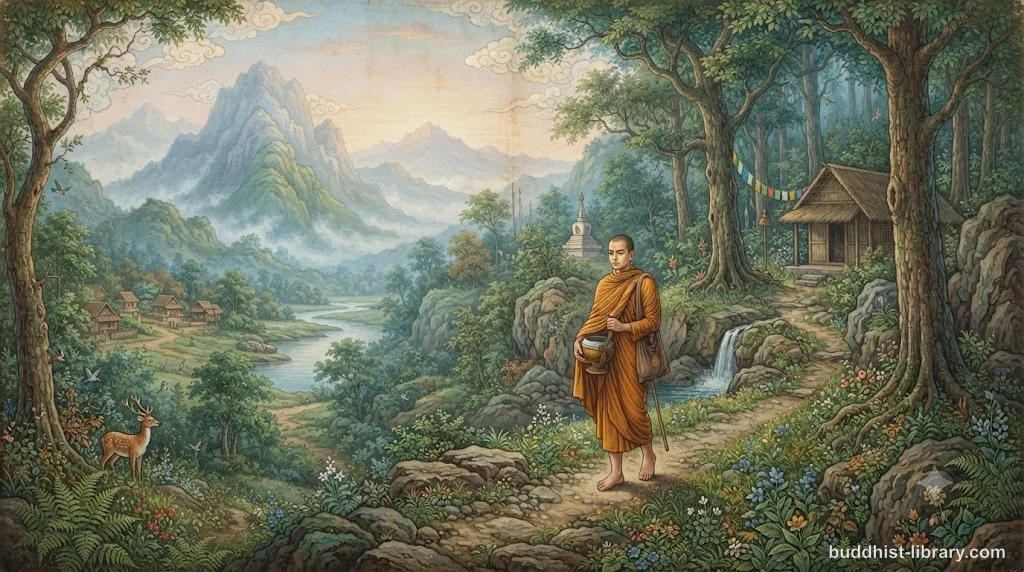
Nekkhamma—renunciation—is the intentional letting go of attachments and desires that bind us to suffering. This isn’t about rejecting the world. It’s about cultivating freedom from the compulsive craving (taṇhā) that keeps us trapped in cycles of dissatisfaction. In Buddhist practice, renunciation is both a foundational virtue and one of the ten perfections (pāramī) essential for awakening.
Often misunderstood as ascetic self-denial or escapism, nekkhamma is actually a path toward genuine contentment and clarity. The Buddha himself modeled this. He renounced a palace not because he hated comfort—he saw that clinging to sensory pleasures could never deliver lasting peace.
What Does Nekkhamma Mean?
The Pali term nekkhamma translates as “going forth” or “renunciation.” It comes from the root meaning “to go out from”—specifically, to step away from the household life of attachment and craving into a life oriented toward liberation.
In the Buddhist framework, nekkhamma operates on multiple levels:
- Gross renunciation: Leaving behind harmful behaviors, addictions, or situations that perpetuate suffering
- Moderate renunciation: Simplifying desires, choosing contentment over accumulation
- Subtle renunciation: Letting go of mental clinging—views, self-concepts, even the desire for attainments
- Ultimate renunciation: The full release that comes with nibbāna (nirvana), when all craving ceases
The Nekkhamma Sutta (AN 9.41) describes renunciation as the “escape from sensual desire” (kāma-nissaraṇa).
This isn’t about running away. It’s about clear seeing. When you truly understand that sensory pleasures are impermanent (anicca) and cannot provide lasting satisfaction, the mind naturally inclines toward letting go.
Why Renunciation Matters: The Problem with Clinging
The Buddha taught that craving (taṇhā) is the origin of suffering (dukkha). We suffer not because pleasures exist. We suffer because we grasp at them, demand they stay, and despair when they inevitably change or disappear.
Renunciation addresses this at the root.
By releasing the compulsive grip on pleasures, possessions, status—even our ideas about who we are—we cut the fuel that sustains the cycle of dissatisfaction (saṃsāra).
The Mahādukkhakkhandha Sutta (MN 13) explains this vividly: sensual pleasures offer fleeting gratification but come with stress, competition, and inevitable loss. The Buddha compares clinging to pleasures to “borrowing goods”—you enjoy them temporarily, but repayment (suffering) is guaranteed.
Nekkhamma offers the alternative.
Satisfaction that doesn’t depend on external conditions. When you’re not driven by the need to acquire, consume, or cling, peace arises naturally.
Key Points About Renunciation in Buddhism
- Renunciation isn’t rejection: You’re not saying the world is evil—you’re recognizing that clinging to it causes suffering
- It grows from wisdom: Genuine renunciation flows from understanding (paññā), not from forcing yourself to give things up
- Laypeople can practice it: You don’t need to become a monk—renunciation scales from small acts of letting go to radical simplification
- It leads to contentment: True renunciation produces santuṭṭhi (contentment), the opposite of deprivation
- It’s one of the ten perfections: Nekkhamma is cultivated over lifetimes as part of the Bodhisattva path
- It supports meditation: Letting go of distractions and desires is essential for developing concentration (samādhi)
How Renunciation Fits Into the Path
Nekkhamma appears throughout the Buddha’s teaching structure:
In the Noble Eightfold Path
Right Intention (sammā saṅkappa), the second factor, includes the intention of renunciation—turning away from sensual craving toward liberation. This mental orientation sets the direction for the entire path.
In the Ten Perfections (Pāramī)
Nekkhamma is the third perfection, cultivated by those aspiring to Buddhahood or deep awakening. It matures through repeated practice of letting go, from small gestures to profound releases.
In Monastic Life
The formal “going forth” (pabbajjā) into monastic ordination is the archetypal expression of nekkhamma. Monks and nuns renounce family life, wealth, possessions, and sexual activity to devote themselves fully to the Dhamma.
But the Buddha never said this was the only way. For laypeople, renunciation takes different forms.
How Laypeople Practice Nekkhamma
You don’t need to shave your head or wear robes to practice renunciation. The spirit of nekkhamma can infuse everyday life.
Simplify desires. Notice where your wants have multiplied beyond what’s truly needed. Experiment with living with less—fewer possessions, fewer commitments, fewer digital distractions. This isn’t about poverty; it’s about discovering that “enough” is often much less than you thought.
Let go of harmful habits. Renunciation begins with the obvious: giving up behaviors that cause suffering to yourself or others. The five precepts provide a practical baseline—refraining from killing, stealing, sexual misconduct, false speech, and intoxicants.
Practice contentment. Contentment (santuṭṭhi) is the positive side of renunciation. When you’re satisfied with what you have, craving loses its grip. This doesn’t mean complacency—it means not being driven by the restless hunger for more.
Release mental clinging. The subtlest renunciation happens in the mind. Notice when you’re holding tightly to opinions, identities, or outcomes. Practice recognizing thoughts as just thoughts, not ultimate truths that must be defended.
Take periodic retreats. Even a few hours of simplified living—no phone, no entertainment, minimal stimulation—can reset your relationship with craving. Longer meditation retreats offer a deeper taste of renunciation’s freedom.
What Nekkhamma Is NOT
Western culture often gets renunciation wrong. The common misreading: life-denying asceticism, joyless self-punishment, monks flagellating themselves in caves.
That’s not what the Buddha taught.
He explicitly rejected extreme asceticism (attakilamathānuyoga) as one of the two extremes to avoid. The Middle Way includes renunciation—but not cruelty to the body or hatred of existence.
Renunciation in Buddhism:
- Is not about suffering: It ends suffering, not creates it
- Is not escapism: It engages deeply with reality, rather than avoiding it through distraction
- Is not nihilism: It affirms the possibility of peace and freedom
- Is not forced deprivation: Authentic renunciation feels like relief, not sacrifice
When nekkhamma arises from genuine understanding—seeing directly that clinging brings suffering—it doesn’t feel like loss. It feels like putting down a heavy burden.
Renunciation and Happiness
One of the Buddha’s most striking claims is that renunciation leads to sukha (happiness). This contradicts the assumption that happiness requires getting what you want.
The happiness of renunciation is different from sensory pleasure. It’s the joy of simplicity, the ease of non-clinging, the freedom that comes when you’re no longer driven by compulsive need. The jhānas (meditative absorptions) are described as born from viveka (seclusion)—a form of renunciation from sensory distraction—and they produce profound bliss.
Bhikkhu Bodhi writes: “Renunciation is not a morbid rejection of pleasure but the intelligent recognition that the pleasures of the senses are unreliable, that they promise more than they deliver, and that genuine happiness lies elsewhere.”
That “elsewhere” is the peace of a mind unbound by craving.
Renunciation in Daily Life: Practical Steps
Want to cultivate nekkhamma? Try these practices:
-
Weekly simplicity day: One day a week, minimize consumption. Simple meals, no shopping, minimal screen time. Notice what happens.
-
Practice saying no: To invitations, purchases, commitments that don’t align with your values. Renunciation includes declining what doesn’t serve your path.
-
Study dependent origination: Understanding how craving leads to clinging (upādāna) and becoming (bhava) strengthens your motivation to let go. Read the What Is Dependent Origination (Paṭiccasamuppāda)? article.
-
Observe attachment mindfully: When you feel the pull of desire, pause. Investigate: What’s driving this? What do I think this will give me? Often, awareness alone loosens the grip.
-
Reflect on death: Death awareness (maraṇasati) is a powerful renunciation practice. Everything you’re clinging to will be left behind. What’s truly worth holding?
-
Take temporary vows: For a week or a month, renounce one thing—alcohol, social media, unnecessary spending. Make it an experiment, not a punishment.
The Ultimate Renunciation: Nibbāna
All forms of renunciation point toward the ultimate letting go: nibbāna (nirvana). This is the complete cessation of craving and clinging, the end of the cycle of becoming and rebirth.
Nibbāna is sometimes called the “unconditioned” (asaṅkhata) because it’s not dependent on anything. When all conditions—especially craving—are released, what remains is freedom itself.
In this sense, the entire Buddhist path is a progressive renunciation: of harmful actions, of craving, of ignorance, of the illusion of a permanent self. Each release brings greater peace, until the final release brings perfect peace.
Conclusion: The Freedom of Letting Go
Nekkhamma is often seen as the hard part of Buddhism—the thing that demands sacrifice. But experienced practitioners describe it differently: as relief, as lightness, as the joy of traveling unburdened.
You don’t have to renounce everything at once. Start where you are. Notice one attachment that’s causing stress and practice loosening your grip. Choose contentment over accumulation. Simplify one corner of your life. These small acts cultivate the wisdom that makes deeper renunciation possible.
Renunciation isn’t about denying life. It’s about discovering what life feels like when you’re not enslaved by craving—when you can enjoy without grasping, participate without clinging, and walk through the world with open hands.
Read more:
- The Five Precepts: Buddhist Ethics in Daily Life — The ethical foundation that supports renunciation and letting go
- What Is Taṇhā? Understanding Craving in Buddhism — Explore the craving that renunciation releases, the second noble truth
- The Ten Perfections (Pāramī): Qualities to Cultivate on the Path — See how renunciation fits into the broader framework of the ten spiritual perfections
📖 Source / license: SuttaCentral AN 9.41, MN 14; Access to Insight, Bhikkhu Bodhi translations
Frequently asked questions
Is renunciation only for monks and nuns?
No. While monastic renunciation is total, laypeople practice nekkhamma by letting go of harmful attachments, simplifying desires, and cultivating contentment with what's enough. The principle applies at every level.
Doesn't renunciation mean rejecting life and pleasure?
Not at all. Buddhist renunciation isn't about hating pleasure—it's about seeing that clinging to impermanent things causes suffering. You can enjoy life while holding it lightly, without the grasping that brings distress.
How do I start practicing nekkhamma as a layperson?
Begin small: notice one attachment causing stress (overwork, compulsive shopping, digital addiction) and consciously let it loosen. Practice contentment with less. Study the five precepts as a foundation. Renunciation grows gradually through mindfulness and understanding.