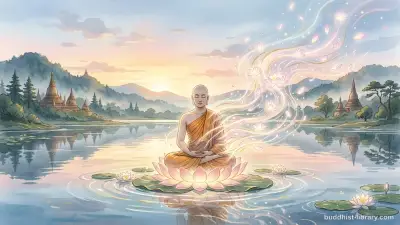
Impermanence (Anicca): Why Everything Changes
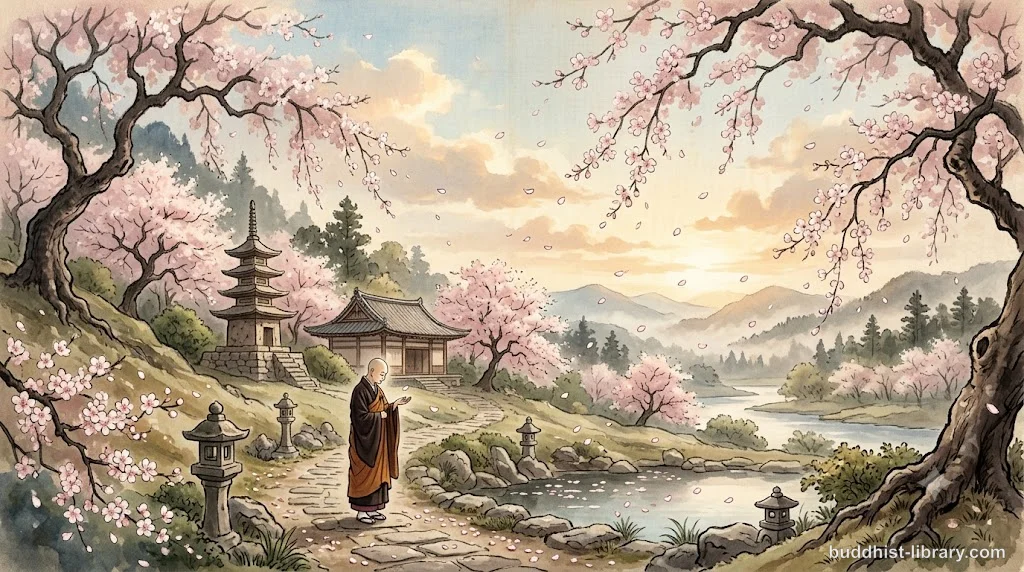
Anicca — impermanence — is the first of Buddhism’s three marks of existence. Everything conditioned arises and passes, from a single breath to entire galaxies. When you truly grasp this, clinging dissolves at its root, because suffering only exists when we try to hold what cannot be held.
Simple to state. Difficult to see. Life-changing when you do.
What does anicca mean in Buddhism?
Anicca (Pali) or anitya (Sanskrit) translates to “impermanence” or “inconstancy.” It’s one of the trilakkhaṇa — the three universal characteristics marking all conditioned existence alongside dukkha (suffering) and anattā (non-self).
In the Anicca-saññā Sutta (SN 22.102), the Buddha declares that perception of impermanence, when developed and cultivated, “removes all sensual lust, all lust for existence, all ignorance, and uproots all conceit ‘I am.’”
The claim is bold. Can watching things change really uproot the deepest defilements? The answer lies in direct observation, not philosophy.
Why did the Buddha emphasize impermanence?
The Buddha didn’t teach impermanence as abstract metaphysics. He taught it as medicine.
Watch what happens when something pleasant arrives — a good meal, unexpected praise, an evening with someone you love. The mind immediately tries to freeze it. “I want this to last forever.” Then it changes, as it must, and disappointment follows. Or grief.
With pain, we do the reverse. “This will never end.” Both reactions deny what experience actually is, which is why both generate suffering.
The Pāli Canon records the Buddha saying:
“Bhikkhus, all conditioned things are impermanent. When one sees this with wisdom, one turns away from suffering. This is the path to purity.”
— Dhammapada 277 (trans. Ṭhānissaro Bhikkhu)
The path to purity isn’t avoiding change. It’s aligning with it.
How does impermanence relate to suffering and non-self?
The three marks form a single insight seen from three angles:
- Anicca — Everything changes.
- Dukkha — What changes cannot provide lasting satisfaction.
- Anattā — What is impermanent and unsatisfactory cannot be a permanent self.
In the Anattalakkhaṇa Sutta (SN 22.59), the Buddha demonstrates this through a simple cross-examination. He points to each of the five aggregates — form, feeling, perception, mental formations, consciousness — and asks the same three questions:
“Is this permanent or impermanent?"
"Impermanent, venerable sir.”
“Is what is impermanent satisfactory or unsatisfactory?"
"Unsatisfactory.”
“Then is it fitting to regard what is impermanent, unsatisfactory, and subject to change as ‘This is mine, this I am, this is my self’?”
No. Not because of doctrine. Because clinging to what slips through your fingers hurts.
When you see dukkha and anattā clearly, you’re also seeing anicca. Three facets of one insight.
What are examples of impermanence in daily life?
Your own experience right now is the most accessible laboratory:
Breath. Each inhalation arises, peaks, dissolves. The next breath is already different.
Thoughts. That worry feels solid until you actually watch it — appearing, morphing, vanishing within seconds.
Bodily sensations. The itch, the tension, the warmth — none stay. Even chronic pain shifts in intensity and quality from moment to moment.
Emotions. Anger that felt permanent ten minutes ago? Already a memory. Joy fades. Fear dissolves.
Relationships. People change. You change. The person you loved five years ago is not the same person today. Neither are you.
On a larger scale: careers end, cities transform, political regimes collapse, species evolve or vanish. The Buddha went further — mountains erode, oceans dry up, galaxies are born and die.
But you don’t need cosmology. Watch your breath for five minutes. The entire teaching is there.
How do I practice contemplating impermanence?
The Buddha gave specific contemplation methods, preserved in texts like the Girimānanda Sutta (AN 10.60) and the Ānāpānasati Sutta (MN 118).
Mindfulness of breathing with impermanence
- Sit quietly and bring attention to the breath.
- Notice: the in-breath arises, stays briefly, passes. The out-breath arises, stays briefly, passes.
- Between breaths — a gap. Neither permanent nor absent.
- Watch for the tendency to expect the next breath to be like the last. It never is.
- When thoughts arise, note: “Thinking, arising… passing.”
Twenty minutes of this and “everything is impermanent” stops being an idea. You’ve verified it hundreds of times.
Reflection on the aggregates
The five khandhas (aggregates) — form, feeling, perception, mental formations, consciousness — are all marked by arising and passing.
Pick one and watch it:
- Feeling (vedanā): pleasant sensations don’t last. Unpleasant ones dissolve too.
- Perception (saññā): your mental image of this moment is already outdated by the time you notice it.
- Consciousness (viññāṇa): awareness itself flickers. You zone out, come back, zone out again.
Bhikkhu Bodhi notes that contemplating the aggregates as impermanent “undermines the conceit ‘I am’ more directly than any other practice.”
Noting practice (Mahāsi method)
In Burmese Vipassanā traditions, practitioners use rapid mental noting: “rising, falling, sitting, touching, hearing, thinking…” Each note marks a discrete event arising and passing.
This creates perceptual momentum. After sustained practice, the dissolving phase of phenomena becomes more obvious than the arising. You start seeing things ending before they fully form.
What happens when you deeply see impermanence?
Insight into anicca unfolds in stages.
Early on: intellectual understanding. “Yes, things change.” Behavior doesn’t shift much.
With practice: you notice it consistently. Thoughts, sensations, moods — all visibly arising and passing. This brings calm. You stop taking every mental event so seriously.
Deeper: solidity dissolves. What seemed like a “self” having experiences reveals itself as process — a stream of changing conditions with no fixed core. Here anicca meets anattā.
Deepest: the suttas describe arahants who have “uprooted the conceit ‘I am’” by seeing impermanence so thoroughly that craving for permanence can no longer arise.
They experience change without resistance.
The Visuddhimagga (Path of Purification) describes this as “the arising of dispassion” (virāga). Not nihilism or depression — just the natural fading of grasping when you see clearly that there’s nothing to grasp.
Is impermanence a pessimistic teaching?
No. Though it can feel that way initially.
Western audiences sometimes hear “everything you love will pass away” and conclude Buddhism is nihilistic. They’re reading it one-directionally. The teaching cuts both ways:
Pleasant experiences end. So does suffering.
Relationships change. So do destructive patterns.
Youth fades. So does illness.
The Dhammapada 278:
“Sabbe saṅkhārā anattā — all formations are not-self. When one sees this with wisdom, one turns away from suffering.”
The teaching doesn’t ask you to hate life. It asks you to stop demanding that life be what it isn’t. When that demand drops, ease emerges — not because circumstances improved, but because you’re no longer fighting reality.
As Ṭhānissaro Bhikkhu puts it: “The problem isn’t that things change. The problem is that we keep trying to build a permanent happiness out of impermanent materials.”
What is the relationship between impermanence and nibbāna?
This is where confusion typically enters.
Anicca applies to all conditioned phenomena (saṅkhāra). Nibbāna — the goal of the path — is asaṅkhata, unconditioned. It doesn’t arise. Therefore, it doesn’t pass away.
Does that make nibbāna permanent? The Buddha avoided that language. “Permanent” implies an eternal thing or self, which would contradict anattā.
The texts describe nibbāna differently:
- “Unborn, unmade, unfabricated” (Udāna 8.3)
- “The ending of craving, the ending of clinging”
- “The deathless” (amata)
Nibbāna doesn’t last forever. It exists outside the framework of arising and passing. Asking if it’s permanent is like asking what color silence is.
Practically: contemplate impermanence. Nibbāna becomes accessible when you stop treating impermanent things as ultimate refuge.
Common misconceptions about anicca
“Impermanence means nothing matters.”
Wrong direction entirely. Because things change, each moment matters. If you had infinite time, why would this conversation, this meal, this breath mean anything? Impermanence creates urgency, not meaninglessness.
“I should detach from everything I love.”
No. The teaching is anti-clinging, not anti-love. You can care deeply about people while recognizing they’ll change and die. That recognition often makes love sharper, not duller.
“Impermanence is obvious. Why meditate on it?”
Intellectual knowing and experiential insight aren’t the same. You “know” you’ll die. Do you live like it? Most people operate as if they and everyone they love will be around indefinitely. Contemplation closes that gap.
Key points
- Anicca is the truth that all conditioned phenomena arise and pass away.
- The Buddha taught it as a direct antidote to clinging and craving.
- It’s one of the three marks of existence alongside dukkha and anattā.
- You can observe it directly in breath, thoughts, sensations, and emotions.
- Deep insight into anicca undermines the sense of a permanent self.
- Nibbāna is the unconditioned — not subject to arising and passing.
- Understanding impermanence isn’t pessimism; it’s realism that leads to freedom.
Frequently Asked Questions
What is anicca in Buddhism?
Anicca is the Pali term for impermanence — the fundamental truth that all conditioned phenomena are in constant flux. Nothing remains static; everything arises, changes, and passes away.
Why is impermanence important in Buddhism?
Understanding impermanence is crucial because clinging to things as permanent causes suffering. When we see that all experiences are temporary, we naturally let go of attachment and craving.
How can I observe impermanence in daily life?
Notice your breath changing, thoughts arising and passing, bodily sensations shifting moment to moment. Even emotions that feel overwhelming dissolve when you watch them with mindfulness.
Is nibbāna (nirvana) also impermanent?
No. Nibbāna is described as the unconditioned (asaṅkhata) — it’s not subject to arising and passing. Anicca applies only to conditioned phenomena (saṅkhāra).
Does contemplating impermanence make you depressed?
No. While it can initially feel sobering, most practitioners report that seeing impermanence clearly brings relief. You stop demanding that temporary things last forever, which ends a major source of suffering.
How long does it take to truly understand anicca?
Intellectual understanding comes quickly. Experiential insight develops gradually through sustained meditation practice. Even experienced practitioners continue deepening their understanding over years.
Read more:
- The Four Noble Truths: The Heart of the Buddha’s Teaching — Anicca is central to understanding the First Noble Truth (suffering exists) and the Second (its cause is craving for permanence).
- Anattā (Non-Self): What the Buddha Really Meant — Impermanence and non-self are two sides of the same insight; exploring anattā deepens your understanding of why clinging to changing phenomena causes suffering.
- What Is Dependent Origination (Paṭiccasamuppāda)? — This teaching explains how impermanent phenomena arise and cease through conditions, providing the causal mechanics behind anicca.
📖 Source / license: SuttaCentral (SN 22.102, SN 35.82), Access to Insight (Ānāpānasati Sutta), Bhikkhu Bodhi's 'Connected Discourses of the Buddha'
Frequently asked questions
What is anicca in Buddhism?
Anicca is the Pali term for impermanence — the fundamental truth that all conditioned phenomena are in constant flux. Nothing remains static; everything arises, changes, and passes away.
Why is impermanence important in Buddhism?
Understanding impermanence is crucial because clinging to things as permanent causes suffering. When we see that all experiences are temporary, we naturally let go of attachment and craving.
How can I observe impermanence in daily life?
Notice your breath changing, thoughts arising and passing, bodily sensations shifting moment to moment. Even emotions that feel overwhelming dissolve when you watch them with mindfulness.
Is nibbāna (nirvana) also impermanent?
No. Nibbāna is described as the unconditioned (asaṅkhata) — it's not subject to arising and passing. Anicca applies only to conditioned phenomena (saṅkhāra).