The Kālāma Sutta: The Buddha on Independent Inquiry
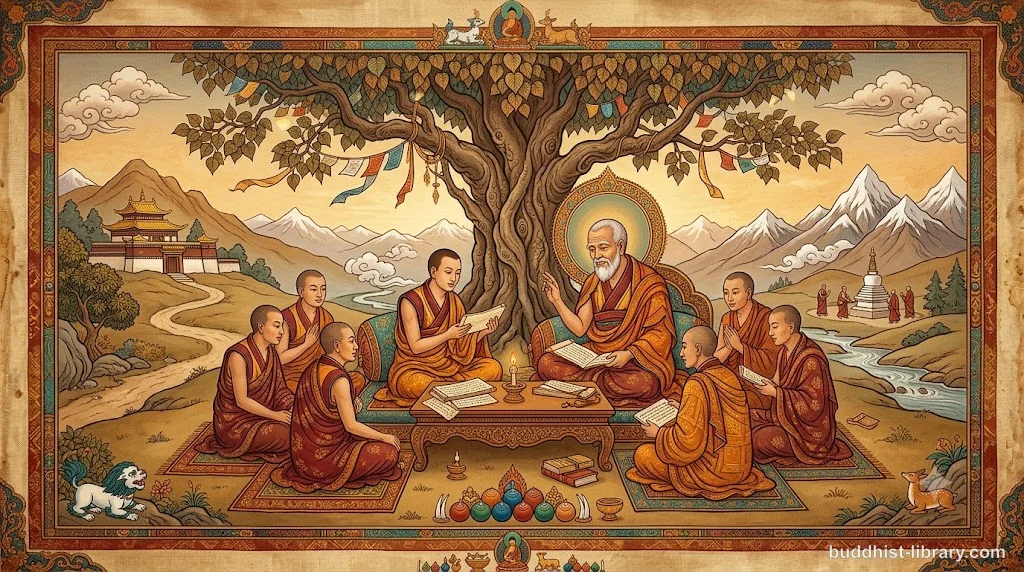
The Kālāma Sutta teaches one of Buddhism’s most famous lessons: don’t accept spiritual teachings on blind faith. Instead, test them through direct observation of whether they lead to harm or benefit, reduce greed and hatred, and align with what genuinely wise people affirm—a framework for critical thinking that remains strikingly relevant today.
The sutta (Aṅguttara Nikāya 3.65) records a remarkable encounter. The Kālāma people had heard conflicting teachings from various spiritual teachers, each claiming exclusive truth. When the Buddha visited their town of Kesaputta, they asked him directly: how should we know whom to trust?
His answer didn’t ask for faith in him. Instead, he offered criteria for independent verification.
What Problem Were the Kālāmas Facing?
The Kālāmas lived in a marketplace of ideas. Wandering ascetics, brahmins, and religious teachers regularly passed through Kesaputta, each presenting their own doctrine as supreme truth while dismissing all others. The townspeople were confused—how could they navigate these competing claims?
This context matters. The Buddha wasn’t addressing committed disciples but uncertain seekers facing information overload. Sound familiar?
What Did the Buddha Actually Say?
The Buddha’s advice unfolds in layers. First, he acknowledges what not to rely on:
- Oral tradition — “It’s been passed down” isn’t evidence
- Lineage of teaching — Antiquity doesn’t guarantee truth
- Hearsay — “Everyone says so” proves nothing
- Scripture — Even written authority requires verification
- Logical reasoning alone — Clever arguments can mislead
- Inference — Speculation isn’t direct knowledge
- Reflexive acceptance — Pondering superficially isn’t testing
- Teacher’s reputation — Status doesn’t equal wisdom
Then he offers positive criteria. Examine teachings by asking:
Do they lead to harm or benefit? Observe the results. When greed, hatred, and delusion increase, suffering follows. When they decrease, welfare arises.
What do the wise affirm? Not popular opinion, but those who demonstrate genuine understanding through their conduct and insight—what the text calls “the wise” (paṇḍitā).
What does your own observation show? Not gut feeling, but careful attention to cause and effect in experience.
This isn’t relativism. It’s empirical verification applied to ethics and mental cultivation. The Buddha provides a framework, then trusts people to investigate for themselves. This approach appears throughout his teaching on Right View—understanding must be grounded in direct seeing, not secondhand belief.
Why Is This Sutta So Often Misunderstood?
The Kālāma Sutta has become a favorite quotation for modern Buddhism’s rational reputation. Unfortunately, it’s also one of the most misread texts in the canon.
Misconception 1: “Buddhism has no authority”
Wrong. The sutta addresses how to relate to authority, not whether wisdom exists. The Buddha explicitly points to “the wise” as a reference point. He’s teaching discernment, not nihilistic relativism.
Misconception 2: “Just trust your gut”
The criteria are rigorous. Observe whether actions rooted in greed, hatred, and delusion lead to suffering. This requires sustained attention and honesty, not casual opinion or what feels good in the moment. The sutta assumes you’re willing to see clearly, even when it’s uncomfortable.
Misconception 3: “This sutta applies to everything in Buddhism”
It doesn’t. The Kālāma Sutta addresses preliminary evaluation of teachings. For deeper practice—like meditation or understanding dependent origination—direct instruction from experienced practitioners becomes essential. You can’t test advanced teachings without actually practicing them, and you can’t practice effectively without guidance. The sutta doesn’t dismiss all reliance on teachers; it establishes how to evaluate them initially.
How Do the Verification Criteria Work in Practice?
Let’s take a concrete example. Suppose a teaching says: “Anger is a righteous response to injustice—express it fully to maintain integrity.”
Test 1: Does it increase or decrease unwholesome states?
Unchecked anger is rooted in aversion (dosa), one of the three poisons. Even when justified, habitual anger conditions the mind toward reactivity and suffering. This doesn’t mean never feeling anger or addressing harm—it means observing whether cultivating anger as a virtue leads to long-term peace or agitation.
Test 2: What do the wise observe?
People recognized for genuine wisdom across contemplative traditions—not just Buddhist, but those who demonstrate freedom from greed, hatred, and delusion—consistently point to the suffering inherent in clinging to anger. Their conduct shows another way: responding to harm with clarity and firmness, but not feeding the fire of aversion.
Test 3: What does direct observation reveal?
Notice the bodily and mental effects of sustained anger. Does it bring lasting peace? Or does it condition stress, narrow attention, and cloud judgment? The Buddha isn’t asking you to believe his description of anger—he’s asking you to look.
What Are the Key Principles for Independent Inquiry?
The Kālāma Sutta establishes a method:
- Healthy skepticism is appropriate — Don’t accept teachings uncritically, even from respected sources
- Direct observation beats speculation — Test principles through lived experience and their observable effects
- Ethical consequences matter — Teachings that reduce suffering and unwholesome states are skillful; those that increase them are not
- Wisdom traditions provide reference points — “The wise” (those who embody freedom from greed, hatred, delusion) offer guidance, but you must verify their claims through your own investigation
- Verification takes time — Some truths can’t be evaluated instantly; practice and sustained observation are necessary
This approach aligns with the Buddha’s broader emphasis on ehipassiko—“come and see for yourself.” The Dhamma isn’t a belief system to adopt but a path to walk and verify.
How Does This Relate to Faith (Saddhā) in Buddhism?
Here’s where nuance matters. The Kālāma Sutta is often pitted against passages that emphasize faith (saddhā) as a crucial quality for practice. Is there a contradiction?
No—if we understand what Buddhist “faith” means. Saddhā isn’t blind belief. It’s confidence born from initial verification, which then supports deeper investigation. Think of it as provisional trust: “This teaching seems sound based on what I can test now; I’ll practice further to verify what I can’t yet directly see.”
The sequence works like this:
- Initial skepticism (Kālāma Sutta mode) — Evaluate teachings carefully before committing
- Provisional confidence — When basic tests prove sound, develop enough faith to practice seriously
- Deepening verification — Sustained practice reveals truths that couldn’t be seen at the start
- Direct knowledge — Faith matures into direct seeing (paññā)
The Kālāma Sutta addresses step one. It’s the starting gate, not the finish line. For profound insights—like the nature of suffering or the possibility of nibbāna—you can’t verify from the outside. You have to walk the path and see where it leads.
What Would the Buddha Say About Modern Spiritual Marketplaces?
The conditions the Kālāmas faced—competing claims, charismatic teachers, information overload—are amplified a thousandfold today.
Social media gurus, wellness influencers, and spiritual brands all promise transformation. Most deliver dopamine hits disguised as wisdom. The Kālāma Sutta cuts through this noise with questions that matter:
Does this teaching reduce or increase greed, hatred, and delusion in my life? Not “does it feel good” but “does it free me from compulsive patterns?”
What do people of genuine wisdom say? Not celebrities or those with large followings, but those who demonstrate freedom, compassion, and clarity through their conduct.
What does sustained observation show? Quick fixes rarely work. Real change takes time and honest self-assessment.
The sutta doesn’t endorse spiritual consumerism—picking and choosing based on comfort. It demands discernment: testing teachings rigorously against the deepest criteria of human welfare, not Instagram aesthetics.
Conclusion: An Invitation to Verify, Not Just Believe
The Kālāma Sutta remains one of Buddhism’s most accessible teachings—and one of its most challenging.
Accessible because it respects our intelligence. The Buddha doesn’t ask for blind loyalty. He invites investigation.
Challenging because genuine investigation requires honesty, patience, and willingness to see what’s actually there—not just what we want to see. Most of us prefer comfortable beliefs to uncomfortable truths.
The Buddha’s message to the Kālāmas was radical then and remains radical now: don’t take my word for it. Test the teachings against your lived experience. Observe the results over time. See for yourself whether they lead to freedom or suffering.
That invitation still stands.
Read more:
- Right View (Sammā Diṭṭhi): The Foundation of the Buddhist Path — The first factor of the Noble Eightfold Path requires seeing clearly, not just believing correctly; the Kālāma Sutta’s empirical approach grounds authentic Right View.
- The Four Noble Truths: The Heart of the Buddha’s Teaching — After testing teachings through the Kālāma criteria, the Four Noble Truths offer the core framework the Buddha himself verified and invites us to investigate directly.
- How to Start Buddhist Meditation: A Beginner’s Guide — Independent inquiry requires sustained practice; meditation provides the laboratory where you can test the Buddha’s teachings about mind, suffering, and freedom firsthand.
📖 Source / license: Kālāma Sutta (Aṅguttara Nikāya 3.65), translated by Ṭhānissaro Bhikkhu (Access to Insight) and Bhikkhu Sujato (SuttaCentral)
Frequently asked questions
What is the Kālāma Sutta?
The Kālāma Sutta (AN 3.65) is a discourse where the Buddha advises the Kālāma people to test teachings through direct experience rather than accepting them on authority, tradition, or reputation alone.
Does the Kālāma Sutta mean Buddhism rejects all authority?
No. The sutta encourages wise discernment, not blanket skepticism. The Buddha asks people to verify teachings through their own observation of whether actions lead to harm or benefit—this includes respecting genuine wisdom while avoiding blind faith.
How do I apply the Kālāma Sutta to modern spiritual teachings?
Test any teaching by observing its results in your life. Does it reduce greed, hatred, and delusion? Does it lead to harm or welfare? Does it align with what wise people affirm? Direct experience and observable outcomes are your guides.
Is the Kālāma Sutta saying all beliefs are equally valid?
No. The Buddha provides criteria for evaluation—teachings should reduce unwholesome mental states and lead to long-term welfare. It's an invitation to discernment, not relativism.