Right Mindfulness (Sammā Sati): The Seventh Factor of the Noble Path
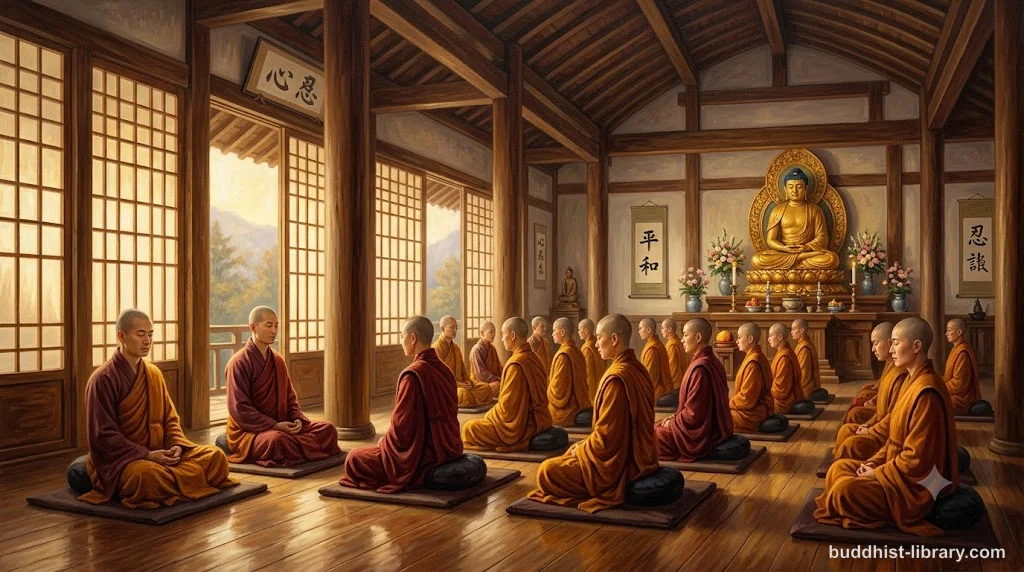
Right Mindfulness (Sammā Sati) is clear, present-moment awareness grounded in ethical understanding and aimed at liberation. Unlike bare attention, it functions within the Noble Eightfold Path—shaped by Right View, energized by Right Effort, and culminating in Right Concentration—to see reality as it is: impermanent, unsatisfactory, and not-self.
Of the eight factors, Right Mindfulness holds a unique position. It’s both a practice and the quality that holds the entire path together.
The Buddha called it the “one-way path” to purification—essential in meditation, yes, but equally essential when you’re walking to the car, washing dishes, or waiting in line.
So what exactly is Right Mindfulness? And how does it differ from the secular mindfulness that has flooded bookstores and apps? Let’s return to the Buddha’s original teaching.
What Is Right Mindfulness in the Noble Eightfold Path?
Right Mindfulness is the seventh factor of the Noble Eightfold Path, positioned between Right Effort and Right Concentration in the concentration (samādhi) group. Yet it also bridges the entire path—it needs ethical conduct (sīla) and wise understanding (paññā) to be “Right,” and it directly supports the development of liberating insight.
The Pali term sati comes from a root meaning “to remember” or “to recollect.” But in Buddhist practice, it means more than memory. Sati is:
- Presence: Awareness of what is happening now, in this very moment
- Clarity: Seeing things as they are, without distortion
- Continuity: Sustained attention that doesn’t wander or forget
- Purpose: Awareness directed toward understanding the nature of reality
The Buddha defined Right Mindfulness specifically in the Satipaṭṭhāna Sutta (MN 10), his most detailed teaching on the practice. He describes it as contemplating four domains—body, feelings, mind, and phenomena—with qualities of ardency, clear comprehension, and mindfulness, having put away worldly desire and distress.
Why “Right” Mindfulness? What Makes It Different?
The word “Right” (sammā) is crucial. Not all mindfulness leads to liberation. A thief can be mindful while picking a lock. A sniper can be mindful while aiming. These are forms of attention, but they’re not Right Mindfulness.
What makes mindfulness “Right” is its context and direction:
Grounded in Right View. It sees experience through the lens of the Four Noble Truths and the three characteristics—impermanence (anicca), suffering (dukkha), and not-self (anattā).
Shaped by Right Intention. Motivated by renunciation, goodwill, and harmlessness—not craving, not aversion, not delusion.
Supported by ethical conduct. Right Speech, Action, and Livelihood create the conditions where mindfulness can actually deepen. You can’t meditate your way around harm you’re actively causing.
Energized by Right Effort. This is active, engaged awareness—not passive drifting.
Aimed at liberation. The purpose is to see through the illusion of self and end suffering. Feeling calm or focused is fine, but it’s not the point.
As Bhikkhu Bodhi writes, “Right mindfulness is not a detached, bare attention. It is always governed by Right View and coupled with clear comprehension (sampajañña)—a discriminating awareness that understands the purpose and appropriateness of what one is doing.”
This is the key difference between Buddhist mindfulness and contemporary secular applications. Modern mindfulness often aims at stress reduction, productivity, or well-being—worthy goals, but not the same as the Buddha’s path to the complete cessation of suffering.
What Are the Four Foundations of Mindfulness?
The Buddha gave a systematic framework for developing Right Mindfulness: the Four Foundations of Mindfulness (cattāro satipaṭṭhānā). This isn’t just a list of meditation objects—it’s a complete map of experience, a way to investigate every aspect of your inner and outer world.
1. Mindfulness of Body (Kāyānupassanā)
The first foundation is the body. This includes:
- Breathing: The most common anchor, detailed in the Ānāpānasati Sutta
- Postures: Awareness of sitting, standing, walking, lying down
- Activities: Clear comprehension when bending, stretching, eating, speaking
- Body parts: Contemplating the body’s anatomical constituents
- Elements: Seeing the body as earth, water, fire, and air
- Decay: Reflecting on the body’s nature to sicken, age, and die
Why start with the body? Because it’s concrete, present, and directly observable.
The body grounds you in the here and now. It’s hard for the mind to spin elaborate stories when you’re simply aware of your breath moving in and out. The breath doesn’t argue. It just is.
2. Mindfulness of Feelings (Vedanānupassanā)
The second foundation is vedanā—feeling tone. This doesn’t mean emotions; it means the bare quality of pleasantness, unpleasantness, or neutrality that accompanies every experience.
You notice: Is this sensation pleasant? Unpleasant? Neither?
This is critical because dependent origination shows that craving arises in response to feeling. If you can catch the feeling before craving arises—if you can experience pleasure without grasping, pain without aversion—you cut the chain of suffering at its root.
3. Mindfulness of Mind (Cittānupassanā)
The third foundation is awareness of the mind itself—the quality of consciousness in this moment.
Is the mind:
- Lustful or free from lust?
- Aversive or free from aversion?
- Deluded or clear?
- Contracted or expansive?
- Concentrated or scattered?
- Liberated or bound?
You’re not trying to change these states—you’re simply recognizing them. “Ah, this is a mind with aversion. This is a mind that is scattered.” That recognition itself begins to loosen the identification with these passing states.
4. Mindfulness of Phenomena (Dhammānupassanā)
The fourth foundation is mindfulness of dhammas—mental phenomena, patterns, and teachings. This includes:
- The Five Hindrances: Recognizing when sensory desire, ill will, sloth, restlessness, or doubt is present
- The Five Aggregates: Seeing how form, feeling, perception, formations, and consciousness arise and pass
- The Six Sense Bases: Understanding eye and forms, ear and sounds, and so on
- The Seven Factors of Enlightenment: Cultivating mindfulness, investigation, energy, joy, tranquility, concentration, and equanimity
- The Four Noble Truths: Directly seeing suffering, its cause, its cessation, and the path
This foundation moves from the concrete to the conceptual, from raw experience to the frameworks that illuminate it. It’s where mindfulness becomes wisdom.
How Do You Practice Right Mindfulness?
The practice is both simple and demanding: bring clear, continuous awareness to your present experience, grounded in one or more of the Four Foundations.
In formal meditation:
Choose an anchor—often the breath, but body sensations, sounds, or any foundation works. Rest attention on that anchor with a light, steady focus.
When the mind wanders—and it will—gently return. Note what pulled you away: a thought, sound, sensation, emotion. Investigate. Is it pleasant, unpleasant, neutral? Permanent or changing?
Return to the anchor. Again and again. With patience.
This isn’t about achieving a blank mind. It’s about training awareness to stay present and see clearly. As Right Effort supports this process, you learn to recognize and abandon unwholesome states and cultivate wholesome ones.
In daily life:
Right Mindfulness doesn’t stop when you leave the cushion. The Buddha taught it as a continuous practice:
- Walking: Feel each footstep, the movement of the body through space
- Eating: Taste, texture, the act of chewing and swallowing
- Speaking: Notice the impulse before words, choose consciously
- Listening: Hear without immediately planning your response
- Working: Bring full attention to the task at hand
- Emotional moments: Pause when anger or desire arises; see the feeling, the urge, the story forming
In the Satipaṭṭhāna Sutta, the Buddha’s refrain is: “One abides contemplating… ardent, clearly comprehending, mindful, having removed covetousness and displeasure in regard to the world.”
That phrase—“having removed covetousness and displeasure”—is key. Right Mindfulness isn’t neutral observation; it functions in the context of letting go.
Key Points: Right Mindfulness at a Glance
- Right Mindfulness is the seventh factor of the Noble Eightfold Path, bridging ethical conduct and concentration
- It’s not bare attention—it’s awareness shaped by Right View, aimed at liberation
- The Four Foundations provide a complete framework: body, feelings, mind, phenomena
- It requires continuity—moment-to-moment awareness in all postures and activities
- It cuts the chain of suffering by observing experience before craving and clinging arise
- It’s both a practice and a quality—something you do and something you become
- It works with Right Effort and Right Concentration to develop the mental factors that lead to awakening
How Does Right Mindfulness Lead to Liberation?
Mindfulness alone doesn’t liberate. But it’s the indispensable condition for wisdom to arise.
Here’s how it works:
When you observe experience closely—without grasping, without pushing away—you begin to see the three characteristics directly:
- Impermanence: Every sensation, thought, emotion arises and passes. Nothing lasts.
- Unsatisfactoriness: Because everything changes, nothing can provide lasting fulfillment. Even pleasant experiences carry the seed of their ending.
- Not-self: There’s no fixed, unchanging “you” in this process. Just patterns of experience, arising and ceasing according to causes and conditions.
These aren’t philosophical concepts to believe. They’re realities to see for yourself, again and again, in direct experience. And when you see them deeply enough—when the insight becomes unshakeable—clinging falls away. Suffering ceases.
This is why the Buddha called the Satipaṭṭhāna Sutta the “direct path” (ekāyano maggo). It’s not one of many paths. It’s the way.
Common Questions About Right Mindfulness
How long does it take to develop Right Mindfulness?
There’s no fixed timeline. The Satipaṭṭhāna Sutta suggests that one who practices diligently can expect results within seven years—or seven months, or even seven days.
But the real answer? It takes as long as it takes.
What matters is consistent, patient practice. Even beginners experience moments of clarity. Deep transformation unfolds gradually.
Is mindfulness always calm?
Not necessarily. Mindfulness reveals what’s there—sometimes that’s peace, sometimes agitation. A mind full of restlessness, observed mindfully, is still Right Mindfulness. Calmness (samatha) and insight (vipassanā) often develop together, but calm isn’t the only measure of good practice. Clarity is what counts.
Can you be too mindful?
In a sense, yes—if mindfulness becomes rigid, tense, or obsessive, it’s lost its quality of ease and spaciousness. The Buddha spoke of balancing the factors of enlightenment: energy and tranquility, investigation and concentration. Mindfulness is the balancing factor itself. When it’s right, it’s alert but relaxed, engaged but not forced.
Does Right Mindfulness replace therapy or medical treatment?
No. Right Mindfulness is a spiritual practice aimed at liberation, not a substitute for mental health care. It can complement therapy and support well-being, but serious psychological or medical issues need professional treatment. The Buddha himself encouraged people to see doctors when sick.
Conclusion: The Practice That Holds Everything Together
Right Mindfulness isn’t just one factor among eight. It’s the quality that allows all the others to function.
Without mindfulness, Right View stays theoretical. Ethical conduct becomes mechanical. Concentration becomes just a pleasant trance.
With mindfulness, the path comes alive.
You see your intentions before you act. You notice when craving arises and choose not to follow it. You observe the mind’s patterns with increasing clarity until wisdom dawns—direct, immediate, liberating.
The Buddha’s invitation is simple: pay attention. Not to think about your life, but to be fully present in it. See what’s actually happening, moment by moment, beneath the stories and judgments.
The freedom isn’t somewhere else. It’s in the seeing itself.
Read more:
- The Satipaṭṭhāna Sutta: Foundations of Mindfulness Explained — The Buddha’s complete teaching on the Four Foundations, the scriptural basis for all mindfulness practice.
- What Is Mindfulness (Sati) in Buddhism? — A broader introduction to mindfulness as a concept and its role across Buddhist traditions.
- Right Concentration (Sammā Samādhi): The Eighth Factor of the Noble Path — How mindfulness deepens into meditative absorption and supports the arising of liberating insight.
📖 Source / license: Satipaṭṭhāna Sutta (MN 10, DN 22), Ānāpānasati Sutta (MN 118), translations by Bhikkhu Bodhi and Ṭhānissaro Bhikkhu via Access to Insight and SuttaCentral
Frequently asked questions
What makes mindfulness 'Right' in Buddhism?
Right Mindfulness (Sammā Sati) is mindfulness directed by Right View and Right Intention—awareness of the Four Foundations (body, feelings, mind, phenomena) with the clear intention of understanding reality as impermanent, unsatisfactory, and not-self. It's not just paying attention; it's paying attention in the service of liberation.
How is Right Mindfulness different from the modern mindfulness movement?
While modern mindfulness often focuses on stress reduction and well-being, Right Mindfulness in Buddhism has a specific ethical and liberative context. It operates within the Noble Eightfold Path, grounded in Right View of the Four Noble Truths, and aims at the cessation of suffering through insight into the three characteristics of existence.
What are the Four Foundations of Mindfulness?
The Four Foundations (Satipaṭṭhāna) are: mindfulness of body (kāyānupassanā), mindfulness of feelings (vedanānupassanā), mindfulness of mind/consciousness (cittānupassanā), and mindfulness of mental phenomena/dhammas (dhammānupassanā). These provide a complete framework for investigating experience.
Can Right Mindfulness be practiced off the meditation cushion?
Absolutely. The Buddha taught mindfulness in all postures—sitting, standing, walking, lying down—and in all activities. Right Mindfulness extends to eating, speaking, working, and every moment of daily life. Formal meditation develops the skill; daily life is where it bears fruit.