Walking Meditation (Caṅkama): Buddhist Practice in Motion
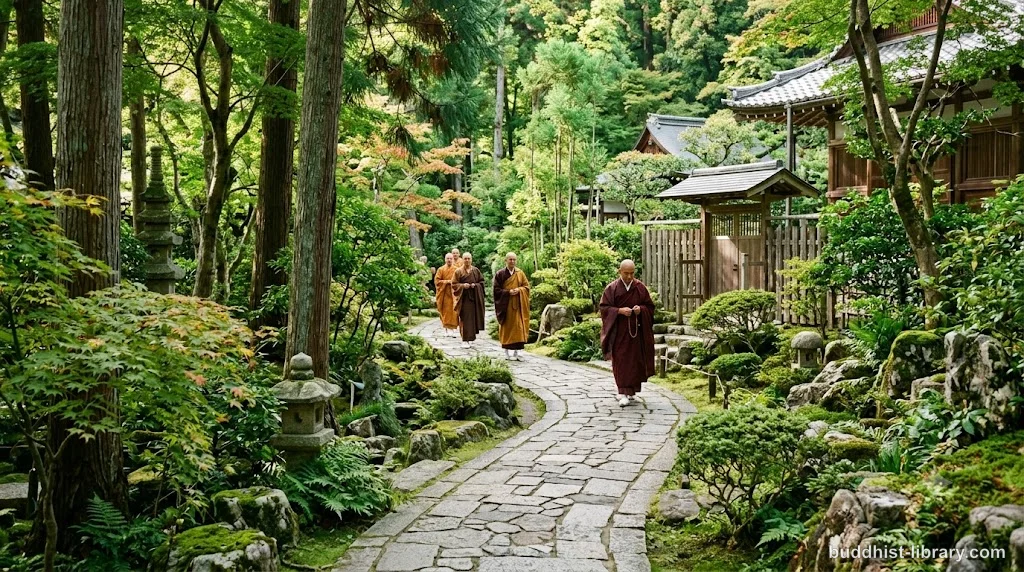
Walking meditation (caṅkama) is a formal Buddhist practice where you walk back and forth on a designated path with full awareness of each step, cultivating mindfulness and concentration through movement. Unlike sitting meditation, caṅkama integrates physical motion with mental training, making it ideal for developing embodied awareness and balancing energy during long practice sessions.
The Buddha himself practiced and taught walking meditation throughout his life. According to the Pali texts, he would pace along a caṅkama path after meals, before dawn, and between sitting sessions—sometimes for hours. This wasn’t mere exercise; it was a deliberate cultivation of presence in motion.
Why Did the Buddha Recommend Walking Meditation?
The Buddha identified specific benefits of caṅkama that sitting meditation alone cannot provide. In the Aṅguttara Nikāya, he lists five advantages: it builds endurance for long journeys, develops stamina for sustained practice, aids digestion, maintains alertness over extended periods, and produces concentration that lasts.
Walking meditation addresses a practical problem: the body grows restless during long sitting sessions, and drowsiness can overtake the mind. Caṅkama provides a middle way—sustaining mindfulness while allowing the body to move. Monks in forest monasteries often alternate 45 minutes of sitting with 45 minutes of walking, creating a rhythm that sustains practice for hours without strain.
The practice also trains a different quality of awareness. Sitting meditation can sometimes become too internalized, too removed from everyday life. Walking meditation keeps you grounded in physical sensation and spatial awareness—skills that transfer directly to mindful living. When you’ve trained attention through walking, you carry that same presence into ordinary movement: walking to your car, climbing stairs, moving through your home.
How Do You Practice Walking Meditation Traditionally?
The traditional method is remarkably simple, though not easy. Here’s the classical technique as preserved in Theravāda monasteries:
1. Choose your path. Select a straight, level path 20–30 paces long—a hallway, garden path, or any quiet space. Mark clear endpoints, either physical (a wall, tree) or mental. This becomes your caṅkama track.
2. Stand at one end. Begin in standing meditation for 30–60 seconds. Feel your feet on the ground, notice your posture, settle your attention. This transition signals the shift from ordinary walking to formal practice.
3. Walk slowly and deliberately. Begin walking at about half your normal pace. Feel each component of the step: the lifting of the heel, the forward movement of the foot, the placing down, the shifting of weight. Some teachers break it into distinct phases—“lifting, moving, placing”—but the essence is continuous awareness of the physical sensations.
4. Maintain attention on the feet. Your primary anchor is the sensation in your feet and legs. When the mind wanders (it will), gently return attention to the feeling of walking. No judgment, just patient return.
5. Turn mindfully. When you reach the endpoint, pause for a breath. Notice the intention to turn. Execute the turn with the same deliberate awareness—not mechanical, but fluid and conscious. Then walk the path in reverse.
6. Continue for the duration. Repeat the back-and-forth for your set time, maintaining the same quality of attention throughout.
The pace varies by tradition and purpose. Mahasi Sayadaw’s vipassanā approach uses very slow walking, dissecting each micro-movement. Thai Forest teachers often use natural pace, emphasizing relaxed awareness rather than microscopic analysis. Experiment to find what supports your concentration without creating tension.
What Should You Pay Attention To?
The Visuddhimagga identifies walking meditation as a foundation for clear comprehension (sampajañña)—knowing what you’re doing while you’re doing it. This sounds obvious, but we rarely walk with full knowledge of walking. The mind narrates, plans, remembers—everywhere except the present step.
In caṅkama, attention typically rests on physical sensations: the pressure and release in your feet, the swing of your legs, the subtle engagement of muscles, the movement of air against your skin. These sensations anchor you in direct experience rather than concepts about experience.
Some practitioners also maintain peripheral awareness of the whole body—posture, balance, the felt sense of your form moving through space. This broader field prevents the fixation that can turn meditation into rigidity. You’re cultivating alert presence, not hypnotic trance.
Thoughts will arise. Let them. The practice isn’t thought-suppression; it’s learning to notice thinking without following the storyline. When you realize you’ve been planning dinner or replaying a conversation, that moment of recognition is mindfulness returning. Acknowledge it without self-criticism, and redirect attention to your feet.
Advanced practitioners sometimes expand the field to include sounds, visual input, emotional tones—anything arising in awareness. But for most practitioners, especially beginners, the feet remain the home base.
How Does Walking Meditation Differ From Sitting Practice?
Sitting meditation cultivates stillness and depth. The body is stable, distractions are minimal, concentration can intensify to absorption states (jhāna). Walking meditation cultivates presence within activity—a different and complementary skill.
Caṅkama is particularly effective for balancing energy. If you’re drowsy in sitting meditation, walking wakes you up without abandoning the meditative state. If you’re agitated or restless, walking provides a constructive outlet for physical energy while maintaining mindfulness. It’s the practice of choice when sitting feels impossible.
Walking meditation also serves as a bridge between formal practice and daily life. The gap between “meditation” and “the rest of life” is one of the great obstacles for lay practitioners. Caṅkama demonstrates that mindfulness doesn’t require stillness—it functions in motion, in transition, in the midst of physical activity. This realization transforms ordinary movement into practice opportunity.
In monasteries, the rhythm of alternating sitting and walking sustains all-day and all-night meditation sessions. The body doesn’t accumulate the stiffness and pain that pure sitting would cause, and the mind stays fresher through the variety of posture.
What Are Common Mistakes in Walking Meditation?
Walking too fast. Speed bypasses the subtlety you’re trying to observe. If you can’t feel distinct sensations in your feet, slow down. But also avoid the opposite extreme—glacial, performative slowness that creates tension. Find a pace where attention can genuinely track the experience.
Staring at your feet. The traditional instruction is a soft, downward gaze about 2–3 meters ahead. Looking directly at your feet externalizes the practice—you’re watching your feet rather than feeling them from the inside. Trust proprioception, not vision.
Making it mechanical. The mind labels—“lifting, moving, placing”—then checks out while the body executes the routine. Labels should support awareness, not replace it. If labeling becomes rote, drop it and return to raw sensation.
Forgetting the turn. The endpoints of your path are prime moments for practice. Turning requires balance, coordination, spatial awareness—fertile ground for mindfulness. Don’t sleepwalk through the turn; make it part of the meditation.
Practicing irregularly. Walking meditation, like any skill, develops through consistency. Five minutes daily builds more capacity than an occasional hour-long session. Establish a specific time and place to reduce decision fatigue.
How Can You Integrate Walking Meditation Into Daily Life?
The formal practice is the training ground; daily life is where it pays dividends. Once you’ve established the basic technique on a dedicated path, informal practice opportunities appear everywhere.
Try this: designate one daily walk as “practice time.” Your walk from the parking lot to your office. The path to the mailbox. The hallway in your home. Bring the same quality of attention you cultivate in formal caṅkama—feel your feet, notice your gait, stay present with the physical act of walking. No need for artificial slowness; practice at natural pace.
Over time, this bridges the gap between “on the cushion” and “off the cushion.” You discover that mindfulness isn’t location-dependent. Awareness can accompany you through every doorway, down every street, across every threshold.
Some practitioners schedule walking meditation during work breaks—a five-minute caṅkama session instead of scrolling social media. Others use it to transition between activities: mindful walking from one task to the next, letting each step reset attention. The Vietnamese teacher Thích Nhất Hạnh built an entire practice around this integration, teaching students to walk with full presence wherever they go.
Walking meditation isn’t separate from life. It is life, executed with awareness instead of autopilot.
Read more:
- What Is Mindfulness (Sati) in Buddhism? — Walking meditation is one of the four traditional postures for developing sati; this article explains the broader framework of mindfulness practice in early Buddhism.
- The Satipaṭṭhāna Sutta: Foundations of Mindfulness Explained — The Buddha’s comprehensive teaching on establishing mindfulness includes clear comprehension in all activities, including walking.
- How to Start Buddhist Meditation: A Beginner’s Guide — If you’re new to meditation, this guide covers the fundamentals of both sitting and walking practice with practical instructions for building a sustainable routine. stainable routine.
📖 Source / license: Aṅguttara Nikāya 5.29 (Caṅkama Sutta); Visuddhimagga (Path of Purification) by Bhikkhu Ñāṇamoli; Satipaṭṭhāna Sutta (MN 10); Access to Insight (dhammatalks.org)
Frequently asked questions
How long should I practice walking meditation?
Start with 10–15 minutes and gradually extend to 30–45 minutes. Traditional monastic practice alternates walking and sitting meditation in equal periods. The key is consistency rather than duration—even 5 minutes of mindful walking daily builds the habit.
Can I practice walking meditation anywhere, or does it need to be quiet?
While a quiet path is ideal for beginners, you can practice caṅkama anywhere once you've established the basics—city sidewalks, hallways, even crowded places. The practice adapts: in noisy environments, use sound as part of your awareness rather than fighting it.
What's the difference between walking meditation and mindful walking?
Walking meditation (caṅkama) is a formal practice with specific technique—designated path, deliberate pace, structured attention on sensations. Mindful walking is informal awareness during ordinary walking. Both are valuable; caṅkama trains the mind more intensively, which then supports everyday mindfulness.
Should my eyes be open or closed during walking meditation?
Eyes should be open but with a soft, downward gaze about 2–3 meters ahead. Closed eyes risk losing balance and defeat the purpose of integrating awareness with physical movement. The gaze should be relaxed, not fixated on any particular object.