Samatha Meditation: Calm Abiding Practice in Buddhism
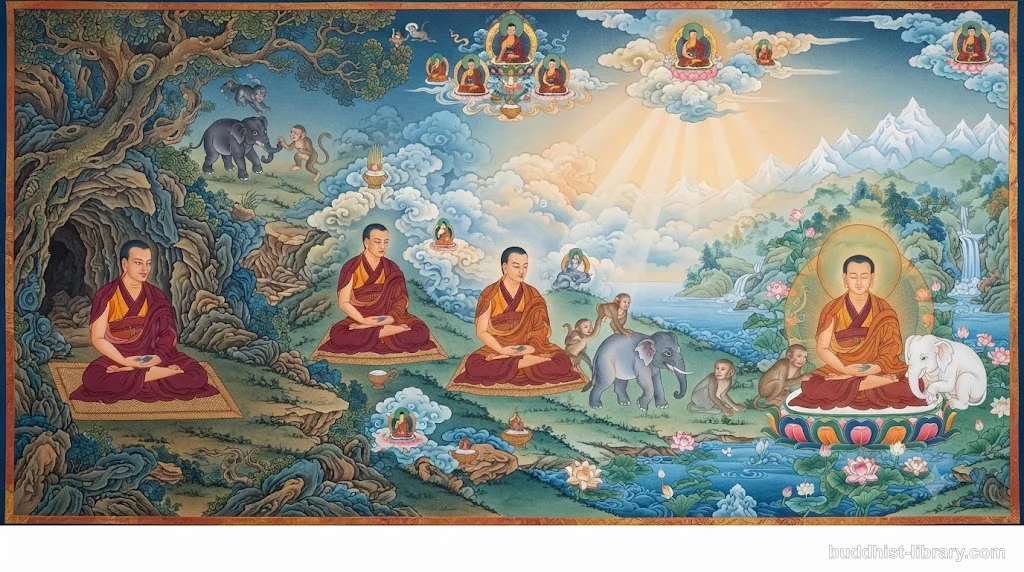
Samatha meditation is the Buddhist practice of developing deep calm and one-pointed concentration by sustained attention on a single object. This “calm abiding” training quiets mental chatter, builds stability, and can lead to profound states of meditative absorption called jhānas—forming the foundation for insight work and spiritual development.
If you’ve ever sat down to meditate and found your mind bouncing like a restless monkey, you’ve encountered the problem samatha addresses. While mindfulness practices ask you to observe whatever arises, samatha takes a different approach: it trains the mind to rest completely on one thing.
What Does Samatha Mean?
The Pali word samatha translates as “tranquility,” “calm,” or “serenity.” In the context of meditation, it refers to the quality of mental stillness that arises when concentration is well-developed.
Samatha meditation is often called “concentration meditation” or “calm abiding” practice. It’s one of the two main wings of Buddhist meditation, the other being vipassanā (insight meditation). While vipassanā investigates the nature of reality, samatha creates the mental conditions—clarity, stability, pliability—that make investigation possible.
The Buddha didn’t invent samatha. Concentration practices existed in India long before his awakening. What the Buddha added was using this calm as a platform for liberating insight, rather than as an end in itself.
How Samatha Meditation Works
Samatha develops through sustained, gentle attention to a chosen object. The basic mechanism is simple:
- Choose one object (typically the breath)
- Return attention to that object whenever it wanders
- Sustain focus with patience and consistency
- Deepen calm as concentration strengthens
Over time, this repeated returning trains the mind to settle. Distractions decrease. The meditation object becomes clearer and more continuous in awareness. Mental energy that was scattered across dozens of thoughts now focuses like a lens.
The Five Hindrances and How Samatha Addresses Them
Five mental patterns obstruct concentration. Samatha practice works by recognizing and releasing them:
- Sensual desire (wanting pleasant experiences)
- Ill will (aversion, irritation, resistance)
- Sloth and torpor (dullness, sleepiness)
- Restlessness and worry (agitation, anxiety)
- Doubt (uncertainty about the practice or path)
When you notice a hindrance has arisen, the instruction is not to fight it but to gently return to the meditation object. The hindrances lose power through non-engagement rather than suppression. For detailed guidance on working with these obstacles, see The Five Hindrances: Overcoming Obstacles to Meditation.
The Jhānas: Deep States of Absorption
As samatha deepens, something remarkable happens: the mind can enter the jhānas. These are states of meditative absorption—profound calm, joy, laser-focused attention. They’re not mystical. They’re not reserved for robed monks in caves. They’re a natural outcome of consistent concentration practice, available to anyone willing to put in the work.
The first jhāna arises when the hindrances are temporarily suspended and five factors appear:
- Applied thought (initial directing of attention)
- Sustained thought (keeping attention on the object)
- Joy (rapture, pīti)
- Happiness (sukha)
- One-pointedness (ekaggatā)
Higher jhānas follow as practice deepens, each characterized by greater refinement and stillness. The Buddha himself regularly entered these states and taught them as valuable—not for clinging to, but as powerful tools for purifying the mind and supporting insight.
For a detailed exploration, read What Are the Jhānas? Understanding Meditative Absorption in Buddhism.
Common Meditation Objects for Samatha
Traditional Buddhist texts list forty meditation subjects suitable for developing samatha. The most widely taught today include:
Mindfulness of Breathing (Ānāpānasati)
The breath is the most popular samatha object. It’s always present, rhythmic, and naturally calming. The Ānāpānasati Sutta provides the Buddha’s own instructions: observe the breath at the nostrils, chest, or abdomen, noting whether it’s long or short, and sustain attention there.
Loving-Kindness (Mettā)
Generating goodwill toward yourself and others creates both concentration and positive emotion. The phrases “May I be happy, may I be peaceful” repeated with intention develop both calm and heart qualities. Learn more in Mettā: The Practice of Loving-Kindness.
Kasiṇas (Colored Discs)
These are external visual objects—circular discs of a single color—used to develop absorption. After gazing at the physical disc, you close your eyes and hold the mental image. This approach is less common today but remains powerful.
Body Parts
Reflecting on parts of the body in sequence (hair, skin, bones, organs) builds concentration while undermining attachment to physical form. This practice combines samatha with insight elements.
Key Principles for Effective Samatha Practice
Start where you are. Don’t expect instant calm. Concentration builds gradually, session by session. The wandering mind isn’t failure—it’s the raw material you’re training.
Gentleness over force. Straining to concentrate creates tension, not tranquility. The instruction is to “place” attention on the object lightly, then sustain it with relaxed alertness.
Consistency matters most. Daily practice, even brief sessions, develops concentration faster than occasional marathon sits. Fifteen minutes every morning outperforms two hours once a week.
Patience with plateaus. Progress isn’t linear. You’ll have periods where nothing seems to deepen. Keep showing up. The mind is learning even when it doesn’t feel like it.
Release perfectionism. Some sessions will feel scattered. That’s normal. The practice is in the returning, not in never wandering.
Samatha and Vipassanā: Two Wings of Practice
The Buddha compared samatha and vipassanā to two wings of a bird—both necessary for the flight to liberation. Samatha alone can produce blissful states, but without insight, these are temporary. Vipassanā without sufficient calm lacks the clarity and stability to see deeply.
Different teachers emphasize different sequences:
- Samatha first: Build strong concentration, then apply it to insight practice
- Vipassanā first: Develop some insight, then deepen it with concentration
- Integrated approach: Work on both simultaneously, allowing them to support each other
There’s no universal prescription. The Visuddhimagga notes that individuals have different temperaments—some naturally gravitate toward calm, others toward investigation. The path you walk may depend on your inclination and your teacher’s guidance.
Common Challenges and How to Work with Them
Drowsiness: If you get sleepy, open your eyes slightly, sit more upright, or do walking meditation. Sometimes dullness signals you need actual rest—honor that.
Restlessness: When the mind won’t settle, check for underlying anxiety or unfinished business. Sometimes a few minutes of mettā or body scanning can discharge agitation before returning to the breath.
Doubt: “Am I doing this right? Is this working?” These thoughts are just another hindrance. Note them, return to the object. Trust the process—samatha has been tested by millions of practitioners for 2,500 years.
Boredom: The breath can seem tedious when concentration is shallow. As focus sharpens, the breath reveals subtle textures and rhythms you never noticed. What seemed boring becomes fascinating.
Euphoria or strange sensations: As concentration deepens, unusual experiences may arise—lights, bodily tingling, waves of bliss. Don’t chase them or fear them. Just note them and return to the breath. These are signs (nimittas), not the destination.
The Role of Samatha in Daily Life
While often associated with sitting meditation, the calm and focus developed through samatha practice extend beyond the cushion. A concentrated mind is:
- Less reactive to small irritations
- More productive at complex tasks
- Better able to listen fully to others
- More present with simple pleasures
The Buddha taught samatha not as an escape from the world but as a way to engage with it more skillfully. A calm mind sees more clearly, responds more wisely, and suffers less from the constant pull of distraction.
Getting Started: A Simple Practice
If you’d like to begin samatha practice today, here’s a straightforward approach:
- Sit comfortably with an upright posture, eyes closed or softly open
- Bring attention to the natural breath—notice where you feel it most clearly (nostrils, chest, or belly)
- Observe the full cycle of each in-breath and out-breath without controlling or changing it
- When the mind wanders (and it will), gently return attention to the breath
- Continue for 10–15 minutes daily
That’s it. No special techniques, no complex visualizations. Just this simple returning, again and again. Over weeks and months, this basic practice can lead to remarkable depths of calm and clarity.
For practical guidance on establishing a meditation routine, see How to Start Buddhist Meditation: A Beginner’s Guide.
Samatha as a Lifelong Practice
Some practitioners assume samatha is just beginner training—something to outgrow on the way to “real” insight practice. This misunderstands the Buddha’s teaching. Even the Buddha himself, after his awakening, regularly entered the jhānas for the “blissful abiding in the here and now.”
Samatha is not merely preparatory. It’s a practice that deepens throughout a lifetime. The tenth jhāna? There isn’t one—but the quality of the first jhāna available to a seasoned practitioner differs vastly from a beginner’s first taste.
The calm, clarity, and unshakable focus cultivated through samatha don’t just support insight—they transform how you move through the world. In a culture that glorifies busyness and distraction, the ability to rest the mind completely on one thing is both radical and liberating.
Read more:
- Right Concentration (Sammā Samādhi): The Eighth Factor of the Noble Path — Samatha meditation is the practical training for Right Concentration, the final factor of the Eightfold Path and the foundation for liberating wisdom.
- What Is Samādhi? Understanding Concentration in Buddhist Meditation — A detailed exploration of samādhi as both a mental quality and a meditative achievement, including its role across different Buddhist practices.
- Samatha and Vipassanā: The Two Wings of Buddhist Meditation — Learn how concentration and insight practices complement each other and how different traditions balance these two essential approaches. each other and how different traditions balance these two essential approaches.
📖 Source / license: Visuddhimagga (The Path of Purification) by Buddhaghosa; Ānāpānasati Sutta (MN 118); various teachings from Access to Insight and dhammatalks.org
Frequently asked questions
What is the difference between samatha and vipassanā meditation?
Samatha develops calm and concentration by focusing on a single object, while vipassanā develops insight by observing the changing nature of phenomena. Both are essential—samatha provides the stability needed for deeper insight practice.
How long should I practice samatha meditation as a beginner?
Start with 10–15 minutes daily and gradually increase. Consistency matters more than duration. Even short sessions build concentration when practiced regularly. Many teachers recommend establishing a basic level of samatha before moving to insight practices.
Can I practice samatha meditation without a teacher?
You can begin basic breath-focused samatha on your own using reliable instructions. However, as concentration deepens and you approach the jhānas, guidance from an experienced teacher becomes invaluable for navigating subtle states and avoiding common pitfalls.
What meditation object should I use for samatha practice?
The breath is the most commonly recommended object because it's always available and naturally calming. Other traditional objects include kasiṇas (colored discs), loving-kindness (mettā), body parts, or even a simple concept. Choose one object and stick with it—switching objects disrupts the development of concentration.