The Six Recollections (Anussati): Buddhist Meditation for Inspiration
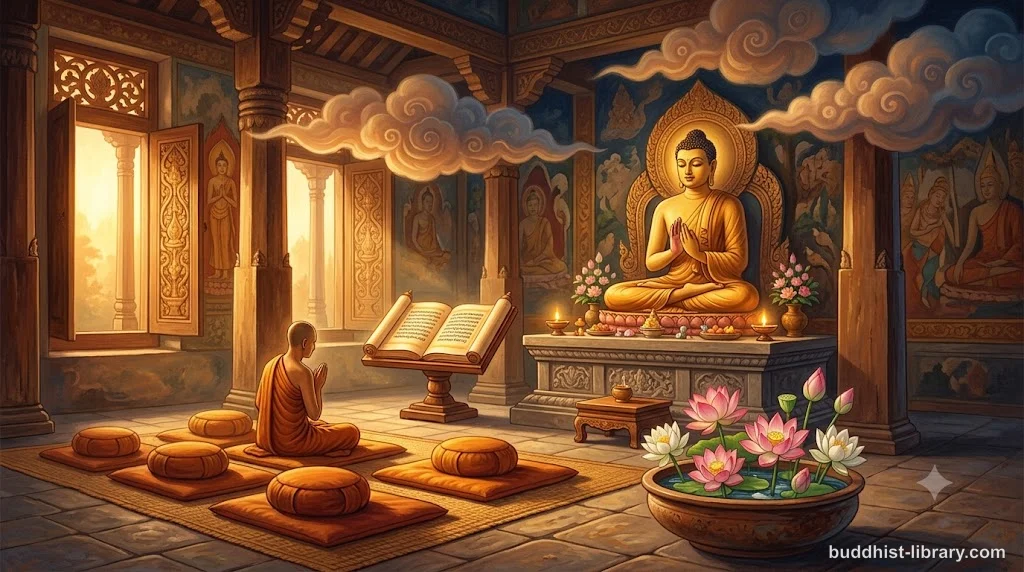
The Six Recollections are classical Buddhist meditation practices that bring joy, confidence, and inspiration to the path. By recollecting the qualities of the Buddha, Dhamma, Sangha, virtue, generosity, and celestial beings, practitioners cultivate positive mental states that support progress toward awakening.
Meditation isn’t always about examining suffering or deconstructing the self. Sometimes the mind needs inspiration—a reminder of what’s noble, beautiful, and possible. That’s where the Six Recollections (Anussati) come in.
The Six Recollections are traditional Buddhist meditation practices found throughout the Pali Canon. Unlike insight meditation (Vipassana), which investigates the nature of reality, the Recollections are devotional practices designed to inspire confidence, joy, and reverence. They remind us why we practice, what we’re practicing toward, and the goodness we already carry.
What Are the Six Recollections?
The Six Recollections (Cha Anussati) are:
- Buddhānussati — Recollection of the Buddha
- Dhammānussati — Recollection of the Dhamma (the Teaching)
- Saṅghānussati — Recollection of the Saṅgha (the Community)
- Sīlānussati — Recollection of Virtue (one’s own ethical conduct)
- Cāgānussati — Recollection of Generosity (one’s own giving)
- Devatānussati — Recollection of the Devas (or virtuous qualities leading to celestial rebirth)
Each recollection directs attention to something uplifting and true. They’re mentioned in several suttas, most notably the Mahānāma Sutta (AN 6.10), where the Buddha teaches them as practices that bring “joy, rapture, and mental ease” even amid difficulty.
These aren’t abstract philosophical exercises. They’re practical tools for stabilizing the mind, cultivating wholesome states, and reconnecting with what matters most on the Buddhist path.
Why Practice the Six Recollections?
They inspire when motivation fades
Every practitioner faces periods of doubt, fatigue, or dryness. The Recollections reignite inspiration by bringing to mind what first drew us to the Dhamma—the wisdom of the Buddha, the beauty of the teachings, the support of the community.
They cultivate positive mental states
Each recollection naturally gives rise to joy (pīti), tranquility (passaddhi), and confidence (saddhā). These states counteract the five hindrances and create a foundation for deeper meditation.
They strengthen faith without blind belief
Buddhist faith (saddhā) isn’t belief without evidence—it’s confidence grounded in understanding. The Recollections deepen this confidence by reflecting on qualities we’ve already witnessed: the Buddha’s wisdom, the Dhamma’s effectiveness, the Saṅgha’s integrity, our own ethical progress.
They balance insight practice
Insight meditation can be challenging, even harsh. It asks us to see suffering, impermanence, and non-self clearly. The Recollections provide a counterbalance—a refuge in what’s beautiful, stable, and worthy of trust.
How to Practice the Six Recollections
The structure is simple: choose one recollection, bring its object to mind, reflect on its qualities, and allow inspiration to arise.
General instructions
- Sit comfortably in a quiet place. You don’t need perfect concentration—just enough stability to reflect.
- Choose one recollection (start with the one that resonates most).
- Bring the object to mind with reverence and attention.
- Reflect on its qualities—either using traditional formulas (below) or your own words.
- Let inspiration arise naturally. Don’t force it; simply open to joy, gratitude, or confidence as they emerge.
- Rest in the feeling for a few moments before returning to reflection or ending the session.
Practice regularly, especially when faith wavers, motivation drops, or the mind feels heavy.
Time and frequency
The Recollections can be practiced:
- As a standalone session (10–30 minutes)
- As a warm-up before Vipassana or Samatha meditation
- During daily activities—while walking, waiting, or resting
- In times of difficulty—when doubt, fear, or discouragement arise
You can rotate through all six or focus on one for an extended period.
The Six Recollections in Detail
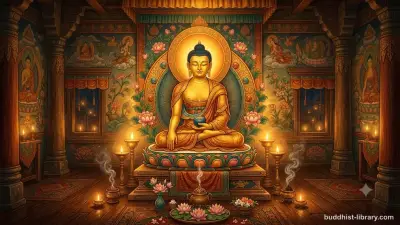
1. Recollection of the Buddha (Buddhānussati)
What to recollect: The qualities and virtues of the Buddha—his wisdom, compassion, purity, and liberation.
Traditional formula (from the Pali Canon):
“The Blessed One is an Arahant, perfectly enlightened, accomplished in true knowledge and conduct, fortunate, knower of the world, unsurpassed trainer of those to be tamed, teacher of gods and humans, awakened, blessed.”
How to practice:
- Bring to mind the Buddha’s image or presence.
- Reflect on one quality at a time: his perfect wisdom, his compassionate skillfulness, his complete freedom from suffering.
- Consider how his enlightenment proves that awakening is possible.
- Let reverence, confidence, and inspiration arise.
Effect: This practice strengthens faith (saddhā) and connects you to the lineage of awakening. It reminds you that what the Buddha accomplished, you can accomplish too—eventually.
2. Recollection of the Dhamma (Dhammānussati)
What to recollect: The qualities and effectiveness of the Buddha’s Teaching.
Traditional formula:
“The Dhamma is well-proclaimed by the Blessed One, visible here and now, timeless, inviting investigation, leading inward, to be experienced by the wise for themselves.”
How to practice:
- Reflect on the Dhamma’s practical effectiveness—how it actually works when applied.
- Consider the teachings that have personally helped you: the Four Noble Truths, dependent origination, mindfulness, etc.
- Notice that the Dhamma is “visible here and now”—its truth can be verified through your own experience.
- Let gratitude and confidence in the path arise.
Effect: This practice deepens trust in the teachings and motivates continued study and application. It reminds you that the Dhamma isn’t ancient philosophy—it’s a living, testable truth.
3. Recollection of the Saṅgha (Saṅghānussati)
What to recollect: The qualities and virtues of the Buddha’s noble disciples—both monastics and awakened laypeople.
Traditional formula:
“The Saṅgha of the Blessed One’s disciples is practicing the good way, practicing the straight way, practicing the true way, practicing the proper way—that is, the four pairs of persons, the eight types of individuals. The Saṅgha of the Blessed One’s disciples is worthy of gifts, worthy of hospitality, worthy of offerings, worthy of reverential salutation, an incomparable field of merit for the world.”
How to practice:
- Bring to mind monastics, teachers, or fellow practitioners you respect.
- Reflect on their dedication, integrity, wisdom, or kindness.
- Consider the continuity of practice from the Buddha’s time to now.
- Let appreciation, connection, and inspiration arise.
Effect: This practice counteracts isolation and reminds you that you’re part of a 2,600-year lineage of seekers. It also strengthens generosity and ethical conduct.
4. Recollection of Virtue (Sīlānussati)
What to recollect: Your own ethical conduct—the precepts you keep, the restraint you practice, the harm you avoid.
Traditional reflection:
“There is in me this virtue, unbroken, untorn, unblemished, unmottled, liberating, praised by the wise, ungrasped, leading to concentration.”
How to practice:
- Reflect honestly on your ethical conduct—where you’ve been consistent, where you’ve grown.
- Don’t inflate or denigrate—just acknowledge the virtue you’ve cultivated.
- Consider the peace and confidence that come from living ethically.
- Let joy, self-respect, and confidence arise.
Effect: Counters guilt, self-doubt, unworthiness. You are making progress. Your efforts matter.
Important note: This isn’t about pride or comparison. It’s about recognizing the wholesomeness already present in your life.
5. Recollection of Generosity (Cāgānussati)
What to recollect: Your own acts of giving—material gifts, time, kindness, forgiveness.
Traditional reflection:
“It is a gain for me, a great gain, that in a generation obsessed with the stain of stinginess, I dwell at home with a heart free of the stain of stinginess—freely generous, open-handed, delighting in relinquishment, devoted to charity, delighting in giving and sharing.”
How to practice:
- Bring to mind times you’ve given—money, food, help, attention, forgiveness.
- Reflect on the joy of letting go, of meeting another’s need.
- Notice how generosity counteracts greed and opens the heart.
- Let gladness, warmth, and openness arise.
Effect: This practice cultivates joy and undermines the delusion that happiness comes from accumulation. It reinforces the truth that letting go brings more ease than holding on.
6. Recollection of the Devas (Devatānussati)
What to recollect: The qualities that lead to celestial rebirth—faith, virtue, learning, generosity, and wisdom.
Traditional reflection:
“There are devas… who were possessed of faith, virtue, learning, generosity, and wisdom. Having passed away from here, they were reborn there. I too am possessed of faith, virtue, learning, generosity, and wisdom.”
How to practice:
- Reflect on the wholesome qualities you share with beings who have attained higher rebirths.
- Recognize that the same mental qualities that lead to celestial rebirth also lead to awakening.
- Let aspiration, confidence, and gladness arise.
Effect: This practice inspires continued cultivation of virtue and wisdom. It also offers a consoling reminder that wholesome actions bear fruit—if not immediately, then eventually.
Modern interpretation: If the cosmology of devas doesn’t resonate, you can reflect on the wholesome qualities themselves—faith, virtue, learning, generosity, wisdom—and the confidence that comes from cultivating them.
Key Points: The Six Recollections
- Inspirational, not analytical: The Recollections cultivate joy and confidence, not insight into impermanence or suffering.
- Accessible to all levels: Beginners and advanced practitioners alike benefit. No special concentration is required.
- Complementary to insight: They balance the sometimes-difficult work of Vipassana by strengthening faith and positive mental states.
- Grounded in personal experience: Each recollection asks you to reflect on what you’ve actually witnessed—the Dhamma’s effectiveness, your own ethical growth, the Saṅgha’s integrity.
- Antidote to doubt and discouragement: When practice feels dry or motivation fades, the Recollections reconnect you to what’s beautiful and true.
- Flexible structure: You can practice all six in rotation or focus on one for weeks or months.
Differences Between the Recollections and Other Practices
Anussati vs. Vipassana
Vipassana (insight meditation) investigates the Three Marks of Existence—suffering, impermanence, non-self—to uproot delusion. It’s analytical and often challenging.
Anussati practices are devotional and uplifting. They cultivate positive mental states that support Vipassana by stabilizing the mind and strengthening confidence.
Anussati vs. Samatha
Samatha (tranquility meditation) develops deep concentration by focusing on a single object (like the breath) to attain jhāna.
Anussati can lead to tranquility and even jhāna, but the primary aim is inspiration and confidence, not one-pointed absorption.
Anussati vs. Mettā
Mettā (loving-kindness) is also a devotional practice, but it focuses specifically on cultivating goodwill toward all beings.
The Six Recollections focus on qualities within the Triple Gem, one’s own virtue, and the path itself. They’re more about inspiration and faith than relational warmth.
When to Practice the Six Recollections
The Recollections are especially helpful:
- When doubt arises—about the path, the teachings, or your own capacity.
- When motivation fades—when practice feels dry or mechanical.
- Before challenging meditation—to establish a stable, confident foundation.
- After ethical missteps—to restore confidence and reconnect with your wholesome intentions.
- In moments of gratitude—when you simply want to acknowledge what’s good and true.
- Daily, as a devotional anchor—many practitioners recite one or more recollections each morning.
Common Questions About the Six Recollections
Can I practice the Recollections if I’m skeptical about devotion?
Yes. The Recollections aren’t about blind faith or worship. They’re reflections on verifiable qualities—the Buddha’s wisdom, the Dhamma’s effectiveness, the Saṅgha’s integrity, your own ethical conduct. If “recollection of the Buddha” feels too devotional, simply reflect on the qualities he embodied: wisdom, compassion, freedom. The practice works because those qualities are real and inspiring, not because of metaphysical beliefs.
Do I have to believe in devas to practice Devatānussati?
No. The sixth recollection can be interpreted as reflecting on the wholesome qualities themselves—faith, virtue, learning, generosity, wisdom—and the confidence that comes from cultivating them. Whether you take the cosmology literally or symbolically, the practice strengthens aspiration and moral clarity.
How do the Recollections relate to taking refuge?
The first three Recollections correspond directly to the Three Refuges: Buddha, Dhamma, Saṅgha. Practicing them deepens your connection to what refuge actually means. The other three recollections strengthen the wholesome qualities that make refuge effective—virtue, generosity, and the aspiration toward higher states.
Can the Recollections lead to jhāna?
Yes, though it’s not their primary purpose. Sustained recollection—especially of the Buddha, Dhamma, or Saṅgha—can give rise to joy (pīti) and tranquility (passaddhi), which can deepen into meditative absorption. The commentaries mention that the Recollections can lead to “access concentration” or even the first jhāna, though not the higher jhānas.
Should I use traditional formulas or my own words?
Both work. Traditional formulas (like “The Blessed One is an Arahant…”) carry the weight of lineage and can feel stabilizing. Your own words can feel more immediate and personal. Experiment with both. Start with the formulas if you’re new; adapt as your practice matures.
Practical Tips for Recollection Practice
- Start with what resonates: If the Buddha’s wisdom inspires you most, begin with Buddhānussati. If gratitude for the teachings feels strongest, start with Dhammānussati.
- Don’t rush: Spend 5–10 minutes with one recollection rather than racing through all six.
- Let inspiration arise naturally: You can’t force joy or confidence. Reflect sincerely, and allow wholesome feelings to emerge on their own.
- Use the Recollections as a warm-up: They’re an excellent way to settle the mind before Vipassana or Samatha meditation.
- Return to them in difficulty: When doubt or discouragement strike, the Recollections reconnect you to what’s stable and true.
- Practice regularly: Even a few minutes daily builds a cumulative effect—a reservoir of confidence and joy to draw on when needed.
Recollection of Virtue and the Risk of Pride
A common concern: Won’t reflecting on my own virtue lead to conceit?
The Buddha addressed this directly. Recollection of virtue is meant to inspire confidence and gladness—not comparison or superiority. You’re not reflecting on how virtuous you are compared to others. You’re simply acknowledging the wholesomeness you’ve cultivated and letting that acknowledgment support further practice.
If pride arises, notice it and let it go. The point isn’t to congratulate yourself endlessly but to counteract the opposite extreme—the self-doubt and guilt that undermine meditation. Wholesome self-respect is different from conceit.
The Recollections in Daily Life
The Six Recollections aren’t only for formal meditation. You can practice them informally throughout the day:
- While walking: Recollect the Buddha’s qualities as you move.
- Before meals: Reflect on the generosity of those who provided the food.
- In moments of waiting: Bring to mind the Dhamma’s timeless effectiveness.
- After ethical choices: Acknowledge your virtue—not with pride, but with quiet confidence.
- In the evening: Review the day and recollect your own acts of generosity.
This informal practice weaves the Recollections into the fabric of daily life, making them a constant source of inspiration and stability.
Conclusion: Recollection as Refuge
The Six Recollections are more than meditation techniques—they’re acts of taking refuge. When you recollect the Buddha, Dhamma, and Saṅgha, you’re reconnecting with what’s stable, wise, and free. When you recollect your own virtue and generosity, you’re acknowledging the goodness already present in your life. When you recollect the qualities that lead to higher states, you’re affirming your aspiration toward liberation.
In a practice that often asks us to see suffering clearly, the Recollections remind us that there’s also beauty, possibility, and profound goodness on this path. They inspire when motivation fades, stabilize when doubt arises, and gladden the mind when it feels heavy.
The Buddha taught these practices not as optional extras but as essential supports for the journey. They’re gifts—simple, accessible, and profoundly effective. All you need to do is recollect, reflect, and allow inspiration to arise.
Read more:
- Buddhānussati: Recollection of the Buddha in Meditation Practice—a detailed guide to the first recollection, with traditional formulas and practical instructions for bringing the Buddha’s qualities to mind.
- What Is Mindfulness (Sati) in Buddhism?—learn how the faculty of mindfulness supports recollection practices and all other forms of meditation.
- The Five Spiritual Faculties (Indriya): Faith, Energy, Mindfulness, Concentration, Wisdom—discover how the Six Recollections strengthen the faculty of faith (saddhā), one of the five powers essential for awakening. ne of the five powers essential for awakening. .
📖 Source / license: Anguttara Nikaya 6.10 (Mahānāma Sutta), Anguttara Nikaya 11.12, Access to Insight, Bhikkhu Bodhi's translations
Frequently asked questions
What are the Six Recollections in Buddhism?
The Six Recollections (Anussati) are traditional Buddhist meditation practices focused on recollecting the Buddha, Dhamma, Sangha, one's own virtue, generosity, and the qualities of celestial beings. They inspire confidence, joy, and wisdom.
How do I practice the Six Recollections?
Choose one recollection, sit comfortably, and bring to mind its qualities with reverence and attention. Reflect on what it means, let inspiration arise, and allow joy and confidence to fill your mind. Practice regularly, especially when faith wavers or motivation drops.
Are the Six Recollections suitable for beginners?
Yes. The Six Recollections are beginner-friendly and accessible. They don't require advanced concentration, and they cultivate positive mental states that support all other meditation practices.
What is the difference between Anussati and Vipassana?
Anussati practices are devotional and inspirational meditations that cultivate faith, joy, and confidence. Vipassana is insight meditation aimed at seeing reality clearly. The Recollections support Vipassana by stabilizing the mind and strengthening wholesome mental states.