What Is Passaddhi? Understanding Tranquility in Buddhist Meditation
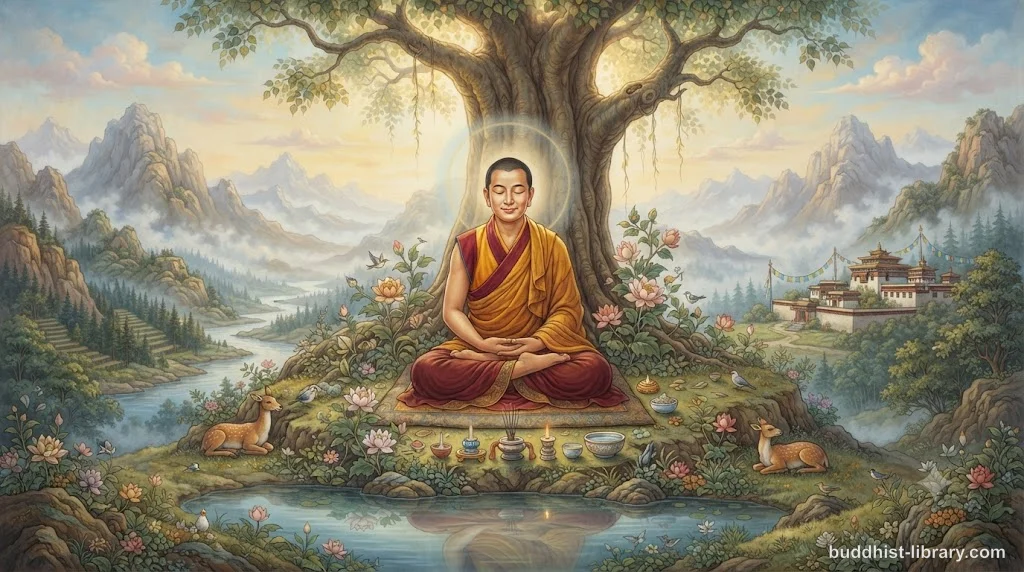
Passaddhi is the calming of bodily and mental agitation, a factor that allows deeper concentration and insight to arise. In Buddhist meditation, it’s not forced relaxation but a natural settling that emerges when hindrances are removed. Passaddhi is one of the seven factors of enlightenment and a necessary condition for the jhānas.
Passaddhi (Pali: passaddhi; Sanskrit: praśrabdhi) translates as “tranquility,” “calm,” or “serenity.” You’ll find it throughout the Pali Canon as both a meditation factor and a quality cultivated on the path to awakening. The Buddha describes it as the subsiding of roughness in body and mind—a quieting that supports concentration without dullness.
Unlike simple relaxation, passaddhi doesn’t slip into drowsiness. The mind becomes still without becoming slack. This balance matters. It’s what makes tranquility a factor of enlightenment rather than just a pleasant feeling.
What Does Passaddhi Feel Like?
The Buddha describes two aspects of passaddhi in the Satipaṭṭhāna Sutta: tranquility of body (kāya-passaddhi) and tranquility of mind (citta-passaddhi).
Bodily tranquility manifests as a release of tension you may not have noticed you were holding. The breath deepens naturally. Muscles soften. There’s a sense of lightness or ease, as if the body has stopped fighting itself. In the Ānāpānasati Sutta, the Buddha instructs meditators to “calm the bodily formation” as the breath becomes subtle and refined.
Mental tranquility is the settling of mental chatter and restlessness. Thoughts still arise, but they no longer pull you into their orbit. Worries lose their grip. The mind feels spacious rather than crowded. According to Ṭhānissaro Bhikkhu, this is when “the mind stops thrashing about.”
When both aspects come together, there’s a unified quality of calm—not blank or empty, but alive and at rest simultaneously. This is the state that supports the deeper absorptions of jhāna.
How Does Passaddhi Develop?
Passaddhi doesn’t arise by trying to force yourself to relax. The Buddha’s approach is indirect: remove what agitates the mind, and tranquility arises on its own.
The Five Hindrances as Obstacles to Tranquility
In the Bojjhaṅga Saṃyutta (SN 46), the Buddha identifies the five hindrances as the primary obstacles to passaddhi:
- Sensual desire creates restless seeking
- Ill will generates tension and heat
- Sloth and torpor bring dullness masquerading as calm
- Restlessness and worry prevent settling
- Doubt creates wavering and second-guessing
Each hindrance disturbs the mind in a different way. Real tranquility emerges when you see these states clearly and withdraw the fuel that sustains them—not by suppressing them. When sensual desire is seen as suffering rather than satisfaction, it loses its pull. When ill will is met with patience, it burns out.
Tranquility as a Factor of Enlightenment
Passaddhi is the fifth of the seven factors of enlightenment (bojjhaṅga). It sits between energy (viriya) and concentration (samādhi), acting as a bridge.
Energy without tranquility becomes agitation. Tranquility without energy becomes dullness. The Buddha teaches that when energy runs too high, cultivate tranquility; when tranquility tips toward sluggishness, rouse energy. The factors support each other through this dynamic balancing.
The sequence matters. Mindfulness notices what’s present, investigation discerns what’s skillful, energy sustains the effort, and tranquility allows everything to settle into steadiness. From that settled state, concentration deepens naturally.
Passaddhi and the Jhānas
Passaddhi is a prerequisite for entering the meditative absorptions called jhānas. In the standard formula, the Buddha describes the first jhāna as arising when the five hindrances are abandoned and the mind experiences “rapture and pleasure born of seclusion.”
But before rapture (pīti) and pleasure (sukha) can stabilize into sustained concentration, there must be tranquility. The mind needs to settle enough that joy doesn’t turn into excitement, and pleasure doesn’t scatter attention. Passaddhi provides that stability.
As the jhānas deepen, passaddhi becomes more refined. In the second jhāna, the initial excitement subsides into a quieter joy. By the third jhāna, even rapture fades, leaving a calm, sustained happiness. The fourth jhāna is described as pure equanimity and mindfulness, with neither pleasure nor pain—a state of profound tranquility balanced with clarity.
This progression illustrates a key point: passaddhi isn’t a single static experience. It deepens as practice matures, from the initial quieting of gross agitation to the subtle stillness that supports insight.
Cultivating Tranquility in Practice
Formal meditation provides the clearest conditions for developing passaddhi, but the quality can be cultivated in everyday life as well.
In Sitting Meditation
The Buddha’s instructions in the Ānāpānasati Sutta offer a direct method: use mindfulness of breathing as the anchor, and notice when the breath settles. As the breath becomes subtle, the body calms. As the body calms, the mind follows.
Key points:
- Don’t try to manufacture tranquility. Notice when it’s already present, even slightly.
- When agitation arises, recognize the hindrance and return to the breath without struggle.
- Let the breath guide the pace. A forced calm is not passaddhi.
Meditators often report that tranquility arrives in layers. First, gross restlessness fades. Then subtler forms of mental movement quiet. Finally, there’s a sense of the whole mind-body system coming to rest without losing its aliveness.
In Daily Life
Off the cushion, passaddhi can be recognized in moments when urgency drops away—when you finish a task and feel the release, when a worry resolves and ease returns, or when you step out of a tense conversation into silence.
The practice is to notice these moments and appreciate them rather than rushing past. Over time, you develop a sensitivity to what supports tranquility and what disrupts it. This is the beginning of wise discernment.
Common Misconceptions About Passaddhi
Misconception #1: Tranquility is the goal.
Passaddhi is a factor that supports liberation, not the destination itself. A calm mind still experiences suffering if it clings to calmness. The Buddha taught passaddhi as part of a larger path that includes wisdom and ethical conduct.
Misconception #2: Passaddhi means no thoughts.
Tranquility doesn’t require a blank mind. It’s the absence of the mental agitation around thoughts—the grasping, resisting, and proliferating. A tranquil mind can think clearly without turbulence.
Misconception #3: You should always be tranquil.
Some situations call for energy and alertness, not calm. The Buddha’s teaching is about balance, not a one-size-fits-all prescription. The wisdom factor discerns when to cultivate tranquility and when to rouse effort.
Passaddhi and Insight
While passaddhi is often associated with concentration practice (samatha), it also plays a crucial role in insight meditation (vipassanā). A settled mind sees more clearly. When mental agitation subsides, the three characteristics—impermanence, suffering, and non-self—become evident not as concepts but as direct observations.
Bhikkhu Bodhi notes that tranquility creates the conditions for paññā (wisdom) to arise. A mind caught in restlessness or dullness can’t sustain the precise attention needed to see how phenomena arise and pass. Passaddhi provides the stability that allows wisdom to do its work.
This is why the Buddha placed tranquility among the factors of enlightenment rather than treating it as a mere preliminary. It’s not just useful for calming down—it’s essential for seeing clearly.
The Question of Effort
One of the subtler challenges in cultivating passaddhi is the question of effort. How do you try to become tranquil without creating the very tension you’re trying to release?
The answer lies in right effort: not forcing, not abandoning. The Buddha’s instruction is to “arouse desire” for skillful qualities without straining. In practice, this means setting up conditions that support tranquility—removing distractions, adopting a comfortable posture, returning to the meditation object—and then allowing the process to unfold.
Ṭhānissaro Bhikkhu compares it to tuning a musical instrument: not too tight, not too loose. When effort is balanced, tranquility doesn’t feel like an achievement you’ve wrestled into existence. It feels like something you’ve allowed to happen.
Why Passaddhi Matters
In a culture that equates busyness with value and stimulation with aliveness, passaddhi offers a radical alternative: a settled mind is not a lazy mind. Calm is compatible with clarity.
For those walking the Buddhist path, passaddhi serves as both refuge and tool. It provides relief from the relentless push of craving and the pull of aversion, while creating the stability needed for sustained practice—the kind that leads to genuine insight rather than temporary comfort.
The Buddha’s final words were “Strive on with diligence.” But striving doesn’t mean thrashing. Tranquility is what allows effort to become sustainable, precise, and ultimately effective.
Frequently Asked Questions
How is passaddhi different from samādhi (concentration)?
Passaddhi is the calming and settling of bodily and mental disturbances that makes concentration possible. Samādhi is the sustained unification of mind that results when passaddhi removes agitation. Tranquility prepares the ground; concentration is the resulting stability.
Can you have passaddhi without formal meditation?
Yes. While passaddhi deepens significantly in meditation, moments of tranquility can arise naturally when conditions are right—after resolving a conflict, during a walk in nature, or when letting go of worry. Formal practice trains you to recognize, cultivate, and sustain these moments intentionally.
What causes passaddhi to fade during meditation?
Passaddhi fades when the five hindrances arise: sensual desire, ill will, sloth and torpor, restlessness and worry, or doubt. Each hindrance creates a different kind of agitation. The practice is to recognize the hindrance, apply the appropriate antidote, and allow tranquility to return naturally.
Is passaddhi the same as relaxation?
Not exactly. Ordinary relaxation often involves dullness or distraction. Passaddhi combines calm with clarity—the body is at ease, but the mind remains alert and collected. It’s relaxation without slackness, a settling that supports rather than undermines awareness.
Read more:
- The Five Hindrances (Nīvaraṇa): Overcoming Obstacles to Meditation — Learn how to recognize and work with the specific obstacles that prevent passaddhi from arising.
- The Seven Factors of Enlightenment: Cultivating the Bojjhaṅgas — Understand how tranquility fits within the complete set of factors that lead to awakening.
- What Are the Jhānas? Understanding Meditative Absorption in Buddhism — Discover how passaddhi serves as the foundation for the deeper states of concentration.
📖 Source / license: Bojjhaṅga Saṃyutta (SN 46), Satipaṭṭhāna Sutta (MN 10, DN 22), Ānāpānasati Sutta (MN 118). Translations by Bhikkhu Bodhi and Ṭhānissaro Bhikkhu via Access to Insight and SuttaCentral.
Frequently asked questions
How is passaddhi different from samādhi (concentration)?
Passaddhi is the calming and settling of bodily and mental disturbances that makes concentration possible. Samādhi is the sustained unification of mind that results when passaddhi removes agitation. Tranquility prepares the ground; concentration is the resulting stability.
Can you have passaddhi without formal meditation?
Yes. While passaddhi deepens significantly in meditation, moments of tranquility can arise naturally when conditions are right—after resolving a conflict, during a walk in nature, or when letting go of worry. Formal practice trains you to recognize, cultivate, and sustain these moments intentionally.
What causes passaddhi to fade during meditation?
Passaddhi fades when the five hindrances arise: sensual desire, ill will, sloth and torpor, restlessness and worry, or doubt. Each hindrance creates a different kind of agitation. The practice is to recognize the hindrance, apply the appropriate antidote, and allow tranquility to return naturally.
Is passaddhi the same as relaxation?
Not exactly. Ordinary relaxation often involves dullness or distraction. Passaddhi combines calm with clarity—the body is at ease, but the mind remains alert and collected. It's relaxation without slackness, a settling that supports rather than undermines awareness.