What Is Saṃvega? Spiritual Urgency in Buddhism
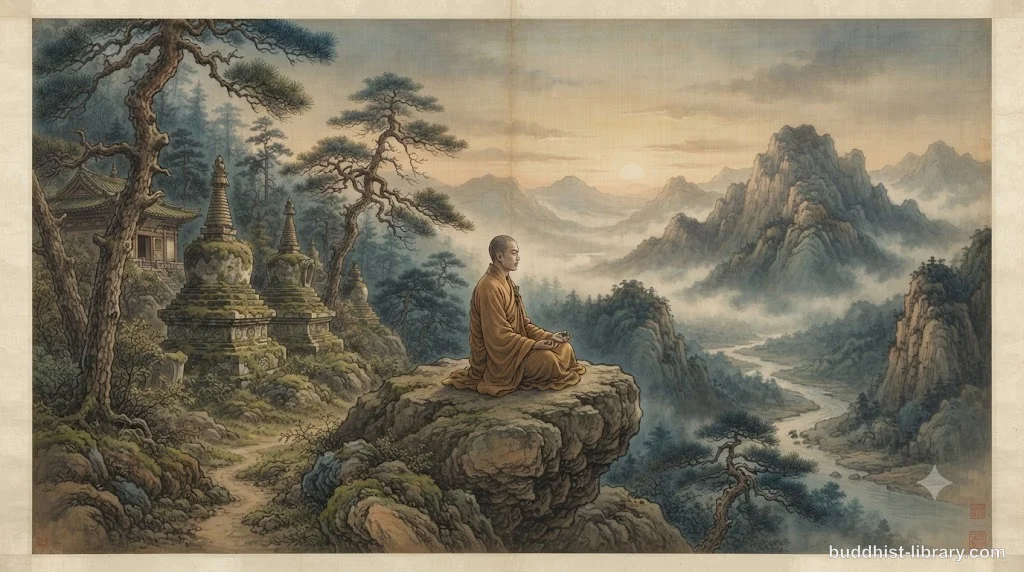
Saṃvega is the clarifying shock that comes from truly seeing life’s impermanence and fragility—not as abstract philosophy, but as lived reality. It’s the urgency that propels sincere practice, the emotional wisdom that says: “This matters. Now matters.” Unlike fear, which contracts, saṃvega opens a door.
What does saṃvega mean?
Saṃvega (Pali: saṃvega; Sanskrit: saṃvega) is often translated as “spiritual urgency,” “sense of dismay,” or “terror of saṃsāra,” though no single English word captures its full meaning.
The term appears throughout the Pali Canon to describe the existential recognition that prompts beings toward the spiritual path. Thanissaro Bhikkhu, whose extensive commentary has brought this concept to English-speaking audiences, describes saṃvega as “the oppressive sense of shock, dismay, and alienation that comes with realizing the futility and meaninglessness of life as it’s normally lived.”
This isn’t nihilism. It’s clarifying insight that cuts through delusion.
The Buddha himself experienced saṃvega as a young prince when he encountered the “four sights”: an old person, a sick person, a corpse, and a wandering contemplative. These encounters shattered his comfortable illusions and ignited the urgency that led him to renounce his palace life and seek awakening.
How is saṃvega different from ordinary fear or anxiety?
The distinction matters.
Fear and anxiety arise from clinging—fear of loss, anxiety about the future, terror of annihilation. They’re symptoms of the very problem Buddhism addresses. Saṃvega, by contrast, arises from seeing clearly. It’s the emotional counterpart to wisdom, not to ignorance.
Where fear paralyzes, saṃvega energizes. Where anxiety scatters attention across a thousand worries, saṃvega focuses the mind on what genuinely matters: the urgent need to practice, to wake up, to free oneself and others from suffering.
Think of it this way: if you suddenly realized your house was on fire, you wouldn’t sit around philosophizing about the nature of combustion. You’d move—decisively, urgently, intelligently.
Saṃvega is that recognition applied to the larger conflagration of suffering and impermanence that defines unawakened existence.
What is the relationship between saṃvega and pasāda?
In the Buddha’s teaching, saṃvega never stands alone.
It’s always paired with pasāda—serene confidence, clarity, or a sense of “brightening.” This is the emotional recognition that there is a way out, that liberation is possible, that the path exists. Saṃvega without pasāda becomes despair. Pasāda without saṃvega becomes complacency.
Together, they form the balanced emotional foundation for practice: the urgency to act combined with the confidence that action will bear fruit.
The Saṃyutta Nikāya (SN 1.20) illustrates this pairing. When confronted with the truth of impermanence and death, a practitioner doesn’t collapse into nihilism but instead gains both urgency (saṃvega) and inspiration (pasāda) to practice the Dhamma diligently. This isn’t manufactured optimism. It’s recognition grounded in understanding the Four Noble Truths—suffering exists, it has a cause, it can end, and there’s a path to that ending.
Where does saṃvega appear in the Buddhist texts?
While the word itself appears throughout the Canon, several passages stand out:
The Four Sights: The Buddha’s own biography provides the paradigmatic example. Prince Siddhattha’s encounters with aging, sickness, and death produced the saṃvega that led him to go forth as a renunciant.
AN 4.184 (Ummagga Sutta): This discourse describes four types of thoroughbred horses, each representing different levels of responsiveness to training. The best horse—analogous to the most spiritually mature practitioner—experiences saṃvega merely at the sight of suffering, without needing to experience it directly.
SN 3.25: King Pasenadi asks the Buddha about the source of saṃvega. The Buddha responds that it arises from contemplating the inevitability of aging and death—not as distant abstractions but as present realities that could manifest at any moment.
Contemplation of death (maraṇasati): The formal meditation on death is explicitly designed to cultivate saṃvega by bringing the reality of mortality into sharp focus.
Key points about saṃvega in practice
- It’s not manufactured: Authentic saṃvega arises from genuine seeing, not from trying to scare yourself or work up dramatic emotions.
- It varies in intensity: Some practitioners experience dramatic moments of saṃvega; others feel it as a steady background awareness that priorities have shifted.
- It’s renewable: Saṃvega can fade as complacency returns. Regularly contemplating impermanence, suffering, and the preciousness of human life refreshes it.
- It’s balanced by joy: The path isn’t grim. Saṃvega coexists with the joy of practice, the delight of ethical living, and the peace of meditation. It provides urgency, not heaviness.
- It respects individual temperament: Not everyone needs dramatic saṃvega to practice sincerely. Some are motivated more by devotion, curiosity, or compassion. But most serious practitioners recognize some form of urgency.
How can I work with saṃvega skillfully?
Reflect on impermanence regularly. Don’t just think about it—let yourself feel the reality that this body ages, that relationships change, that everything you’re clinging to will eventually be lost.
This isn’t morbid. It’s honest.
Notice complacency. When practice feels like a pleasant hobby rather than a matter of genuine importance, that’s a sign that saṃvega has faded. Re-engage with the fundamental questions: What am I doing with this life? What truly matters?
Pair it with pasāda. Always remember that the recognition of suffering’s reality comes with the recognition of suffering’s end. The Noble Eightfold Path exists. Others have walked it. You can too.
Don’t indulge in despair. If contemplation leads to hopelessness rather than urgency, you’ve gone off course. The point isn’t to depress yourself but to wake yourself up.
Let it motivate action. Saṃvega that doesn’t translate into practice—into ethical discipline, meditation, study, generosity—is wasted. The urgency is there to move you, not just to agitate you.
Study the texts. Reading accounts of the Buddha’s own saṃvega, or the urgency expressed by accomplished monastics, can inspire and calibrate your own understanding.
Why does saṃvega matter?
Without saṃvega, Buddhism risks becoming a philosophy to admire rather than a path to walk.
It’s the difference between understanding that your house is on fire and actually leaving the burning building.
The contemporary Buddhist landscape is filled with people who’ve read hundreds of books, attended countless talks, and meditated occasionally for years—without ever cutting through to genuine freedom. Often what’s missing isn’t more information. It’s saṃvega. The bone-deep recognition that this matters, that time is short, that there’s work to be done.
The Buddha didn’t teach for those who are perfectly content with ordinary existence. He taught for those who’ve glimpsed—even fleetingly—that something is fundamentally unsatisfactory about the conditioned world, and who sense that liberation is both necessary and possible. That recognition is saṃvega.
For those who feel it, even faintly, the path awaits.
Conclusion
Saṃvega is the emotional intelligence of impermanence made visceral.
It’s what happens when you stop postponing the real questions and start actually living as though this life—this body, this moment—won’t last forever. Because it won’t. The beauty of saṃvega is that it’s self-correcting. If you’re feeling it right now, you’re already on the path. If you’re not, the very question “Where’s my urgency?” can itself become the doorway to renewed practice.
The tradition hands you this teaching not to frighten you but to free you. Saṃvega is the door. Pasāda is the confidence to walk through it.
The path is waiting.
Read more:
- What Is Maraṇasati? Death Awareness Meditation in Buddhism — The formal contemplation practice designed to cultivate saṃvega through direct reflection on mortality.
- The Four Noble Truths: The Heart of the Buddha’s Teaching — Understanding how recognizing suffering (dukkha) naturally gives rise to spiritual urgency and the confidence that liberation is possible.
- Right Effort (Sammā Vāyāma): The Four Right Exertions in Buddhism — How saṃvega translates into sustained practice through the framework of wise exertion on the path.
📖 Source / license: Thanissaro Bhikkhu's translations and commentary; Saṃyutta Nikāya 1.20, 3.25; Aṅguttara Nikāya 4.184
Frequently asked questions
Is saṃvega the same as fear or anxiety?
No. While saṃvega can arise from confronting uncomfortable truths, it's fundamentally different from fear. Fear paralyzes; saṃvega motivates. Anxiety scatters attention; saṃvega focuses it on what truly matters. Saṃvega is clarifying rather than destabilizing—it cuts through complacency without plunging you into despair.
Can you practice Buddhism without experiencing saṃvega?
You can go through the motions, but without saṃvega, practice often remains superficial—a hobby rather than a genuine path of liberation. The Buddha himself experienced saṃvega when he encountered old age, sickness, and death. This urgency is what transforms practice from an intellectual exercise into a lived commitment.
What if saṃvega feels overwhelming or leads to despair?
Authentic saṃvega naturally gives rise to pasāda (serene confidence) when you recognize that there is a way out of suffering. If what you're feeling is pure despair or nihilism, that's not true saṃvega—it's likely an unbalanced response. The Buddha's teaching always points toward liberation, not hopelessness.
How do I cultivate saṃvega?
Reflect honestly on impermanence, the reality of aging and death, and the unsatisfactoriness inherent in clinging. Contemplate the preciousness of this human birth and the opportunity to practice. Read accounts of practitioners who transformed their lives through urgency. But don't force it—genuine saṃvega arises when you truly see, not when you manufacture feeling.