What Is Virāga? Understanding Dispassion in Buddhism
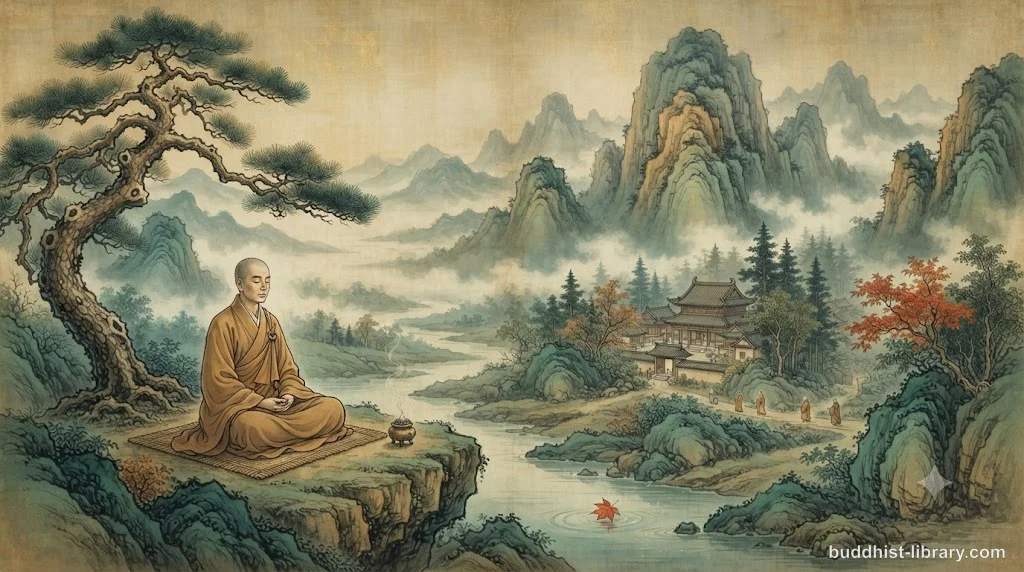
Virāga is the fading away of passion, craving, and attachment—a gradual cooling of the fires that drive suffering. In the Buddha’s teaching, it’s not cold indifference. It’s the natural release that comes from seeing clearly. The shift from being controlled by desire to experiencing genuine freedom.
This quality stands at the heart of the path to liberation, appearing again and again in the suttas as the gateway to peace.
What Does Virāga Mean?
The Pali word virāga combines vi- (away, without) and rāga (passion, attachment, lust). It literally means “fading of color” or “discoloration”—evoking the image of a vibrant cloth gradually losing its dye.
In Buddhist psychology, virāga describes the progressive weakening and eventual dissolution of craving (taṇhā) and attachment (upādāna). Unlike mere suppression, it’s not about forcing yourself not to want things. It’s the natural result of wisdom (paññā). When you see the impermanent, unsatisfactory nature of conditioned things, passion for them fades on its own. The grip loosens. What once seemed irresistibly compelling becomes… less interesting.
The Buddha frequently paired virāga with nirodha (cessation) and nibbāna (liberation), showing it as a defining characteristic of the awakened mind. In the Fire Sermon (Ādittapariyāya Sutta, SN 35.28), he taught that through dispassion toward the senses and their objects, one becomes free.
How Does Virāga Differ from Aversion?
This is crucial: virāga is not pushing away, rejecting, or hating what you once desired. That would simply replace one unwholesome state (lobha—greed) with another (dosa—aversion). True dispassion is characterized by equanimity (upekkhā)—a balanced, clear-minded freedom from both attraction and repulsion.
Think of it this way: when you’re attached to chocolate cake, you crave it, chase it, feel incomplete without it. Force yourself to avoid it through willpower while still craving it? You’ve created tension—aversion masquerading as discipline.
But when virāga arises, you simply… don’t need it. You might enjoy a piece if it’s offered, or not. Either way, there’s no inner pull, no sense of lack.
That’s freedom.
The Āneñjasappāya Sutta (MN 106) distinguishes between dispassion for sensual pleasures, dispassion for form, and dispassion for feeling—showing that virāga can mature at different levels of refinement, from giving up gross attachments to relinquishing subtle clinging to meditative states.
Key Points About Virāga
- Fading, not forcing: Virāga arises naturally from insight into impermanence (anicca), suffering (dukkha), and non-self (anattā)—not from willpower or self-denial.
- Gateway to nibbāna: The Buddha described the path as “dispassion, cessation, peace”—virāga is the experiential shift that makes liberation accessible.
- Progressive development: You don’t wake up one day completely dispassionate. It develops in stages—laypeople experience it, stream-enterers deepen it, arahats embody it fully.
- Not indifference: Freedom from attachment doesn’t mean you stop caring. Awakened beings are deeply compassionate and engaged, but they don’t cling.
- Applies to everything: Virāga encompasses dispassion toward sensual pleasures, views, rituals, the notion of self—any object of clinging.
How Do You Cultivate Virāga?
The Buddha’s teaching offers a clear path, though the journey is personal and gradual.
Through Insight Meditation (Vipassanā)
Direct observation of impermanence is the most powerful catalyst for virāga.
When you see firsthand that pleasurable experiences don’t last, that they arise and pass beyond your control, attachment naturally weakens. This isn’t intellectual understanding—it’s visceral recognition. Body-level knowing.
The Anattalakkhaṇa Sutta (SN 22.59) shows the Buddha leading his disciples to dispassion by guiding them to see that the five aggregates (form, feeling, perception, mental formations, consciousness) are not-self, impermanent, and subject to suffering. When you truly see this, the mind releases its hold.
Through Mindfulness Practice
Mindfulness (sati) reveals craving in real time—the moment-by-moment grasping at pleasant experiences and pushing away unpleasant ones. As you watch these patterns without acting on them, their compulsive power diminishes. You learn to be with desire without being driven by it. Over time, this creates space for virāga to emerge.
The Four Foundations of Mindfulness provide a complete framework for this practice, training the mind to observe body, feelings, mind states, and mental patterns with equanimity.
Through Wise Reflection
Contemplating the drawbacks (ādīnava) of sensual pleasure and the benefits (ānisaṃsa) of renunciation supports dispassion. The Buddha didn’t demonize pleasure. He invited practitioners to see clearly: Is this truly satisfying? Does it lead to peace? What does it cost in terms of time, energy, and entanglement?
This isn’t morbid pessimism. It’s honest assessment.
When you see that even the best worldly pleasures are fleeting, stressful, and ultimately disappointing, the allure fades.
Through Ethical Conduct (Sīla)
Living by the Five Precepts naturally reduces opportunities for attachment to take root. When you’re not chasing intoxication, sexual conquests, or ill-gotten gains, you starve the conditions that feed craving. Ethical restraint isn’t just about avoiding harm—it simplifies life and creates the stability needed for deeper practice.
Through Meditative Absorption (Jhāna)
The concentrated mind experiences a refined happiness that makes sensual pleasures seem coarse by comparison. This isn’t forced renunciation—it’s discovering something better. The pleasure of the jhānas points toward even subtler forms of well-being, supporting progressive dispassion.
What Are the Stages of Virāga?
Buddhist texts describe dispassion developing in stages that correspond to the four stages of awakening:
Stream-enterer (sotāpanna): Has enough virāga toward wrong views and attachment to rituals to never again be reborn in lower realms. Some sensual desire and attachment to existence remain.
Once-returner (sakadāgāmi): Sensual desire and ill-will are significantly weakened but not eliminated.
Non-returner (anāgāmī): Complete virāga toward sensual desire. No longer drawn back to the sensual realm.
Arahat: Perfect dispassion toward everything—all craving has ceased, including subtle attachment to existence itself. This is complete liberation.
Does Virāga Mean Giving Up Everything You Love?
No. And this is where people often misunderstand the teaching.
Virāga doesn’t mean you can’t enjoy beauty, music, good food, loving relationships, or meaningful work. It means you’re no longer enslaved by them. You don’t need them to feel whole.
The difference is profound: when you’re attached, loss creates anguish. When you’re dispassionate, you can appreciate something fully while it’s here and let it go when it’s time. You engage without entanglement. You love without clinging.
The Buddha himself spoke of “blameless pleasures” and encouraged laypeople to enjoy the fruits of their honest livelihood. What he warned against was addiction—the cycle of craving, grasping, and suffering that comes from believing external things can provide lasting fulfillment.
How Does Virāga Lead to Nibbāna?
The causal sequence is direct: craving (taṇhā) is the fuel that keeps the fires of suffering burning. When craving fades—when virāga deepens—those fires lose their fuel and go out. That “going out” is nibbāna.
The Buddha described it this way: “This is peace, this is the sublime—the stilling of all formations, the relinquishment of all attachments, the destruction of craving, dispassion, cessation, nibbāna” (AN 3.32).
Virāga is the lived experience of this relinquishment. It’s not a philosophical position but a felt shift—the actual release of what you’ve been holding onto. And in that release, you discover what was always there beneath the grasping: freedom, ease, profound peace.
Conclusion
Virāga points to the possibility of genuine freedom. Not through acquiring more, but through needing less. Not through controlling everything, but through releasing the compulsion to control.
You can taste this quality in small ways right now: the moment you let go of a petty resentment. The relief of simplifying your life. The spaciousness that comes when you stop chasing the next thing.
These are glimpses of dispassion—and they point toward something far greater.
The path to virāga is the path itself: ethical living, meditative training, the cultivation of wisdom. As these ripen, attachment naturally loses its grip. What once seemed impossible—living without being driven by desire—becomes the most natural thing in the world.
Read more:
- What Is Taṇhā? Understanding Craving in Buddhism — Virāga is the direct antidote to taṇhā; understanding craving reveals why dispassion is so freeing.
- What Is Nirvana (Nibbāna)? Meaning and Misconceptions — Virāga is the path to nibbāna; see how the cessation of craving leads to liberation.
- The Noble Eightfold Path: A Complete Guide — The complete framework for developing virāga through ethical conduct, meditation, and wisdom.
📖 Source / license: Saṃyutta Nikāya 22.59 (Anattalakkhaṇa Sutta), Saṃyutta Nikāya 35.28 (Ādittapariyāya Sutta), Majjhima Nikāya 106 (Āneñjasappāya Sutta). Translations: Bhikkhu Bodhi, *The Connected Discourses of the Buddha*; Ṭhānissaro Bhikkhu, Access to Insight.
Frequently asked questions
Is virāga the same as not caring about anything?
No. Virāga is freedom from possessive attachment, not indifference. You can still care deeply, love others, and engage fully with life—but without the clinging that creates suffering. The Buddha showed great compassion while being completely free from attachment.
Do I have to become a monk to develop virāga?
Not at all. While monastic renunciation supports the development of virāga, laypeople can cultivate dispassion through meditation, ethical conduct, and wise reflection. The key is reducing craving and clinging in your daily life, whatever your circumstances.
How is virāga different from detachment?
Virāga is often translated as 'detachment,' but it's more precisely the 'fading away' or 'discoloring' of passion and craving. It's not a forced pushing away, but a natural letting go that arises from seeing things clearly. True virāga feels like freedom, not suppression.
Can you experience virāga gradually, or does it happen all at once?
Both. Virāga develops gradually through practice—you notice desires losing their grip bit by bit. But there can also be breakthrough moments of insight where a particular attachment suddenly dissolves. For most practitioners, it's a progressive deepening over time.