Working with Doubt (Vicikicchā) in Buddhist Practice: A Practical Guide
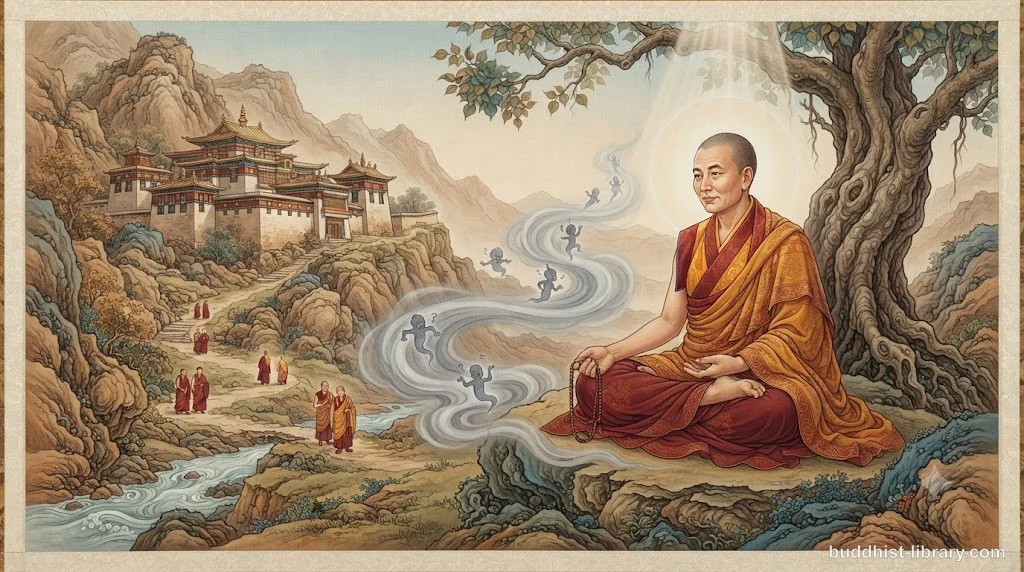
Doubt (vicikicchā) is the hindrance that whispers “maybe this isn’t working” just when your practice begins to deepen. It’s the mental static that turns clarity into confusion, freezing you in indecision at every crossroad. Unlike healthy investigation, vicikicchā doesn’t seek answers—it endlessly questions without resolution, paralyzing your practice and undermining confidence in the path.
Vicikicchā is one of the five hindrances (nīvaraṇa)—mental obstacles that cloud the mind and obstruct meditation. While the other hindrances (sensual desire, ill will, sloth, restlessness) are more visceral, doubt operates subtly, corroding trust from within. It asks: “Is the Buddha’s teaching true? Am I practicing correctly? Will this ever lead anywhere?”
Understanding how to work with doubt is essential for any serious practitioner. This guide explores what vicikicchā is, why it arises, and how to transform it from an obstacle into an opportunity for deeper understanding.
What Is Vicikicchā? Understanding Doubt as a Hindrance
Vicikicchā is often translated as “doubt,” but the Pali term carries a specific meaning: skeptical indecision that prevents action. It’s not the healthy questioning encouraged in the Kālāma Sutta—where the Buddha invited people to test his teachings through direct experience. Rather, vicikicchā is the paralysis that comes from endless uncertainty without investigation.
In the suttas, the Buddha described doubt as one of the five mental hindrances that block concentration and insight. While desire pulls you toward objects, and aversion pushes you away, doubt leaves you frozen in place, unable to commit to the practice.
The Three Domains of Doubt
Traditional commentaries identify three primary areas where vicikicchā manifests:
- Doubt about the Teacher — “Was the Buddha truly awakened? Can I trust his guidance?”
- Doubt about the Teaching — “Is the Dhamma actually true? Does the path really lead to liberation?”
- Doubt about the Community — “Are these practitioners genuine? Is the Sangha worth taking refuge in?”
In modern practice, doubt also appears as:
- Doubt about technique — “Am I meditating correctly? Should I switch methods?”
- Doubt about oneself — “Maybe I’m not capable of this. Perhaps enlightenment is only for others.”
- Doubt about results — “Is anything actually happening? Am I wasting my time?”
Why Does Doubt Arise in Meditation?
Doubt doesn’t appear randomly. It has specific conditions that give rise to it, and understanding these can help you work with it skillfully.
Lack of Clear Understanding
The Buddha identified “unwise attention” (ayoniso manasikāra) as a key condition for doubt. When you don’t understand the purpose of a practice, or when instructions are vague, the mind naturally questions: “Why am I doing this?” Without a clear map, doubt fills the gap.
This is why study (pariyatti) supports practice (paṭipatti). Reading the suttas, understanding the gradual training, and clarifying the path’s structure all reduce the fertile ground where doubt grows.
Encountering Unfamiliar Territory
As your practice deepens, you enter states and insights you’ve never experienced before. The mind, encountering the unfamiliar, responds with doubt as a form of self-protection. “This is strange—am I doing it wrong?”
The arising of the jhānas, for instance, can trigger intense doubt: “This feels too good to be ‘real’ meditation. Shouldn’t practice be harder?” Such doubt is often a sign of progress, not failure.
Cultural Conditioning and Hidden Beliefs
Many practitioners carry unconscious doubts rooted in cultural conditioning:
- Secular skepticism that questions all religious or contemplative claims
- Perfectionism that demands constant measurable progress
- Comparisons with others (“Their practice seems more advanced than mine”)
These aren’t character flaws—they’re the legacy of growing up in a culture that values productivity, certainty, and external validation. Recognizing these patterns is the first step toward loosening their grip.
The Difference Between Healthy Investigation and Harmful Doubt
Not all questioning is vicikicchā. The Buddha encouraged investigation (dhamma vicaya)—one of the seven factors of enlightenment. How do you distinguish between the two?
Healthy Investigation:
- Moves you forward through inquiry and experimentation
- Seeks to test teachings through direct experience
- Leads to clearer understanding and refined practice
- Energizes your commitment to the path
Harmful Doubt (Vicikicchā):
- Freezes you in indecision and second-guessing
- Spins in endless loops without resolution
- Undermines confidence and weakens practice
- Drains energy and motivation
Ask yourself: “Is this question moving me toward understanding, or is it keeping me stuck?” If your doubt leads to experimentation and learning, it’s investigation. If it leads to paralysis and withdrawal, it’s vicikicchā.
How to Work with Doubt: Practical Strategies
The Buddha’s approach to obstacles was always practical: understand the condition, see its danger, and apply the appropriate antidote. Here are time-tested methods for working with doubt.
1. Recognize Doubt as a Hindrance (Not as Truth)
The first and most crucial step is to see doubt for what it is—a temporary mental state, not an accurate assessment of reality. When doubt says, “This practice isn’t working,” that’s not a fact; it’s a hindrance speaking.
Label it: “This is doubt.” Name it clearly, without judgment. In that moment of recognition, you’ve already created space between yourself and the hindrance. Doubt loses much of its power when it’s seen rather than believed.
2. Investigate the Doubt Itself
Rather than trying to answer doubt’s endless questions, turn the lens around: investigate the doubt itself. Notice:
- Where do you feel it in the body? (Often as tension in the chest or forehead)
- What thoughts accompany it?
- What is the emotional tone? (Anxiety? Fear? Frustration?)
- What conditions triggered it? (A difficult sit? A conversation? Reading something?)
This investigation transforms doubt from a problem into an object of meditation. You’re no longer fighting it—you’re observing it with the same mindfulness you bring to the breath.
3. Return to the Basics
When doubt becomes overwhelming, simplify your practice. Let go of advanced techniques, complex frameworks, and ambitious goals. Return to:
- Posture: sit with stability and ease
- Breath: follow the natural rhythm of breathing
- Present moment: just this breath, just this body, just now
Often doubt arises because we’ve overcomplicated things. The breath is always here, always reliable. Returning to it cuts through the tangle of uncertainty.
4. Seek Guidance from the Sangha
The Buddha established the Sangha—the community of practitioners—as one of the Three Refuges for a reason. Doubt thrives in isolation. When you’re alone with your questions, they grow larger and more urgent.
Talk to a teacher. Discuss your practice with fellow meditators. Often, you’ll discover that others have walked this same ground. A few words from someone who’s been where you are can dissolve months of doubt.
This is not blind faith—it’s the wisdom of learning from those who’ve navigated the path before you.
5. Study the Teachings (Deepen Understanding)
Doubt rooted in ignorance dissolves through study. If you’re uncertain about the path, read the suttas. If you’re confused about technique, study the Satipaṭṭhāna Sutta or other meditation instructions.
The more you understand the structure of the path—how concentration (samādhi) supports insight (paññā), how the hindrances work, why certain practices lead to specific results—the less room there is for doubt to operate.
Knowledge isn’t a substitute for practice, but it provides the context that allows practice to unfold with confidence.
6. Test the Teachings Through Experience
The Buddha’s final instruction was: “Be a lamp unto yourselves.” This is the ultimate antidote to doubt—not blind belief, but direct verification through practice.
If you doubt whether mindfulness leads to insight, commit to consistent practice for a set period (e.g., 30 days of daily sitting) and observe the results. If you doubt whether generosity leads to happiness, practice dāna intentionally and notice the effects.
The Buddha didn’t ask anyone to believe him. He asked them to try the path and see for themselves. When doubt arises, shift from questioning to experimenting.
7. Remember Past Experiences of Clarity
Doubt often has selective memory—it highlights failures and forgets successes. Intentionally recall moments when your practice was clear:
- A time when mindfulness helped you navigate a difficult situation
- A meditation sit where the mind settled into peace
- An insight that changed your understanding
These memories aren’t fantasies. They’re evidence—your own evidence—that the path works. Recollecting them counters doubt’s selective memory without clinging to the past.
When Doubt Becomes a Teacher
There’s a paradox at the heart of working with vicikicchā: the doubt that questions your practice can deepen your understanding—if you relate to it wisely.
Doubt forces you to clarify your intentions. It asks: “Why are you doing this?” If you can’t answer, maybe the question is worth sitting with. Are you practicing to conform to an image? To achieve a spiritual status? Or because you’ve tasted something genuine and want to go deeper?
Doubt also reveals attachment. When you doubt whether a meditation technique is “working,” it often points to an unexamined expectation: “I should be experiencing X by now.” That expectation itself is a form of craving. Seeing it clearly is a step toward letting go.
In this way, vicikicchā can be a gateway to wise attention (yoniso manasikāra)—if you’re willing to investigate it rather than indulge it.
The Role of Faith (Saddhā) in Overcoming Doubt
In Buddhism, faith (saddhā) isn’t blind belief—it’s provisional confidence based on preliminary evidence. You don’t need absolute certainty to practice; you need enough trust to take the next step.
Think of it like crossing a bridge you haven’t fully tested. You see that others have crossed safely. The structure looks sound. You take a tentative step, then another. Each step that doesn’t collapse increases your confidence. By the time you reach the other side, you know from direct experience that the bridge holds.
Faith in the Buddhist sense works the same way:
- You hear the teaching (or read it)
- You find it reasonable and worth testing
- You practice with provisional trust
- You observe results in your own experience
- Confidence deepens, grounded in understanding
This is why doubt (vicikicchā) is said to be abandoned at stream-entry. The stream-enterer has walked far enough on the path to know from direct experience that it leads where the Buddha said it would. Doubt based on ignorance is gone—though questions rooted in investigation continue.
Doubt as a Fetter: The Traditional View
In the traditional scheme of the ten fetters (saṃyojana)—the bonds that keep beings tied to suffering and rebirth—vicikicchā is the second fetter, eliminated at the first stage of awakening (sotāpanna, or stream-entry).
This isn’t just a doctrinal point. It reflects a deep truth about the spiritual path: as long as you’re fundamentally uncertain about the Buddha, Dhamma, and Sangha, your practice will waver. You’ll be pulled between competing views, unable to commit fully.
The stream-enterer doesn’t become omniscient or free of all questions. But the paralyzing doubt—the uncertainty that undermines practice itself—is gone. There’s an unshakable confidence: “This path leads to liberation. I may not be there yet, but I know the way.”
For those of us not yet at stream-entry, this teaching offers encouragement: doubt isn’t permanent. It’s one of the obstacles cleared through sustained practice and deepening insight.
Conclusion: From Paralysis to Confidence
Doubt, when unrecognized, is a thief. It steals your time, drains your energy, and keeps you circling the same questions without resolution. But when seen clearly, doubt becomes a teacher—revealing hidden expectations, clarifying your intentions, and pushing you toward deeper investigation.
The path from vicikicchā to confidence isn’t about forcing belief or suppressing questions. It’s about:
- Recognizing doubt as a hindrance, not as truth
- Investigating it as a mental formation, not indulging its stories
- Simplifying practice when complexity breeds confusion
- Seeking guidance from those who’ve walked this path
- Testing the teachings through direct experience
- Cultivating provisional faith that allows you to take the next step
The Buddha didn’t ask anyone to believe him blindly. He asked them to practice, observe, and verify for themselves. If you’re willing to do that—to meet doubt with curiosity rather than fear—you’ll find that the path reveals itself, one step at a time.
Read more:
- The Five Hindrances (Nīvaraṇa): Overcoming Obstacles to Meditation — A comprehensive guide to all five mental obstacles, including vicikicchā, and how they interact in practice.
- The Kālāma Sutta: The Buddha on Independent Inquiry and Free Thinking — The Buddha’s famous teaching on healthy skepticism and why it’s essential to test spiritual claims through direct experience rather than blind faith.
- What Is Stream Entry (Sotāpanna)? The First Stage of Buddhist Awakening — Explore the first stage of awakening where doubt as a fetter is permanently eliminated, and what that means for practice. s for practice.
📖 Source / license: Nīvaraṇa teachings (SN 46.51, AN 9.64), Satipaṭṭhāna Sutta (MN 10), and contemporary teachers including Ṭhānissaro Bhikkhu
Frequently asked questions
What is the difference between healthy skepticism and harmful doubt in Buddhism?
Healthy skepticism (the spirit of the Kālāma Sutta) involves active investigation and testing teachings through direct experience. Harmful doubt (vicikicchā) is paralysis—endless questioning that prevents practice and leads to indecision. Skepticism moves you forward; vicikicchā freezes you in place.
Why does doubt arise more strongly during meditation?
Meditation removes external distractions, making internal uncertainty more visible. When the mind quiets, doubt often surfaces as a defense mechanism against unfamiliar territory. The practice itself can trigger existential questions: 'Am I doing this right? Is this even working? Should I try a different technique?' This is normal and part of the purification process.
Can doubt ever be completely eliminated?
According to the traditional path, vicikicchā as a fetter is eliminated at stream-entry (sotāpanna). However, this doesn't mean all questions cease—it means the paralyzing uncertainty about the Buddha, Dhamma, and Sangha is resolved through direct insight. Functional questioning continues; dysfunctional doubt ends.
What should I do when doubt about my meditation practice becomes overwhelming?
First, recognize doubt as one of the five hindrances—a natural obstacle, not a personal failure. Second, return to basics: reestablish your posture, reconnect with the breath, and simplify your technique. Third, seek guidance from experienced teachers or the Sangha. Often doubt dissolves when we stop fighting it and instead observe it as just another mental formation.