How to Work with Physical Pain During Meditation: A Buddhist Guide
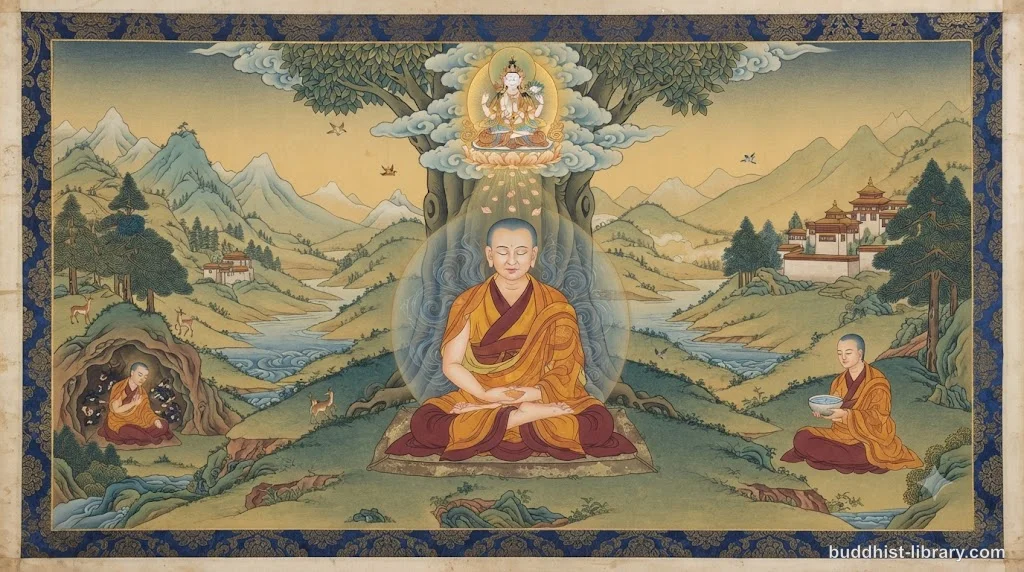
Physical pain during meditation is inevitable — and the Buddha taught specific methods to work with it skillfully. Rather than enduring pain as a test or immediately shifting position, Buddhist practice treats pain as vedanā (feeling-tone), one of the four foundations of mindfulness, offering a powerful opportunity to develop equanimity and insight into the impermanent nature of all sensations.
Pain is one of the most common obstacles new meditators face. It’s also one of the most misunderstood.
Some traditions glorify sitting through extreme discomfort as a badge of dedication. Others advocate immediate adjustment at the slightest twinge. The Buddha’s teaching, as preserved in the Pali Canon, cuts through both extremes: investigate pain with mindful awareness, learn from it, respond intelligently rather than reactively.
What Does the Buddha Say About Pain in Meditation?
The foundational text is the Satipaṭṭhāna Sutta (MN 10), where the Buddha outlines four foundations of mindfulness. The second foundation — vedanānupassanā (contemplation of feeling-tones) — explicitly includes painful sensations as objects of meditation:
“When feeling a painful feeling, one knows: ‘I am feeling a painful feeling.’ One understands a painful feeling as it arises, as it is present, as it passes away.” — MN 10 (SuttaCentral translation)
Pain is not presented as something to eliminate or heroically endure, but as a phenomenon to know directly. The instruction is clear: when pain arises, recognize it; observe its characteristics; notice when it changes or fades.
The Buddha also distinguished between two types of suffering in several discourses:
- Kāyika vedanā (bodily feeling) — the raw physical sensation
- Cetasika vedanā (mental feeling) — the emotional reaction, resistance, or story we add
As Ṭhānissaro Bhikkhu explains in his commentary on the Sallatha Sutta (SN 36.6), most people experience pain as “two arrows”: the physical sensation (first arrow) plus the mental suffering of aversion, fear, and “why is this happening to me?” (second arrow). Meditation trains us to experience only the first arrow.
Why Does Physical Pain Arise During Meditation?
Understanding the causes helps. When you know why pain appears, you respond with intelligence instead of defeat.
Postural Adjustment
Your body is learning a new position.
Most people don’t sit cross-legged or upright without back support in daily life. Muscles unaccustomed to holding the meditation posture will fatigue and ache. This is normal. It typically improves with consistent practice.
Releasing Stored Tension
Meditation brings awareness to chronic tension you’ve been carrying unconsciously.
As the mind settles, you notice tightness in the jaw, shoulders, lower back — always there, previously ignored. This heightened sensitivity isn’t a problem. It’s progress.
Reduced Distraction Amplifies Sensation
In daily life, your attention scatters across dozens of stimuli. In meditation, with fewer distractions, sensations that would normally be background noise move to the foreground. A mild knee ache you’d ignore while walking becomes vivid when sitting still.
Actual Physical Issues
Sometimes pain signals a genuine problem — poor alignment, an old injury aggravated by posture, or a condition requiring medical attention. The practice is to discern this honestly.
The Five-Step Method for Working with Pain
This approach synthesizes classical instructions from the Nikāyas with practical guidance from contemporary Theravāda teachers like Ajahn Chah and Bhikkhu Anālayo.
1. Notice and Name
When pain first appears, acknowledge it clearly: “Pain is present.” This simple recognition prevents the common pattern of pretending it’s not there while subtly tensing against it. Use neutral language internally — not “this terrible pain” but just “pain” or “unpleasant sensation.”
2. Investigate Its Characteristics
Turn toward the pain with curiosity rather than aversion. Ask (silently):
- Where exactly is the sensation? (Knee, lower back, left ankle?)
- What quality does it have? (Sharp, dull, burning, aching, throbbing, tingling?)
- Is it constant or does it pulse, wave, or change intensity?
- What is its size — a point, a region, does it spread?
This investigation engages the factor of dhamma-vicaya (investigation of phenomena), one of the seven factors of enlightenment. You’re treating pain as an object of study, not an enemy.
3. Observe Impermanence (Anicca)
No sensation is truly static. Even intense pain fluctuates subtly — moment to moment, breath to breath. Can you detect:
- Moments when it intensifies?
- Moments when it lessens slightly?
- The space between pulses or waves?
Recognizing impermanence at the level of sensation weakens the mind’s tendency to reify pain into a solid, unchanging “thing.” As the Dhammapada (277) states: “All conditioned things are impermanent.” Pain included.
4. Relax the Resistance
Notice the mental reaction to pain — the clenching, the internal “I don’t want this,” the bracing. This is the second arrow. You can’t control the sensation itself, but you can soften the layer of resistance around it.
Try breathing into the painful area (imagining breath flowing to and from that spot), or consciously relaxing muscles surrounding the pain. Sometimes resistance creates 50% of the discomfort.
5. Adjust Position If Necessary
If pain becomes sharp, shooting, or so intense it overwhelms all other awareness, change position mindfully. This is not “failure” — it’s wise discernment (yoniso manasikāra). Shift slowly, maintaining awareness of the intention to move, the movement itself, and the new position. Then resume meditation.
The Buddha himself adjusted posture during meditation, as recorded in several suttas. Skillful practice is not rigidity; it’s responsiveness informed by wisdom.
What About Chronic Pain or Medical Conditions?
For practitioners living with chronic pain, arthritis, old injuries, or disabilities, the relationship with pain requires additional nuance.
Consult your body: if a posture aggravates a known condition, modify it from the start. Use cushions, benches, chairs, or lie down. The Buddha taught many meditation postures (sitting, standing, walking, lying down) — the point is mindfulness, not a specific configuration of limbs.
Pain as primary object: some practitioners with chronic pain make the sensation itself the central focus of practice. Shinzen Young, drawing on Mahāsi Sayadaw’s noting technique, guides meditators to break pain into components — location, intensity, emotional tone — and observe each with precision. For some, this transforms suffering into a powerful doorway to insight.
Equanimity is the fruit: the goal is not to make pain disappear (though it sometimes does) but to change your relationship to it — meeting it with balance (upekkhā) rather than reactivity. As Ajahn Chah taught: “If you let go a little, you will have a little peace. If you let go a lot, you will have a lot of peace.”
Common Mistakes to Avoid
Treating Pain as an Enemy
Pain is a messenger, not an invader.
Approaching it with hostility creates more tension — the very thing you’re trying to release. Cultivate interested investigation instead. Think of yourself as a scientist observing a natural phenomenon, not a soldier fighting an enemy.
Sitting Through Harmful Pain
“Heroic endurance” is not the teaching. Sharp, shooting, worsening pain — especially in knees, back, or neck — can indicate injury. Honor these signals. Your meditation practice should support your body’s long-term health, not sacrifice it.
Constantly Fidgeting
At the opposite extreme, shifting position every few minutes at the first hint of discomfort prevents depth. Find a balance: give each posture enough time to settle (at least 10–15 minutes unless pain is acute), but don’t force yourself into rigidity.
Expecting Pain to Vanish
Some pain will dissolve with mindful attention; some will persist. The practice is not about outcomes (making pain go away) but about process (knowing pain clearly as it is). Paradoxically, releasing the demand that pain stop often allows it to shift.
Practical Posture Tips
While posture advice varies by body type and flexibility, these principles apply broadly:
For sitting meditation:
- Cushion height matters: if your hips are lower than your knees, lower back pain is almost guaranteed. Elevate your seat until hips are slightly higher.
- Alignment, not rigidity: the spine should be upright but not stiff. Think “stacked and relaxed” — ears over shoulders over hips.
- Knees supported: if cross-legged, both knees should touch the ground or be supported by cushions. Suspended knees create strain.
Alternative postures:
- Seiza bench (kneeling with support): reduces knee and hip strain
- Chair: feet flat, back upright, hands resting — entirely legitimate
- Walking meditation: for bodies that cannot sit still for extended periods
Bhikkhu Anālayo, in his study Satipaṭṭhāna: The Direct Path to Realization, notes that the suttas emphasize mental posture (alert, relaxed awareness) far more than physical configuration.
When Pain Becomes the Teacher
Some of the deepest insights in Buddhist practice arise through sustained, mindful investigation of pain.
Why? Because pain unmasks the mind’s habitual patterns like nothing else. Craving for pleasure. Aversion to discomfort. The desperate attempt to control what cannot be controlled. When you sit with pain — neither indulging the story nor suppressing the sensation — you watch these patterns operate in real time, stark and undeniable.
The Girimananda Sutta (AN 10.60) recounts how the Buddha taught a sick monk to contemplate impermanence directly through his illness. The monk, close to death and in intense pain, used his suffering as the object of insight meditation — and attained liberation.
You don’t need to be on your deathbed to apply this teaching. Every session with discomfort is an opportunity to see:
- Sensations arise without your permission (not-self)
- They change constantly (impermanence)
- Clinging to comfort and pushing away discomfort creates suffering (dukkha)
Key Takeaways
- Pain during meditation is normal and, handled skillfully, beneficial to practice
- The Buddha taught investigating pain as vedanā — one of the four foundations of mindfulness
- Distinguish physical sensation (first arrow) from mental resistance (second arrow)
- Use the five-step method: notice, investigate, observe impermanence, relax resistance, adjust if needed
- Sharp or worsening pain is a signal to adjust; dull, stable ache can be worked with mindfully
- Modify posture for chronic pain or injury — the goal is awareness, not a specific body position
- Pain teaches impermanence, not-self, and the nature of clinging more vividly than abstract concepts
Conclusion
The Buddha’s teaching on pain in meditation is radically practical. It’s neither masochistic endurance nor constant avoidance. It’s clear seeing.
Pain is dukkha made tangible — a lived opportunity to understand the First Noble Truth not as philosophy but as direct experience. Every ache, every throb, every wave of discomfort is the teaching itself.
When you learn to meet pain with mindful curiosity rather than reflexive resistance, you develop a skill that extends far beyond the cushion. Life will bring discomfort — physical, emotional, circumstantial. The equanimity cultivated here becomes a foundation for meeting all of it with wisdom.
The Sallatha Sutta offers the clearest summary: you cannot prevent the first arrow (pain is part of conditioned existence), but you can choose not to shoot the second (the suffering we create through aversion and clinging). That choice, practiced moment by moment on the meditation cushion, is the heart of the path.
Read more:
- The Five Hindrances (Nīvaraṇa): Overcoming Obstacles to Meditation — learn how aversion (one of the five hindrances) creates resistance to pain and how to work with it skillfully.
- What Is Vedanā? Understanding Feeling in Buddhist Meditation — explore the Buddha’s teaching on feeling-tone (vedanā), the framework for understanding all pleasant, painful, and neutral sensations.
- The Satipaṭṭhāna Sutta: Foundations of Mindfulness Explained — read the full discourse where the Buddha teaches contemplation of vedanā as one of the four foundations of mindfulness.
📖 Source / license: Satipaṭṭhāna Sutta (MN 10), Discourse on the Foundations of Mindfulness — https://suttacentral.net/mn10
Frequently asked questions
Should I sit through pain during meditation or change position?
The Buddha taught a middle way: investigate pain mindfully first, but if it becomes overwhelming or risks injury, adjust your position wisely. Pain is a teacher, not a test of endurance.
How do I tell the difference between 'good' pain and harmful pain in meditation?
Harmful pain is sharp, shooting, or worsening — signals of potential injury. 'Practice pain' is dull, achy, and stable — muscular tension from holding posture. Always honor sharp pain immediately.
Can physical pain actually help my meditation practice?
Yes. The Buddha taught that vedanā (feeling-tone) — including painful sensations — is one of the four foundations of mindfulness. Pain provides a vivid object for developing equanimity and insight into impermanence.
What if the pain is so intense I can't focus on anything else?
Make the pain itself your primary meditation object. Investigate its qualities with curiosity: where exactly is it? Does it pulse, burn, or ache? Is its intensity constant or changing? This transforms resistance into investigation.