Buddhist Chanting and Paritta: Protective Verses in Practice
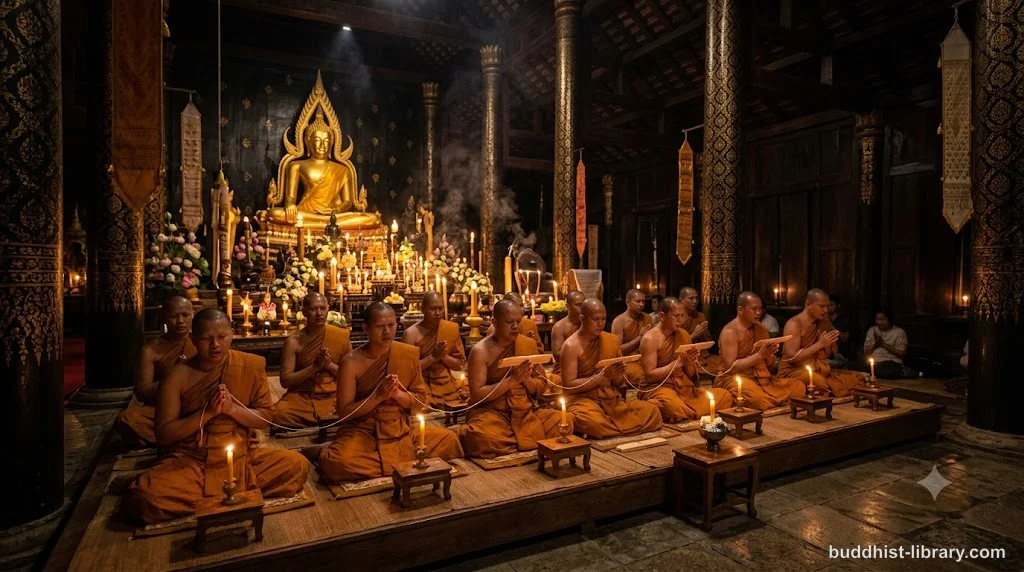
Buddhist paritta (Pāli: paritta, meaning “protection”) refers to protective verses—selected passages from the Pāli Canon chanted or recited for blessing, safeguarding, and cultivating wholesome states of mind. Rooted in Theravāda tradition and practiced across Buddhist cultures, paritta combines devotion, mindfulness, and the power of the Buddha’s words to inspire calm, courage, and spiritual protection in daily life.
What Is Paritta in Buddhism?
Paritta are specific suttas or verses extracted from the Tipiṭaka (Pāli Canon) and recited aloud—individually, in groups, or by monastics during ceremonies. The practice serves multiple purposes: invoking blessings, generating protective energy through wholesome mental states, focusing the mind, and recollecting the Dhamma’s truth.
Unlike magical spells, paritta works through psychological and spiritual mechanisms. When you chant with concentrated attention and devotion, you’re cultivating mettā (loving-kindness), sati (mindfulness), and sammā-diṭṭhi (right view)—wholesome mental factors that naturally protect the mind from fear, anger, and delusion. The verses themselves remind you of core teachings, anchoring awareness in the Dhamma during moments of uncertainty or danger.
Historically, the Buddha himself recommended certain discourses for protection. In the Ratana Sutta, he instructed monks to recite specific verses to ward off illness and calamity in Vesālī. The canon records monks chanting suttas before traveling dangerous roads, entering forests, or facing hostile beings—not as supernatural armor, but as a way to steady the mind and radiate goodwill.
How Does Paritta Provide Protection?
Paritta’s protective power is not mystical—it’s practical psychology grounded in the Dhamma:
-
Mindfulness cultivation: Reciting or listening to paritta requires attention, anchoring you in the present moment and preventing mental proliferation (papañca)—the runaway worry that amplifies fear.
-
Wholesome mental states: Chanting verses on mettā (loving-kindness) or karuṇā (compassion) generates those exact mental qualities, creating a mind-state incompatible with hatred, anxiety, or ill-will. This radiated goodwill can de-escalate interpersonal tension and calm aggressive environments.
-
Recollection of truth: Paritta verses remind you of impermanence (anicca), non-self (anattā), the power of virtue (sīla), and the Triple Gem’s refuge. Recalling these truths reorients perspective during crisis, reducing reactivity.
-
Confidence and moral strength: Repeated recitation builds psychological resilience. Knowing you’ve prepared your mind through practice gives you steadiness when facing illness, loss, or confrontation.
-
Community bonding: Group paritta chanting fosters collective calm and mutual support—valuable during disasters, hospital vigils, or funerals.
The Buddha framed protection in terms of mental purification. In the Maṅgala Sutta (Discourse on Blessings), he lists true protections: avoiding fools, associating with the wise, patience, contentment, virtue—qualities strengthened through regular paritta practice.
Common Paritta Verses and Their Uses
Here are the most widely chanted paritta in Theravāda Buddhism:
1. Ratana Sutta (Discourse on Treasures)
Celebrates the Triple Gem’s qualities. Traditionally chanted for protection from calamity, illness, and negative influences. Often recited at house blessings or during epidemics.
2. Mettā Sutta (Karaṇīya Metta Sutta)
The Buddha’s teaching on cultivating universal loving-kindness. Used to generate goodwill, protect against hostility, and calm fear. Ideal for beginners—short, melodic, and deeply moving.
3. Maṅgala Sutta (Discourse on Blessings)
Lists thirty-eight supreme blessings—from respecting parents to developing wisdom. Chanted for general well-being, auspicious occasions, and moral guidance.
4. Mora Paritta (Peacock Protection)
A verse in which the Buddha, in a past life as a peacock, recited protective words each dawn before foraging. Symbolizes starting the day with mindful recollection. Used for morning protection.
5. Khandha Paritta (Aggregate Protection)
A discourse on radiating mettā toward all beings, including snakes. Traditionally chanted for protection from animal attacks, nightmares, or environmental dangers.
6. Aṅgulimāla Paritta
The reformed bandit Aṅgulimāla’s verse on truth and harmlessness, spoken to ease a woman’s childbirth. Chanted for safe delivery and maternal health.
7. Bojjhaṅga Paritta (Seven Factors of Enlightenment)
Recounts the Buddha reciting the seven awakening factors to cure illness. Used during sickness to inspire healing and mental clarity.
Most paritta collections (paritta pota) compile these verses with Pāli text, romanization, and translations. “The Book of Protection,” edited by Ven. Piyadassi Thera, is a canonical English resource widely used in Theravāda communities.
How to Practice Paritta Chanting
Whether you’re chanting alone or in a group, the practice follows a similar structure:
1. Create a conducive environment
Light a candle or incense if you wish, sit in a quiet space, and adopt a posture of respect—hands in añjali (palms together) or resting mindfully. The physical setup signals your mind that this is sacred time.
2. Take refuge and precepts
Begin by reciting the Three Refuges (Tisaraṇa) and, if appropriate, the Five Precepts. This frames the chanting as an act of Dhamma practice, not mere ritual.
3. Chant with attention and devotion
Read or recite the chosen paritta aloud, either in Pāli (if you’ve learned it) or in translation. Focus on each word’s meaning or, if chanting phonetically, on the rhythm and your breath. The key is not mechanical repetition—bring genuine mindfulness and heartfelt intention.
4. Cultivate the corresponding mental state
If chanting the Mettā Sutta, actively generate loving-kindness as you speak. If reciting the Ratana Sutta, reflect on the Buddha’s qualities. Let the words awaken the Dhamma in your mind.
5. Dedicate merit
Conclude by sharing the merit (puñña) generated with all beings: “May all beings be happy, peaceful, and free from suffering.” This universalizes your practice and reinforces compassion.
Frequency: Daily paritta is common—many practitioners chant morning and evening as part of a devotional routine. During illness, danger, or emotional turmoil, you can chant more frequently. Some keep a paritta book by the bedside for pre-sleep recitation.
Learning the chant: Start by listening to recordings from monasteries (many are freely available online). Follow along with Pāli-English texts, then gradually practice reciting. Don’t worry about perfect pronunciation at first—sincerity matters more than technical accuracy.
The Role of Paritta in Contemporary Practice
Paritta remains vibrant in Theravāda countries—Sri Lanka, Thailand, Myanmar, Cambodia, Laos—where monks chant it at funerals, weddings, hospital visits, and national ceremonies. Laypeople invite monks to chant paritta at new homes, businesses, or during family crises, believing the collective recitation blesses the space and calms distressed minds.
In Western Buddhist communities, paritta is increasingly practiced as devotional meditation—a complement to silent sitting. Chanting engages the voice, body, and emotion in Dhamma practice, offering an accessible entry point for those who find purely silent meditation challenging.
Paritta also functions as portable Dhamma teaching. Because the verses are memorized and recited regularly, their content becomes internalized. A practitioner facing fear on a dark street instinctively recalls the Mettā Sutta’s words: “May all beings be free from enmity”—instantly shifting their mental state from panic to compassion.
Critically, paritta should not replace right effort or ethical action. It’s not a substitute for seeking medical treatment, resolving interpersonal conflict skillfully, or taking practical safety measures. The Buddha warned against superstitious reliance on rituals (sīlabbata-parāmāsa). Paritta works in conjunction with wisdom and moral conduct—not as a magical shortcut.
The Psychological Science Behind Paritta
Modern psychology aligns with the Buddha’s teaching on paritta’s mechanism:
- Anxiety reduction: Focused recitation activates the parasympathetic nervous system, reducing cortisol and heart rate—physiological markers of calm.
- Cognitive reframing: Verses like the Maṅgala Sutta reframe “blessings” as internal virtues rather than external luck, fostering an internal locus of control—a predictor of resilience.
- Loving-kindness priming: Studies on mettā meditation show that reciting phrases of goodwill increases empathy, reduces implicit bias, and enhances social connection—precisely what paritta aims to cultivate.
- Ritual grounding: In uncertainty, ritual provides structure and meaning, buffering against existential anxiety. Paritta offers a Dhamma-aligned ritual free from superstition.
The “protection” is real—not as a force field, but as a fortified mind less vulnerable to the defilements (kilesa) that cause suffering.
Key Principles for Paritta Practice
- Intentionality over automation: A single verse chanted with full mindfulness surpasses an hour of distracted recitation. Bring your whole attention to the practice.
- Understanding enhances, but isn’t mandatory: You don’t need fluent Pāli to benefit. Many chant phonetically while studying translations separately. Over time, familiarity with the verses deepens comprehension.
- Regular practice builds strength: Like physical exercise, paritta’s protective effect accumulates through consistency. Daily chanting conditions the mind to default to wholesomeness.
- Community amplifies power: Chanting in a group—whether at a monastery or online—creates shared intention and mutual encouragement, strengthening the collective field of mindfulness.
Paritta as a Gateway to Deeper Practice
For many practitioners, paritta serves as a stepping stone from cultural Buddhism to meditative Buddhism. Someone may begin chanting because their grandmother did, then gradually notice the verses’ profound teachings—prompting study of the suttas and eventually insight meditation.
Paritta also complements the Noble Eightfold Path: it embodies sammā-vācā (right speech) as the voice speaks Dhamma; sammā-sati (right mindfulness) as attention anchors in each word; sammā-samādhi (right concentration) as the mind unifies around the recitation. For householders balancing work and family, ten minutes of paritta chanting can be more accessible than sitting for an hour—yet still cultivating the same awakening factors.
Over time, practitioners often transition from protective motivations (“I want safety”) to devotional ones (“I want to honor the Dhamma”) to meditative ones (“I want to train my mind”). All three are valid—paritta meets you where you are.
Conclusion: Protection Through Dhamma
Buddhist paritta is neither superstition nor empty ritual. It’s a skillful means for embedding Dhamma truths in your daily life, cultivating wholesome mental states, and preparing the mind to meet life’s inevitable challenges with calm and compassion.
Whether you chant alone before sleep, join a community ceremony, or recite silently in your heart during a difficult moment, paritta transforms the Buddha’s words from abstract teachings into lived protection.
The real safeguard is not the syllables themselves but the mind shaped by them. A mind steeped in loving-kindness, grounded in impermanence, and confident in the Triple Gem. That is the ultimate paritta: a heart fortified by the Dhamma against the suffering born of ignorance and fear.
Read more:
- The Mettā Sutta: The Buddha’s Discourse on Loving-Kindness — The most widely chanted paritta verse, foundational for cultivating universal goodwill and psychological protection.
- The Maṅgala Sutta: The Buddha’s Teaching on True Blessings — Explores the thirty-eight supreme blessings, a core paritta text that reframes fortune as virtue and wisdom.
- Buddhānussati: Recollection of the Buddha in Meditation Practice — Another form of devotional meditation that shares paritta’s focus on recollection and refuge in the Triple Gem. e Gem.
📖 Source / license: Access to Insight (dhammatalks.org), SuttaCentral, 'The Book of Protection' edited by Piyadassi Thera
Frequently asked questions
Do I need to understand Pāli to benefit from paritta chanting?
No—the practice works through devotion, mindfulness, and the wholesome intention you bring. Many practitioners chant phonetically while studying translations separately. Understanding deepens the practice, but the concentrated, reverent act of chanting itself cultivates mindfulness and calm.
Can laypeople chant paritta, or is it only for monks?
Laypeople absolutely can and do chant paritta—both privately and in groups. While monastic communities traditionally chant for protection ceremonies, individual lay practitioners use paritta as daily devotional practice, before sleep, or during challenging times.
Is paritta chanting the same as magical protection?
No—paritta is not magic. The protective effect comes from cultivating wholesome mental states (mettā, sati, sammā-diṭṭhi) and strengthening mindfulness. The verses remind you of Dhamma truths and redirect the mind away from fear, creating psychological and spiritual protection rather than supernatural intervention.
Which paritta should I start with as a beginner?
The Mettā Sutta (Karaṇīya Metta Sutta) is ideal for beginners—it's short, widely available with translations, focuses on loving-kindness, and is melodically simple. Start by listening to recordings, then practice reciting along before attempting solo chanting.