Buddhist Daily Routine: How Monks and Laypeople Structure Their Day
A Buddhist monk’s day revolves around three pillars: meditation (both sitting and walking), alms collection before noon, and study or teaching of the Dhamma. Laypeople practice a simplified version—morning mindfulness, ethical work, and evening reflection—adapted to responsibilities outside the monastery while maintaining the core intention of continuous practice.
The Buddha didn’t prescribe a rigid timetable, but the Vinaya Piṭaka (the monastic code) and centuries of tradition have shaped a rhythm that supports awakening. Whether you’re considering ordination, visiting a monastery, or simply want to bring more structure to your home practice, understanding the Buddhist daily routine reveals how practice becomes a way of life—not just something you do for twenty minutes on a cushion.
What does a typical day look like for a Buddhist monk?
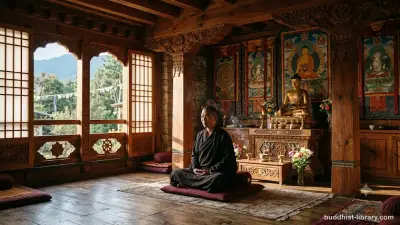
The monastic day begins in darkness. Most monks rise between 4:00 and 5:00 AM, often to the sound of a bell or wooden clappers signaling the community to gather. The first activity is early morning meditation (usually sitting, sometimes walking), often lasting 60–90 minutes. This pre-dawn period, when the mind is fresh and the world is quiet, is considered ideal for deep concentration.
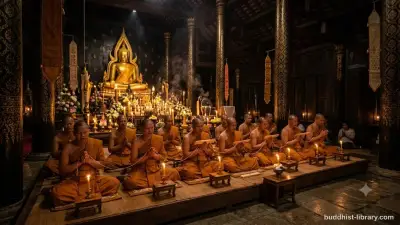
After meditation, monks chant protective verses (paritta) or suttas, sometimes in Pāli, sometimes in the local language. This isn’t mere ritual—chanting serves as recollection of the Dhamma, a communal bonding practice, and a form of buddhānussati (recollection of the Buddha).
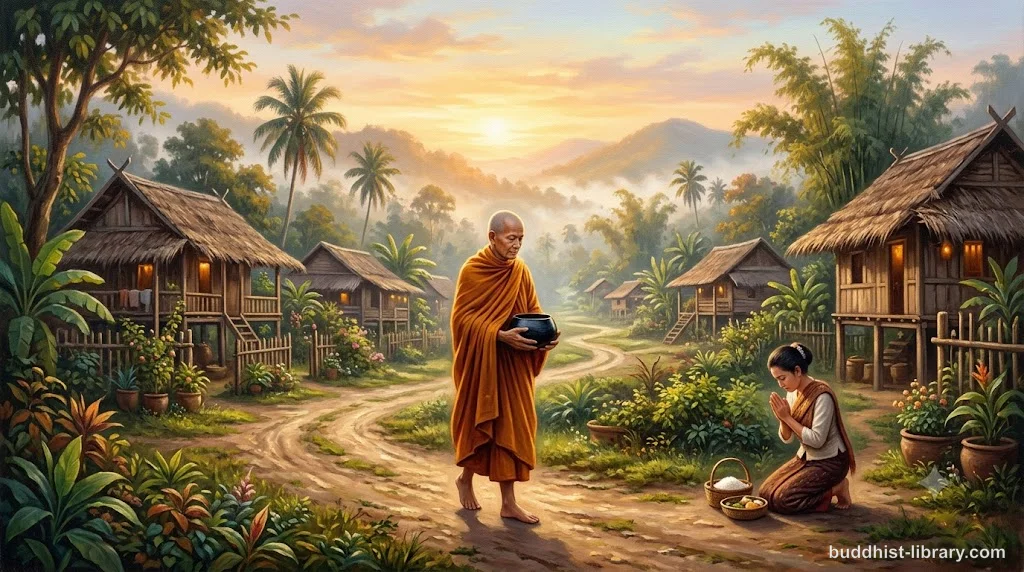
Around 6:00–7:00 AM, monks prepare for the alms round (piṇḍapāta). They walk silently through the village or neighborhood, barefoot, carrying their alms bowls. Laypeople offer food—typically rice, curry, fruit—and the monk receives it with a brief blessing or silent acknowledgment. This isn’t begging; it’s a mutual exchange: the lay community gains merit (puñña) through generosity (dāna), and the monk practices humility and gratitude.
The meal, eaten before noon, is the only substantial food a monk consumes that day. The Vinaya forbids solid food after midday to support afternoon and evening meditation, reduce digestive heaviness, and cultivate contentment with little. Some monks eat only once; others may take a light breakfast if their tradition allows.
The afternoon is divided between study, teaching, and work meditation (cleaning the monastery, maintaining the grounds, preparing Dhamma talks). In forest monasteries, monks often practice extended walking meditation (caṅkama) under the trees. In urban centers, senior monks may give talks to laypeople or counsel visitors.
Evening brings another meditation session, often shorter (30–60 minutes), followed by chanting and a Dhamma talk if there’s a teacher present. Monks retire early—typically by 9:00 or 10:00 PM—to ensure they’re rested for the next pre-dawn sitting.
The entire structure supports Right Effort: continuous mindfulness throughout waking hours, with formal meditation as the anchor and daily activities as the training ground.
How do laypeople adapt this routine to modern life?
You don’t need to shave your head or live in a monastery to benefit from a Buddhist daily structure. Laypeople have adapted the monastic rhythm to fit jobs, families, and urban schedules for over 2,500 years. The key is intention and consistency, not perfection.
Here’s a realistic lay adaptation:
Morning (before work or family duties):
- Wake 30–60 minutes earlier than usual.
- 10–20 minutes of sitting meditation or mindful breathing (ānāpānasati).
- Recite the Three Refuges and Five Precepts silently or aloud to set the day’s ethical foundation.
- Eat breakfast mindfully—treat it as practice, not just fuel.
Daytime (at work or home):
- Practice Right Livelihood: engage your work ethically, avoiding harm.
- Take three “mindfulness bells” during the day—pause for three breaths when you hear a specific sound (your phone, a clock chime, a doorbell). This prevents the day from becoming a blur.
- If possible, eat lunch slowly, without screens, noticing taste and texture.
Evening (after responsibilities wind down):
- 10–20 minutes of meditation (sitting or walking).
- Reflect on the day: which of the Five Precepts did you uphold? Where did you slip? This isn’t self-judgment—it’s honest inventory, like a farmer checking crops.
- Optional: read a sutta or a page from a Dhamma book (the Dhammapada, a discourse by Bhikkhu Bodhi or Ṭhānissaro Bhikkhu).
- Go to bed at a consistent time to support morning practice.
Weekly or monthly:
- Observe Uposatha days (the Buddhist Sabbath, typically on new and full moons). On these days, some laypeople take the Eight Precepts (which include not eating after noon and abstaining from entertainment) and spend extra time in meditation or at a monastery.
The rhythm doesn’t have to be rigid. Life happens—kids get sick, deadlines loom, travel disrupts routines. The practice is returning to the structure when you can, not berating yourself when you can’t.
What are the key practices woven into a Buddhist day?
Whether monastic or lay, a Buddhist daily routine weaves together several core practices:
- Meditation (bhāvanā) — Both samatha (calm) and vipassanā (insight). Morning sitting establishes the day’s baseline; evening sitting reviews it.
- Ethical reflection — Daily recitation or mental review of the precepts keeps moral conduct front of mind.
- Generosity (dāna) — For monks, receiving alms; for laypeople, offering food, money, or time to monastics or those in need.
- Study (pariyatti) — Reading suttas, listening to Dhamma talks, or discussing teachings with others.
- Recollection (anussati) — Remembering the Buddha, Dhamma, and Sangha throughout the day to maintain confidence and direction.
The genius of the routine is that it’s not compartmentalized. Meditation isn’t something you do separately from ethics or generosity—each practice reinforces the others. The alms round is meditation in motion. Mindful eating is a form of vedanā (feeling) contemplation. Cleaning the monastery is kāyagatāsati (body awareness).
The structure creates a container where the Noble Eightfold Path can unfold naturally across the hours, not just during formal sits.
Why does routine matter on the Buddhist path?
The Buddha compared the mind to a wild elephant that must be tethered to a post until it becomes tame. Daily routine is that post. Without it, practice becomes sporadic—intense one week, forgotten the next. Awakening doesn’t happen in bursts; it unfolds through steady, patient repetition.
Routine also counteracts the papañca (mental proliferation) that modern life encourages. When your day has a clear structure—wake, meditate, work ethically, reflect, sleep—you spend less mental energy deciding what to do next and more energy actually doing it. Decision fatigue dissolves.
Moreover, a consistent schedule builds samatha (calm) at the macro level. Just as following the breath for twenty minutes settles the mind, following a daily rhythm settles your weeks and months. You begin to notice patterns: “I’m always irritable on Tuesday afternoons” or “I sleep better when I meditate at 7 PM instead of 9 PM.” These insights wouldn’t surface in a chaotic schedule.
Finally, routine is an act of faith—saddhā—in the path itself. You’re trusting that these small, repeated actions compound into transformation, even when you don’t see immediate results. That’s how the practice works. The monk who sits at 4 AM for forty years doesn’t do it because every session is blissful; he does it because the structure itself is the teacher.
Can the routine be adjusted for different Buddhist traditions?
Yes, and it is. The core rhythm—early rising, meditation, ethical living, study, reflection—persists across traditions, but the details vary:
-
Theravāda monasteries (Thailand, Sri Lanka, Myanmar) tend to emphasize long sitting sessions, strict adherence to the Vinaya, and the alms round. Forest tradition monks may meditate for several hours at a stretch.
-
Mahāyāna temples (China, Korea, Japan) often include elaborate chanting liturgies, bowing practices, and work periods (samu in Zen). Zen monks famously integrate “chopping wood, carrying water” as meditation.
-
Vajrayāna practitioners (Tibetan Buddhism) may begin the day with deity yoga, mantra recitation, or prostrations before moving into analytic meditation on emptiness or compassion.
Laypeople in each tradition adapt accordingly. A Zen lay practitioner might do zazen (seated meditation) facing a wall for 25 minutes every morning. A Tibetan lay practitioner might recite 108 maṇi mantras and visualize Chenrezig. A Theravāda lay practitioner might do ānāpānasati and recite the Metta Sutta.
The form differs, but the function is the same: anchor the day in Dhamma, not in distraction.
How strict should you be with the routine?
The Buddha’s teaching on this is clear: avoid the extremes of rigidity and laxity. He told the story of Soṇa, a monk who was straining too hard in practice. The Buddha asked him about tuning a lute: if the strings are too tight, it won’t play; if too loose, it won’t play. The middle tuning is right.
Apply that to daily routine. If you beat yourself up for missing one morning meditation, you’re too tight. If you meditate “whenever you feel like it” and haven’t sat in three weeks, you’re too loose. The middle way is gentle consistency: you have a plan, you follow it most days, and when life disrupts it, you return without drama.
Some practitioners find that setting a minimum viable practice—“I will sit for at least five minutes every day, no matter what”—prevents the all-or-nothing trap. Five minutes is doable even on chaotic days, and once you’re on the cushion, you often sit longer. But even if you don’t, you’ve honored the commitment, and the momentum doesn’t break.
The routine serves you; you don’t serve the routine. When it becomes a source of stress rather than support, adjust it.
Frequently Asked Questions
What time do Buddhist monks wake up?
Most Buddhist monks wake between 4:00 and 5:00 AM to begin the day with early morning meditation before dawn. The exact time varies by tradition and monastery, but the practice of rising before sunrise is nearly universal across Theravāda, Mahāyāna, and Vajrayāna communities.
Can laypeople follow a Buddhist daily routine?
Yes. Laypeople can adapt core monastic practices to their schedule: morning meditation (even 10–15 minutes), mindful breakfast, ethical work as Right Livelihood, evening reflection on the Five Precepts, and bedtime meditation. The structure matters more than the duration.
Why do monks only eat before noon?
The Vinaya (monastic code) prohibits monks from eating solid food after midday to support meditation practice, reduce sensory distraction, and cultivate contentment with simple needs. This rule applies strictly to ordained monks; laypeople may observe it on Uposatha days or as personal practice.
What is the purpose of the alms round (piṇḍapāta)?
The alms round serves multiple purposes: it maintains monks’ dependence on the lay community (preventing arrogance), gives laypeople an opportunity to practice generosity (dāna), and reminds both groups of interdependence. It’s a living expression of the relationship between Sangha and society.
Do all Buddhist monks follow the same daily schedule?
No. While the core structure (early meditation, alms or meal before noon, study, evening practice) is common, specific timings and activities vary by tradition, monastery, and even individual teacher’s guidance. Forest monasteries may have more solitary practice; city temples may have more teaching and community service.
Conclusion
The Buddhist daily routine—whether the full monastic version or a lay adaptation—is not about checking boxes or accumulating “good Buddhist” points.
It’s about creating conditions where the mind can settle, where ethical clarity can emerge, and where the teachings move from concepts to lived experience.
Start small: ten minutes of morning meditation, a moment to recite the precepts, a mindful meal. Notice what changes. The routine won’t make you enlightened overnight, but it will make you more present, more consistent, and more aligned with the path the Buddha laid out 2,500 years ago.
And that alignment, sustained over months and years, is how transformation happens—not in dramatic leaps, but in the quiet repetition of waking, sitting, living ethically, and returning to practice again tomorrow.
Read more:
- How to Start Buddhist Meditation: A Beginner’s Guide — If you’re new to sitting practice, this guide walks you through posture, breath, and the first steps of establishing a meditation routine.
- The Five Precepts: Buddhist Ethics in Daily Life — Understanding the ethical foundation that underpins both monastic and lay Buddhist daily life.
- Right Effort (Sammā Vāyāma): The Four Right Exertions in Buddhism — The daily routine is an expression of sustained Right Effort—learn how the Buddha defined balanced, continuous practice. Right Effort—learn how the Buddha defined balanced, continuous practice. practice. , continuous practice. ha defined balanced, continuous practice.
📖 Source / license: Vinaya Piṭaka (Monastic Code); Access to Insight; Bhikkhu Bodhi, *The Noble Eightfold Path* (BPS, 1984)
Frequently asked questions
What time do Buddhist monks wake up?
Most Buddhist monks wake between 4:00 and 5:00 AM to begin the day with early morning meditation before dawn. The exact time varies by tradition and monastery, but the practice of rising before sunrise is nearly universal across Theravāda, Mahāyāna, and Vajrayāna communities.
Can laypeople follow a Buddhist daily routine?
Yes. Laypeople can adapt core monastic practices to their schedule: morning meditation (even 10–15 minutes), mindful breakfast, ethical work as Right Livelihood, evening reflection on the Five Precepts, and bedtime meditation. The structure matters more than the duration.
Why do monks only eat before noon?
The Vinaya (monastic code) prohibits monks from eating solid food after midday to support meditation practice, reduce sensory distraction, and cultivate contentment with simple needs. This rule applies strictly to ordained monks; laypeople may observe it on Uposatha days or as personal practice.
What is the purpose of the alms round (piṇḍapāta)?
The alms round serves multiple purposes: it maintains monks' dependence on the lay community (preventing arrogance), gives laypeople an opportunity to practice generosity (dāna), and reminds both groups of interdependence. It's a living expression of the relationship between Sangha and society.