Buddhist Meditation Posture: Finding Stability and Ease in Sitting Practice
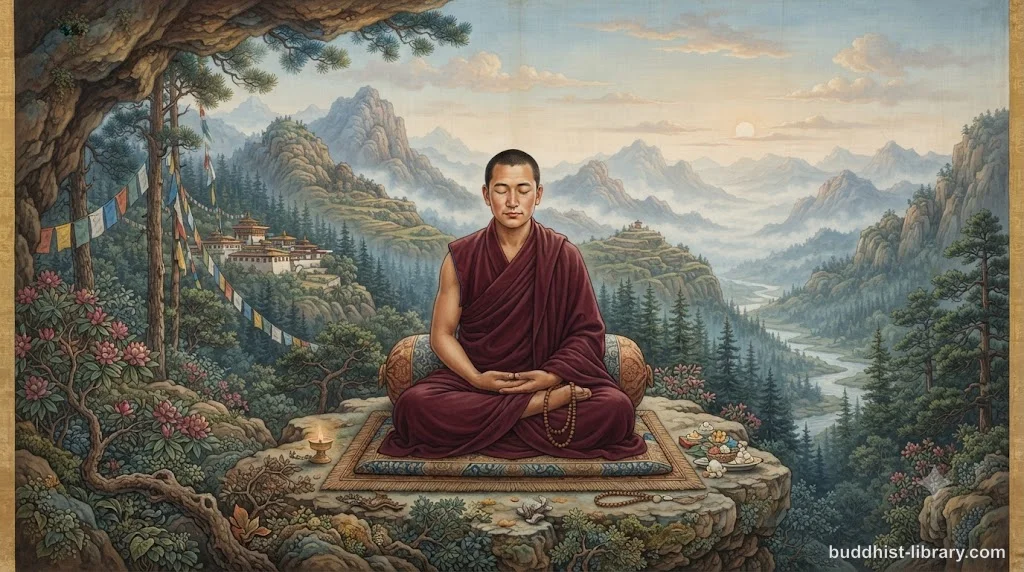
The Buddha taught that meditation posture should embody two essential qualities: stability (sthira) and ease (sukha). Whether sitting in full lotus or on a chair, proper alignment supports the mind’s natural capacity for awareness without unnecessary physical struggle. The ideal posture keeps you alert yet relaxed, grounded yet light — a physical foundation for mental clarity.
The way you hold your body during meditation isn’t merely logistical. Posture directly influences breath, energy flow, mental alertness, and your ability to sustain practice over time.
A collapsed spine invites drowsiness. Excessive tension creates restlessness. Between these extremes lies a middle way — the postural embodiment of Buddhist practice itself.
Why Does Meditation Posture Matter?
Physical posture and mental state are intimately connected. When the body assumes a stable, upright position, the mind naturally follows. The Satipaṭṭhāna Sutta, the Buddha’s foundational discourse on mindfulness, begins body contemplation with posture awareness: knowing when sitting, standing, walking, or lying down.
This isn’t arbitrary. An aligned spine allows unrestricted breathing. A grounded base provides stability that frees attention from constant micro-adjustments.
When your body is relaxed yet alert, the nervous system registers: this is neither sleep nor threat. That creates optimal conditions for meditative concentration.
Traditional meditation masters observed that certain postural configurations naturally support the jhānas (meditative absorptions) and insight practice. Not because these positions are sacred — they work with human biomechanics and neurophysiology. Physics, not mysticism.
What Are the Main Buddhist Sitting Positions?
Buddhism recognizes multiple valid sitting positions. The goal is finding one appropriate for your body, not conforming to an idealized image.
Full Lotus (Padmāsana)
Both feet rest on opposite thighs, soles facing upward. This creates an exceptionally stable triangular base and naturally straightens the lower spine. However, it requires significant hip flexibility and can cause knee injury if forced.
Best for: Practitioners with natural hip flexibility or dedicated yoga practice.
Not recommended for: Those with knee issues, tight hips, or limited flexibility.
Half-Lotus
One foot rests on the opposite thigh; the other foot tucks beneath. Offers similar stability to full lotus with less flexibility demand.
Best for: Intermediate flexibility, those building toward full lotus.
Watch for: Uneven hip rotation over time — alternate which leg goes on top.
Burmese Position
Both feet rest flat on the floor (or cushion), one in front of the other, with knees grounded. This is the most accessible cross-legged position and causes minimal strain.
Best for: Beginners, those with limited flexibility, long sitting sessions.
Advantage: Sustainable for extended practice without injury risk.
Seiza (Kneeling)
Kneeling with hips resting on a meditation bench or cushion placed between the calves. Common in Zen traditions. Reduces strain on knees while maintaining upright alignment.
Best for: Those who find cross-legged positions painful.
Requires: Meditation bench or dense cushion for proper height.
Chair Sitting
Feet flat on floor, thighs parallel to ground, spine upright and away from the backrest. Fully legitimate for meditation despite being less “traditional” in appearance.
Best for: Those with knee injuries, severe inflexibility, physical disabilities, or anyone who finds floor sitting prohibitive.
Key point: The Buddha emphasized mental cultivation, not athletic achievement.
How Should I Align My Spine and Head?
Proper spinal alignment is more important than leg position. The goal is a naturally extended spine — not rigid, not collapsed.
The Seven-Point Posture
This classical framework (popularized in Tibetan Buddhism but with roots in earlier meditation manuals) provides useful postural landmarks:
- Legs: Stable base in your chosen position
- Hands: Resting in lap (right over left, thumbs lightly touching) or on knees
- Spine: Naturally erect — imagine each vertebra stacked like coins
- Shoulders: Relaxed, slightly back and down
- Chin: Slightly tucked to lengthen the back of the neck
- Eyes: Closed or half-open with downward gaze
- Jaw and tongue: Relaxed, tongue tip lightly touching the upper palate
This isn’t rigid protocol. The principles matter more than perfect execution: groundedness, uprightness, relaxation in alertness.
Finding Your Natural Curve
The spine has natural curves (cervical, thoracic, lumbar). Don’t flatten them. Instead, sit so your pelvis tilts slightly forward, allowing the lumbar curve to support the upper spine. Most practitioners need cushion height to achieve this pelvic tilt.
A useful image: Imagine a string gently pulling the crown of your head toward the ceiling while your sit bones root down. This creates natural extension without strain.
What About Hand Positions (Mudrās)?
Hand positions are less critical than spinal alignment but can support practice.
Cosmic/Dhyāna Mudrā: Hands in lap, right over left (or reverse), thumbs lightly touching to form an oval. This is stable and keeps hands warm. Used widely in Zen and Theravāda traditions.
Hands on Knees: Palms down or up, resting on each knee. Some find this helps keep shoulders back. In vajrayāna traditions, specific mudrās may be prescribed, but for basic mindfulness practice, simple resting positions work.
The guideline: hands should be comfortably settled so they don’t become a distraction.
How Do I Work with Physical Discomfort During Meditation?
Some discomfort is inevitable when the body is learning a new position. The question is: what kind, and how to respond?
Distinguish Pain from Discomfort
Discomfort: Dull muscle stretch, unfamiliar position, minor restlessness. This is workable and even useful — it becomes an object of mindfulness (vedanā contemplation).
Pain: Sharp, shooting, or burning sensations, especially in joints. This signals potential injury. Adjust immediately. Meditation is not masochism.
The Buddha’s Middle Way in Posture
Early in his practice, the Buddha tried extreme asceticism — including torturous postures. He later rejected this as unhelpful. The middle way applies to sitting: enough challenge to maintain alertness, enough ease to sustain practice.
If your leg falls asleep or aches intensely, mindfully adjust.
There’s no virtue in damaging your knees for the sake of not moving. That’s not practice — that’s self-harm dressed up as dedication.
Progressive Adjustment Strategy
- Notice the sensation without immediately reacting
- Investigate: Is this sustainable discomfort or genuine pain?
- Adjust mindfully if needed — slow, deliberate movements rather than fidgeting
- Return attention to your meditation object
Over weeks and months, sitting tolerance increases as flexibility and strength develop. But this is gradual, not forced.
What Are Common Postural Mistakes and How to Fix Them?
Slouching or Leaning
Problem: Compresses breath, invites drowsiness, causes back pain.
Fix: Check your cushion height first. If it’s too low, the pelvis can’t tilt forward properly, and the whole alignment collapses. Add height until your hips sit higher than your knees.
Excessive Tension
Problem: Shoulders hiked up, jaw clenched, abdomen tight.
Fix: Do a body scan at the start of each sit. Consciously relax shoulders. Soften the face. Release belly tension. Imagine breathing into tense areas — not forcing, just allowing.
Neck Strain
Problem: Chin jutting forward or head tilted back.
Fix: Gently tuck chin as if making a slight double-chin, lengthening the back of the neck. Imagine the crown of your head lifting.
Leaning on Furniture
Problem: Using the chair back for support collapses the spine.
Fix: Sit toward the front third of the chair, feet flat, spine self-supporting. You can use back support if needed for injury, but try to wean off if possible.
Should I Use Meditation Cushions or Props?
Props aren’t luxuries. They’re tools for proper alignment, and using them is smart practice, not weakness.
Zafu (Round Cushion)
Lifts hips to allow forward pelvic tilt and knee grounding. Traditional in Zen. Works well for Burmese and half-lotus.
Meditation Bench
Supports seiza position. Ensures hips are elevated above ankles, preventing leg compression.
Yoga Blocks or Folded Blankets
Budget-friendly alternatives. Can be stacked to desired height.
Chair Modifications
A small cushion under the sit bones can improve pelvic tilt even in chair sitting.
The key principle: your hips should be higher than your knees when cross-legged. This allows the thighs to slope downward and the knees to touch the ground, creating that stable tripod base.
How Does Posture Relate to Breath and Energy?
An upright spine creates space for the diaphragm to move freely. Collapsed posture restricts breathing — you’ll notice shorter, shallower breaths and difficulty maintaining alertness.
Traditional meditation manuals describe energy channels (nāḍī) that run along the spine. While these are metaphorical in modern interpretation, the practical observation holds: postural alignment correlates with mental clarity and energetic alertness.
When properly aligned:
- The breath deepens naturally without effort
- You can sit longer with less fatigue
- The mind settles more quickly
- Subtle mental factors (pīti, sukha) arise more easily
What Did the Buddha Actually Say About Posture?
The canonical texts are pragmatic. The Satipaṭṭhāna Sutta instructs: “Having gone to the forest, to the foot of a tree, or to an empty hut, they sit down cross-legged, set their body erect, and establish mindfulness in front of them.”
Notice what’s specified: sitting, cross-legged position, upright body, and present-moment awareness.
No mention of exact leg configuration. No hand positions. No painful contortions.
The Buddha’s concern was mental cultivation. Posture serves this aim — it isn’t the aim itself. In the Aṅguttara Nikāya, the Buddha describes the four postures (sitting, standing, walking, lying down) as positions in which mindfulness can be cultivated. None is inherently superior.
How Can I Adapt Posture for Physical Limitations?
Buddhist practice is for everyone, regardless of physical capacity.
Injury or Chronic Pain
Chair sitting is fully legitimate. If even that is uncomfortable, lying down meditation (savasana-style but with alert attention) is valid. The Buddha himself taught meditation to sick and dying monastics lying in bed.
Age-Related Flexibility Loss
Don’t compare your 60-year-old body to your imagination of a 25-year-old monk. Use props generously. Adjust as needed. The dharma isn’t reserved for the flexible.
Disability
Wheelchair users can practice meditation exactly as effectively as anyone else. Postural “rules” are guidelines for those who can use them, not exclusionary requirements.
The essential qualities — alert wakefulness, stable base, relaxed attention — can be embodied in any position the body can sustain.
How Long Does It Take to Become Comfortable in Meditation Posture?
Habit formation varies, but most practitioners notice improvement within 2-4 weeks of daily practice. Hip flexibility increases gradually. Muscles supporting upright posture strengthen. Sitting duration extends naturally.
However, this assumes:
- Appropriate positioning for your current body (not forcing advanced postures)
- Gradual increase in duration (adding 5-10 minutes every week or two)
- Mindful adjustment when genuine pain arises
If you’ve been sitting in pain for months with no improvement, you’re likely in the wrong position for your body. Consult experienced teachers or consider physical therapy if needed.
What Role Does Posture Play in Different Meditation Types?
Postural needs vary slightly by practice:
Samatha (Concentration) Practice
Stillness is emphasized. A stable position that can be held without movement supports sustained attention on the meditation object.
Vipassanā (Insight) Practice
Since vipassanā observes all arising phenomena — including body sensations — posture becomes both container and content. You might note “tension… relaxation… pressure… heat…” as objects of awareness.
Walking Meditation
Obviously, sitting posture doesn’t apply. But the principles do: upright carriage, relaxed shoulders, grounded steps. The same balance of stability and ease.
Key Takeaways for Meditation Posture Practice
- Stability and ease (sthira-sukha) are the two essential qualities — not aesthetic perfection
- The Buddha never mandated a specific leg position — lotus, Burmese, seiza, and chair sitting are all valid
- Spinal alignment matters more than leg configuration — an upright spine supports breath and alertness
- Use props without shame — cushions, benches, and chairs are tools, not crutches
- Pain is a signal to adjust — the middle way rejects both indulgence and self-mortification
- Comfort develops gradually — give your body weeks, not days, to adapt
- Posture serves mental cultivation — it’s the foundation, not the goal
The right meditation posture is the one that allows you to practice regularly without injury. Start where you are, use what you have, adjust as needed. The dharma is found in the quality of attention, not the configuration of your legs.
Read more:
- What Is Mindfulness (Sati) in Buddhism? — Understanding the quality of awareness that posture supports
- How to Start Buddhist Meditation: A Beginner’s Guide — A complete introduction to establishing a meditation practice
- Working with Physical Pain During Meditation: A Buddhist Guide — Deeper strategies for working with discomfort mindfully
📖 Source / license: Satipaṭṭhāna Sutta (MN 10), Vimuttimagga, The Path of Purification (Visuddhimagga), contemporary meditation manuals from Mahasi Sayadaw and Ajahn Chah
Frequently asked questions
Do I have to sit in lotus position to meditate properly?
No. The Buddha never mandated lotus position. Any stable, comfortable position — full lotus, half-lotus, Burmese, seiza, or even a chair — works as long as it supports alert wakefulness. The key is finding the balance between stability (sthira) and ease (sukha), not achieving a specific leg configuration.
How do I deal with pain during meditation?
Distinguish between discomfort (muscle stretch, unfamiliar positions) and actual pain (sharp, shooting sensations). Mild discomfort can be observed as vedanā practice. Sharp pain signals potential injury — adjust immediately. Never force your body into positions it's not ready for.
Should my eyes be open or closed during meditation?
Both approaches have merit. Closed eyes reduce visual distractions and support concentration (samatha). Half-open eyes (gaze downward at 45°) maintain alertness and are traditional in some Mahāyāna schools. Experiment to find what supports your practice without causing drowsiness or distraction.
How long should I hold a meditation posture?
Start with what you can sustain with reasonable comfort — even 10-15 minutes. Gradually extend as flexibility and strength develop. Advanced practitioners may sit for 45-60 minutes or longer. The goal is cultivating mental qualities, not enduring physical punishment.