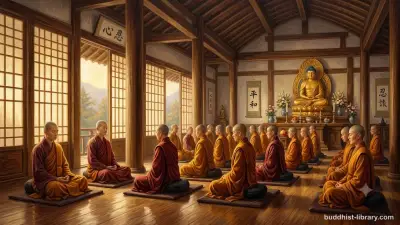
What Is Kāyagatāsati? Body Contemplation in Buddhist Meditation
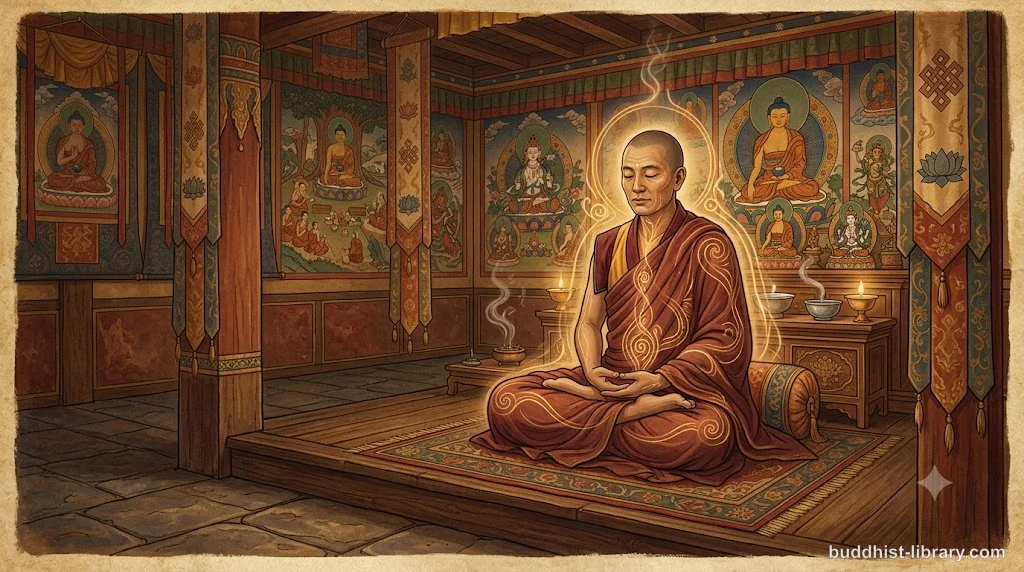
Kāyagatāsati—“mindfulness immersed in the body”—is a foundational Buddhist meditation practice taught by the Buddha in the Pali Canon. It directs full awareness to bodily phenomena—breath, posture, anatomical parts, elements, and decay—cultivating profound presence, dismantling attachment to the body-as-self, and opening the path to insight and liberation. The practice spans 14 distinct methods, from simple breath awareness to advanced contemplations of bodily dissolution.
What Does Kāyagatāsati Mean?
Kāyagatāsati (Pāli: kāyagatāsati) is a compound word:
- Kāya = body
- Gata = gone to, directed to, immersed in
- Sati = mindfulness, awareness
Together, kāyagatāsati means “mindfulness directed to the body” or “mindfulness immersed in the body.” It is one of the four satipaṭṭhānas (foundations of mindfulness) and forms the first pillar of the Buddha’s comprehensive meditation framework.
The practice is detailed most extensively in the Kāyagatāsati Sutta (MN 119), where the Buddha declares:
“When mindfulness immersed in the body is developed and cultivated, it leads to great benefit and great reward.”
This isn’t mere relaxation or body scanning—it’s a penetrating investigation of the body’s true nature, designed to uproot the illusion of a permanent, pleasurable self.
Why Did the Buddha Emphasize Body Contemplation?
The body is the first foundation of mindfulness for a reason: it’s tangible, immediate, and constantly available. Unlike abstract concepts or fleeting emotions, the body is always here—breathing, sitting, walking, aging.
The Buddha taught that most suffering arises from our mistaken relationship with the body:
- We identify with it (“This is me, this is mine”)
- We crave pleasure through it (sensual desire)
- We fear its loss (aging, sickness, death)
Kāyagatāsati directly confronts these delusions. By observing the body with clear, non-reactive awareness, practitioners:
- See impermanence (anicca): the body is a process, not a thing
- Recognize suffering (dukkha): the body is subject to pain, disease, decay
- Understand non-self (anattā): there is no owner inside the body; it’s a collection of impersonal processes
This isn’t morbid or pessimistic—it’s liberating. When you stop clinging to the body as “you,” fear and craving lose their grip.
The 14 Practices of Kāyagatāsati (From MN 119)
The Kāyagatāsati Sutta outlines 14 distinct body contemplation practices, presented in a progressive sequence from accessible to advanced:
1. Mindfulness of Breathing (Ānāpānasati)
Observing the in-breath and out-breath. This is often the entry point—simple, calming, and concentration-building.
2. Mindfulness of Posture
Knowing clearly when you are walking, standing, sitting, or lying down. Awareness of the body’s position in space anchors you in the present.
3. Clear Comprehension (Sampajañña)
Maintaining awareness during all activities—bending, stretching, eating, speaking. Every movement becomes a meditation.
4. Contemplation of the 32 Parts of the Body
Mentally reviewing the anatomical components: hair, nails, teeth, skin, flesh, sinews, bones, marrow, kidneys, heart, liver, lungs, intestines, stomach contents, etc. This practice de-glamorizes the body, countering sensual lust.
5. Contemplation of the Four Elements
Analyzing the body as a composite of:
- Earth element (solidity—bones, flesh)
- Water element (fluidity—blood, saliva)
- Fire element (temperature—warmth, digestion)
- Air element (motion—breath, winds)
This reveals the body as an impersonal assembly, like assembling a chariot from parts—where is the “chariot” itself?
6–9. Four Charnel Ground Contemplations
Visualizing the body after death in various stages of decay:
- Bloated, discolored
- Devoured by crows and vultures
- Reduced to bones
- Bones scattered and crumbled to dust
Each reflection ends with the insight: “This body too is of the same nature; it will be like that; it is not exempt from that fate.”
These practices are not morbid fantasies—they’re based on direct observation. In the Buddha’s time, charnel grounds (open-air cemeteries) were common, and monastics would visit them to contemplate impermanence. Today, the practice is mostly visualized, though some traditions still practice at morgues or anatomical museums.
10–13. The Four Jhānas
When body contemplation is refined, it can serve as the basis for deep meditative absorption (jhāna)—states of profound concentration and bliss, free from sensory distraction.
14. Recollection of the Body’s Unattractiveness
A general mindfulness that the body, beneath its surface appearance, is composed of unattractive elements—undermining vanity and lust.
Key Benefits of Kāyagatāsati (According to the Suttas)
The Buddha praised kāyagatāsati as “the single thing” that, when developed, brings immense benefits. In MN 119, he lists ten benefits:
- Overcomes discontent and delight—you stop swinging between craving and aversion
- Conquers fear and dread—awareness of the body’s impermanence reduces existential anxiety
- Endures cold, heat, hunger, thirst—physical discomfort no longer overwhelms the mind
- Tolerates contact with flies, mosquitoes, criticism—minor irritants lose their sting
- Bears bodily pain without mental collapse—physical pain is seen clearly, not amplified by resistance
- Attains the four jhānas at will—deep concentration becomes accessible
- Develops psychic powers (if pursued, though not emphasized in early texts)
- Gains direct knowledge (abhiññā)—insight into the nature of phenomena
- Realizes stream-entry (sotāpanna—first stage of awakening)
- Realizes once-returning (sakadāgāmi—second stage)
- Realizes non-returning or arahantship—full liberation
In short: kāyagatāsati is a complete path, not a preliminary exercise.
How to Practice Kāyagatāsati: A Beginner’s Approach
If you’re new to body contemplation, start simple:
Step 1: Establish a Comfortable Posture
Sit in a stable, comfortable position—cross-legged on a cushion, or in a chair with feet flat. Keep the spine upright but not rigid.
Step 2: Begin with Breath Awareness
Close your eyes. Notice the natural rhythm of the breath—the sensation of air at the nostrils, the rise and fall of the abdomen. Don’t control it; just observe. This is ānāpānasati, the first practice in the sequence.
Step 3: Expand to Postural Awareness
After a few minutes, broaden your attention: “I am sitting.” Feel the weight of the body, the contact with the ground, the alignment of the spine. When you stand or walk, note: “I am standing,” “I am walking.”
Step 4: Add Clear Comprehension
During daily activities—eating, brushing teeth, opening a door—pause briefly and know what you are doing. This is sampajañña: awareness of action.
Step 5 (Optional, Intermediate): Contemplate the 32 Parts
Mentally scan the body from head to toe, naming each part: hair of the head, hair of the body, nails, teeth, skin… down to urine and feces. Notice the absence of glamour—the body is a biological machine, not a palace.
Step 6 (Advanced): Reflect on the Elements
Sit and discern: “What in this body is solid? (earth) What is liquid? (water) What is warm? (fire) What is in motion? (air)?” Realize: there is no “me” here—only elements temporarily assembled.
Common Challenges and How to Navigate Them
Challenge 1: Boredom or Resistance
The body isn’t as stimulating as thoughts or fantasies. Your mind will wander. When it does, gently return to the body. Boredom itself is a valuable object—notice the feeling of boredom in the body.
Challenge 2: Discomfort or Pain
Physical pain will arise—knees ache, back stiffens. Instead of immediately shifting, investigate the pain: Where exactly is it? Is it constant or pulsing? Sharp or dull? Often, pain loses its power when observed without aversion.
Challenge 3: Fear or Disgust (32 Parts, Charnel Ground)
Advanced practices can trigger aversion. If contemplating decay or anatomical parts feels overwhelming, return to breath awareness. These practices are for practitioners with stable concentration and a degree of dispassion. Don’t force them prematurely.
Challenge 4: Identification with Sensations
You might think, “My knee hurts” or “I’m uncomfortable.” Kāyagatāsati teaches: “There is pain in the knee” (not my knee). Practice depersonalizing: sensations arise and pass in the body, but there’s no “you” experiencing them—just the knowing itself.
How Kāyagatāsati Leads to Insight
Body contemplation is not just calming—it’s insight practice (vipassanā). Here’s how it unfolds:
- You observe the body closely → You see sensations arise and pass (impermanence)
- You notice the body ages, hurts, decays → You see it’s unreliable (suffering)
- You search for the “owner” of the body → You find no one home (non-self)
This isn’t intellectual understanding—it’s direct, experiential knowledge. When you see that the body is not you, not yours, and not under your control, attachment weakens. Fear of death softens. Craving for sensual pleasure loses its urgency.
The Visuddhimagga (a 5th-century meditation manual) explains that the 32-parts practice and charnel ground contemplations specifically dismantle lust—the root of much suffering. When you recognize the body’s composite, impermanent, unattractive nature, you stop grasping at it as a source of ultimate pleasure.
Kāyagatāsati in the Broader Path
Body contemplation is the first of the four satipaṭṭhānas (DN 22):
- Kāyānupassanā (contemplation of the body)
- Vedanānupassanā (contemplation of feelings/sensations)
- Cittānupassanā (contemplation of mind states)
- Dhammānupassanā (contemplation of mental phenomena/dharmas)
The sequence is deliberate: the body is the most concrete and stable object. Once you establish clear awareness of the body, you can move to subtler objects—feelings, thoughts, and mental patterns.
Kāyagatāsati also intersects with:
- Right Mindfulness (sammā sati)—the seventh factor of the Noble Eightfold Path
- Right Concentration (sammā samādhi)—body contemplation can lead to jhāna
- The abandoning of the five hindrances—especially sensual desire and restlessness
In essence, kāyagatāsati is both a standalone practice and a foundation for the entire Buddhist path.
Practical Tips for Sustained Practice
1. Start Small
Five minutes of breath awareness daily beats one hour of sporadic, forced effort. Consistency builds the habit.
2. Anchor Practice in Routine
Link body contemplation to an existing habit—right after waking, before meals, before bed. This leverages behavioral psychology.
3. Use Reminders
Set a gentle timer every hour to pause and notice: “What is the body doing right now?” This builds clear comprehension throughout the day.
4. Join a Community
If possible, practice with a local or online sangha. Group sits provide accountability and encouragement.
5. Study the Suttas
Read the Kāyagatāsati Sutta (MN 119) and the Satipaṭṭhāna Sutta (MN 10 / DN 22) in translation. Bhikkhu Bodhi and Ṭhānissaro Bhikkhu’s versions are excellent. Understanding the Buddha’s words deepens your practice.
6. Balance Calm and Insight
Body contemplation develops both samatha (tranquility) and vipassanā (insight). If you feel overly agitated, emphasize breath to calm the mind. If you feel dull or complacent, investigate the body’s impermanence and non-self to sharpen awareness.
Common Misconceptions About Body Contemplation
Misconception 1: “It’s body worship or attachment to the body.”
False. Kāyagatāsati is the opposite—it reveals the body’s impermanent, unattractive, non-self nature, dismantling attachment.
Misconception 2: “Charnel ground contemplations are morbid.”
They’re pragmatic. Death is a universal reality. Contemplating it reduces denial and fear, leading to urgency in practice and equanimity in the face of loss.
Misconception 3: “Only monastics can practice this.”
While some practices (e.g., extended charnel ground visits) were easier for monastics, laypeople can and do practice breath awareness, postural mindfulness, and the 32 parts. The Buddha taught these methods to both monastics and householders.
Misconception 4: “Body contemplation is inferior to insight meditation.”
Kāyagatāsati is insight meditation. It’s not mere concentration—it directly reveals the three characteristics (impermanence, suffering, non-self).
A Word of Caution: Emotional and Psychological Safety
Advanced body contemplation—especially the 32 parts and charnel ground reflections—can stir strong emotions: disgust, fear, sadness, even existential dread. If you have a history of trauma, body dysmorphia, or eating disorders, approach these practices with caution and ideally under the guidance of an experienced teacher.
Some practitioners have reported:
- Disassociation (feeling disconnected from the body)
- Nihilistic thoughts (“nothing matters”)
- Increased anxiety about death or illness
These are signs that the practice is proceeding too quickly or without proper foundation. If this happens:
- Return to simpler practices (breath, posture)
- Cultivate mettā (loving-kindness) to balance the analytical edge
- Seek guidance from a qualified meditation teacher
- Remember the Middle Way—the Buddha didn’t advocate self-punishment or harm
The goal is dispassion (virāga), not aversion (paṭigha). Train the mind to see clearly—not to reject or hate the body.
The Ultimate Goal: Liberation Through the Body
The Buddha once said:
“In this fathom-long body, with its perceptions and thoughts, I proclaim the world, the origin of the world, the cessation of the world, and the path leading to the cessation of the world.” (AN 4.45)
Everything you need to understand suffering and reach liberation is here, in this body. You don’t need esoteric visions or abstract philosophy—just clear, sustained awareness of what’s already present.
Kāyagatāsati teaches you to:
- Stop fleeing from discomfort—sit with pain, boredom, restlessness
- Stop chasing pleasure—see sensual delight as fleeting and unreliable
- Stop identifying with the body—recognize it as a process, not a self
When these shifts happen—not as beliefs, but as lived experience—you move toward nibbāna (liberation). The body, once the prison of craving and fear, becomes the very ground of freedom.
Key Takeaways
- Kāyagatāsati means “mindfulness immersed in the body,” a foundational Buddhist meditation practice.
- The Buddha taught 14 body contemplation methods in MN 119, from simple breath awareness to advanced charnel ground reflections.
- Benefits include overcoming fear, enduring discomfort, attaining jhānas, and realizing the stages of awakening.
- The practice directly reveals impermanence, suffering, and non-self—the three characteristics of existence.
- Start with breath and posture awareness; progress to anatomical and elemental contemplations as your practice matures.
- Kāyagatāsati is both a concentration and insight practice, suitable for all levels when approached skillfully.
- Advanced practices should be undertaken with caution and guidance, especially if you have trauma or psychological vulnerabilities.
The body is always here, breathing, sitting, aging. It’s the most intimate teacher you’ll ever have. Turn your attention to it, and it will show you the path to freedom.
Read more:
- What Is Mindfulness (Sati) in Buddhism?—Explore the broader concept of mindfulness, of which kāyagatāsati is the foundational practice.
- The Satipaṭṭhāna Sutta: Foundations of Mindfulness Explained—A deep dive into the Buddha’s comprehensive teaching on the four foundations of mindfulness, including detailed body contemplation.
- The Ānāpānasati Sutta: The Buddha’s Teaching on Mindfulness of Breathing—Learn about breath meditation, the first practice in the kāyagatāsati sequence and a complete path to awakening in its own right. own right. own right.
📖 Source / license: MN 119 Kāyagatāsati Sutta (Majjhima Nikāya, translated by Bhikkhu Bodhi and Ṭhānissaro Bhikkhu); DN 22 Mahāsatipaṭṭhāna Sutta (SuttaCentral / Access to Insight)
Frequently asked questions
What does kāyagatāsati mean?
Kāyagatāsati is a Pali term meaning 'mindfulness directed to the body' or 'mindfulness immersed in the body.' It refers to a comprehensive set of meditation practices that use the physical body as the primary object of awareness, cultivating deep presence and insight.
How is kāyagatāsati different from regular mindfulness meditation?
While mindfulness (sati) can be directed to many objects—breath, thoughts, emotions—kāyagatāsati specifically focuses on bodily phenomena: posture, movement, anatomical parts, elements, and decay. It's a subset of the broader satipaṭṭhāna (foundations of mindfulness) practice, emphasizing embodied awareness as the foundation for deeper insight.
Is body contemplation practice difficult for beginners?
Body contemplation ranges from simple to advanced. Beginners can start with mindfulness of posture or breathing (easier entry points), while practices like contemplating the 32 parts of the body or charnel ground reflections are typically reserved for more experienced practitioners. The MN 119 sutta outlines 14 practices spanning this spectrum.
What are the benefits of kāyagatāsati according to the suttas?
MN 119 lists ten benefits: conquering displeasure and delight, overcoming fear and dread, enduring physical discomfort (cold, heat, pain), attaining the four jhānas at will, gaining supranormal powers, divine ear, mind-reading, past-life recall, divine eye, and the ending of effluents (liberation).