Right Concentration (Sammā Samādhi): The Eighth Factor of the Noble Path
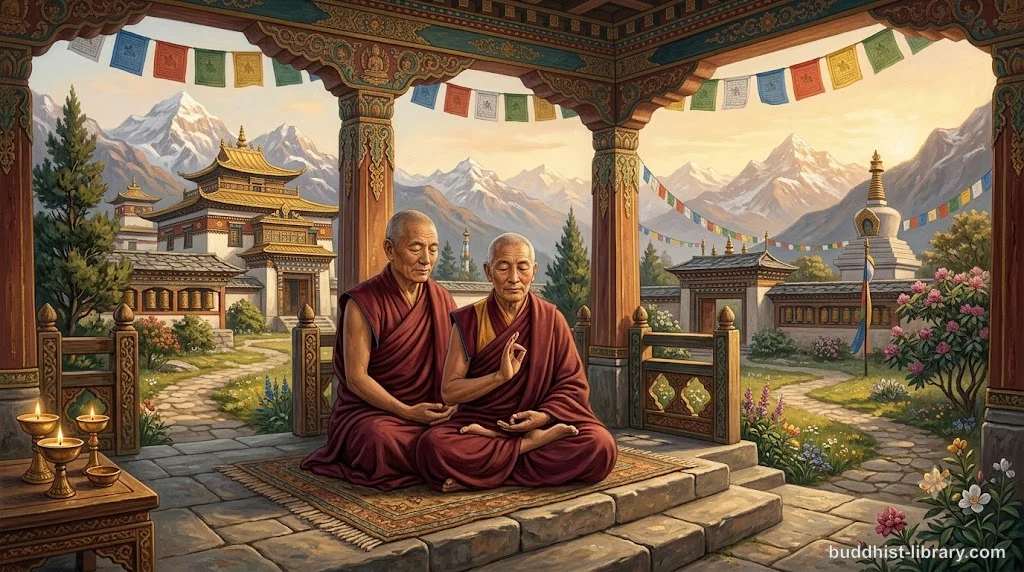
Right Concentration (sammā samādhi) is the unified, wholesome focusing of mind that emerges when the other seven factors of the Noble Eightfold Path support it. Unlike scattered attention or forced suppression, right concentration is the natural settling of awareness into steadiness and clarity—traditionally cultivated through the four jhānas and essential for the deep seeing that liberates.
The Buddha didn’t present concentration as an isolated technique. He placed it eighth deliberately. Genuine samādhi depends on what comes before: ethical conduct (right speech, action, livelihood), mental development (right effort, mindfulness), and correct understanding (right view, intention). When those factors align, concentration arrives on its own. You don’t muscle it into existence.
What Does the Buddha Mean by Right Concentration?
In the Mahā-satipaṭṭhāna Sutta (DN 22), the Buddha defines sammā samādhi with remarkable specificity. It’s not vague “focus.” It’s the capacity to enter and abide in the four jhānas—progressively refined states of absorption where the mind becomes unified, joyful, tranquil, and eventually equanimous.
The first jhāna is characterized by applied and sustained thought (vitakka and vicāra), born of seclusion from sensual desires and unwholesome states. It includes rapture (pīti) and pleasure (sukha). As practice deepens, applied thought drops away, then sustained thought, then rapture—until in the fourth jhāna, the mind rests in perfect equanimity and one-pointed concentration.
This isn’t mere theory. The Buddha described these states from direct experience—they were part of his own awakening sequence under the Bodhi tree. He distinguished genuine samādhi from mere mental absorption: right concentration is always accompanied by right view. A master forger can concentrate intensely on counterfeiting, but that’s not sammā samādhi. The “rightness” comes from the intention and ethical foundation supporting it.
Why Is Concentration Necessary for Liberation?
You might wonder: if wisdom cuts through delusion, why bother with concentration at all? Can’t you just develop insight?
The Buddha’s answer, demonstrated across the Nikāyas: concentration and wisdom work together. Neither wing flies alone. Scattered mind can’t sustain the penetrative seeing that uproots deep conditioning. When attention flits from object to object—the untrained default—observations stay superficial. You might grasp impermanence intellectually. You won’t see it directly in the microstructure of experience.
Concentration stabilizes awareness. In the simile from MN 125, the Buddha compares the mind to a lake. When the surface is choppy with waves (distraction), you can’t see the bottom. When it stills, pebbles and shells become visible. Similarly, concentrated mind reveals the arising and passing of phenomena that scattered attention misses.
Bhikkhu Bodhi notes in “The Noble Eightfold Path” that sammā samādhi provides three critical functions: it purifies the mind of hindrances (sensual desire, ill will, sloth, restlessness, doubt), it intensifies awareness to perceive subtle mental processes, and it generates the energy needed for sustained insight practice. Without concentration, vipassanā meditation becomes a conceptual exercise rather than direct observation.
How Right Concentration Differs From Forced Focus
Common misunderstanding: concentration means gritting your teeth and wrestling attention onto an object. That’s effortful focus. It’s not sammā samādhi.
The Pāli term samādhi shares a root with sam (together) and ā-dhā (to place). A bringing together. A unification. The mind gathers itself willingly around a single object.
Thanissaro Bhikkhu distinguishes between “compressed” and “expansive” models of concentration. In the compressed view (more common in later commentarial traditions), you narrow focus down to a tiny point, excluding everything else. In the expansive view (closer to the suttas), you allow awareness to fill comfortably with the meditation object—like a room filling with light rather than a laser burning a hole.
Right concentration has a quality of ease. Yes, it requires initial effort (sammā vāyāma, right effort, precedes it in the path). But once momentum builds, the mind wants to stay concentrated. It feels good. The pīti and sukha that characterize early jhānas aren’t rewards for good behavior—they’re natural feedback that you’re moving in a wholesome direction. When concentration feels like a struggle session, something’s misaligned, usually too much striving or insufficient preparation in ethics and mindfulness.
The Four Jhānas: A Roadmap (Not a Rigid Formula)
The classical description of the jhānas can sound intimidating. Four distinct states, each with precise factors. Here’s a more useful frame: they’re a natural developmental arc that concentration follows when conditions are right.
First jhāna: You’ve withdrawn attention from sensual distractions. The mind is thinking about the meditation object (applied thought, vitakka) and sustaining that thought (vicāra), but it’s not lost in discursive wandering. There’s a sense of joy (pīti)—often physical, sometimes manifesting as tingling, warmth, or waves of pleasure—and deeper contentment (sukha). You’re still aware of body sensations and sounds, but they don’t disturb the center of attention.
Second jhāna: Thinking quiets. You’re no longer “aiming” attention—it stays unified without commentary. The joy remains, now more refined, and the pleasure deepens. Confidence in the practice (pasāda) arises. This is often described as the first “true” absorption, where the mind fully commits to the object.
Third jhāna: Even rapture, which can be energetically intense, fades. What remains is a pervasive, even pleasure and clear, equanimous mindfulness. The Buddha compared this to a lotus submerged in cool water—suffused but not overwhelmed. This is subtle; many practitioners mistake pleasant dullness for third jhāna.
Fourth jhāna: Pleasure and pain both cease, along with previous mental elation and distress. What’s left is utterly neutral feeling with luminous equanimity and purity of mindfulness. The mind is a perfectly polished mirror. From this base, the Buddha developed insight into the Four Noble Truths.
These aren’t achievement badges to collect. Some practitioners move through them in a single session; others work with the first jhāna for years. The commentarial tradition adds four more “formless” jhānas (sphere of infinite space, infinite consciousness, nothingness, neither-perception-nor-non-perception), but the Buddha’s core teaching centers on these four material absorptions.
Developing Right Concentration: Practical Steps
How do you actually cultivate sammā samādhi? The path is incremental, not magical.
Establish the foundation—sīla (ethical conduct). This isn’t moralizing. The five precepts (no killing, stealing, sexual misconduct, false speech, intoxicants) calm the mind. When you’ve lied to someone, part of your mental bandwidth stays busy with cover-up anxiety. When you’ve acted harmfully, guilt and fear loop in the background. A mind tangled in ethical messes doesn’t unify easily. Clean up your conduct first.
Choose a meditation object. The classical choice is breath (ānāpānasati), described extensively in MN 118. Other options include kasiṇas (colored disks), loving-kindness (mettā), or body parts (as in cemetery contemplations). The object matters less than consistency—pick one and stay with it long enough for familiarity to deepen.
Work with the hindrances. Five mental states block concentration: sensual desire, ill will, sloth and torpor, restlessness and worry, doubt. Don’t fight them directly. Thanissaro Bhikkhu’s advice: investigate what feeds each hindrance. Sensual desire thrives on attention to attractive features—withdraw that fuel. Ill will feeds on perceived injustice—reframe or forgive. Sloth needs interest and posture adjustment. Restlessness needs calming (mettā often helps). Doubt needs teaching and temporary faith in the method.
Recognize access concentration. Before the first jhāna, there’s a transitional state called upacāra-samādhi (access or neighborhood concentration). The breath (or your object) becomes vivid and stable. Distractions still arise but don’t hook you. You might see a nimitta—a mental sign, often a light or color. Not everyone experiences nimittas; don’t chase them. The important marker is sustained, effortless attention with mental pliancy.
Don’t grasp at jhāna. Here’s the paradox: you can’t force absorption, but you do need to incline toward it. Apply right effort—rouse energy when drowsy, relax when straining. Ajahn Brahm uses the simile of falling asleep: you can’t make yourself sleep, but you can lie down, close your eyes, and let go. Similarly, set up conditions (quiet space, stable posture, consistent time), then allow concentration to coalesce.
Use guidance wisely. Books are helpful—Bhikkhu Bodhi’s “The Noble Eightfold Path,” Thanissaro Bhikkhu’s “With Each & Every Breath,” Ajahn Brahm’s “Mindfulness, Bliss, and Beyond” each offer maps. But states of samādhi are experiential. A teacher who knows the territory can confirm when you’re actually in jhāna versus a pleasant near-miss, and troubleshoot sticking points. If no teacher is available locally, consider intensive retreats where you’ll get individual interviews.
Key Points
- Right concentration is the eighth and culminating factor of the Noble Eightfold Path, dependent on the seven factors that precede it.
- It is defined by the four jhānas—progressively refined states of absorption characterized by unification, joy, tranquility, and equanimity.
- Sammā samādhi differs from wrong concentration by its ethical foundation and liberative intention; technical skill alone doesn’t make concentration “right.”
- Concentration and wisdom are interdependent—neither is sufficient alone. Concentration provides the stability for insight; insight ensures concentration doesn’t become mere blissful escape.
- The jhānas are natural developmental stages, not rigid formulas. Progress varies; some practitioners access them readily, others work steadily for years.
- Ethical conduct (sīla) is the essential base—a mind burdened by guilt, fear, or remorse won’t unify.
- The five hindrances are the immediate obstacles—learn to recognize and de-fuel them rather than suppress them.
- Genuine samādhi has a quality of ease—if concentration feels like constant wrestling, adjust effort level or check the preparatory factors.
Frequently Asked Questions
What is the difference between right concentration and wrong concentration?
Right concentration (sammā samādhi) is directed toward liberation and supported by ethical conduct and right view. Wrong concentration (micchā samādhi) can be technically strong but serves unwholesome purposes—like a thief concentrating on picking a lock, or absorption in sensual fantasies. The Buddha taught that concentration becomes “right” when it’s part of the Noble Eightfold Path and leads toward nibbāna.
Do I need to master the jhānas to reach enlightenment?
This is debated among Buddhist schools. The Theravāda tradition generally holds that at least the first jhāna is necessary for full awakening, based on suttas like DN 2 where the Buddha describes his own path. However, some teachers emphasize that momentary concentration (khaṇika-samādhi) can be sufficient for insight practice. What’s not debated: concentration is essential—the question is how deep it needs to be.
How long does it take to develop right concentration?
There’s no fixed timeline. Some practitioners report experiencing access concentration within weeks of consistent daily practice. The first jhāna might take months to years. Much depends on your background, practice intensity, ethical foundation, and guidance. The Buddha emphasized regularity over duration—twenty minutes daily beats sporadic marathon sessions. Progress isn’t linear; expect plateaus and breakthroughs.
Can I practice right concentration without a teacher?
Books and recordings can guide early stages, but most experienced practitioners recommend finding a qualified teacher for deeper jhāna work. Concentration states can be subtle; it’s easy to mistake near enemies (like pleasant dullness) for genuine samādhi. A teacher can verify your experience, adjust techniques, and navigate challenges. That said, basic shamatha practice is accessible to solo practitioners—just approach deeper states with informed caution.
Conclusion
Right concentration isn’t mystical attainment. It’s not mental calisthenics either. It’s what emerges from a well-lived path. When ethics are intact, intentions wholesome, effort balanced, and mindfulness continuous, the mind settles into samādhi naturally. The jhānas aren’t spiritual merit badges; they’re milestones that confirm you’re moving in the right direction, and tools that sharpen awareness for the liberating insight that follows.
What distinguishes sammā samādhi from productivity hacks, flow states, and hypnotic absorption? Its orientation toward freedom. Right concentration doesn’t make you efficient. It doesn’t make you blissful, at least not as an end. It prepares the mind to see things as they are: impermanent, unsatisfactory, not-self. That seeing liberates.
If you’re beginning concentration practice, set modest expectations and long patience. Work with the breath for twenty minutes daily. Guard your precepts. When the mind wanders (it will, thousands of times), return gently. Access concentration is achievable for most consistent practitioners. The jhānas unfold in their own time. Trust the path the Buddha walked and described with such precision—it still works, twenty-six centuries later.
Read more:
- What Are the Jhānas? Understanding Meditative Absorption in Buddhism — Explores the four jhānas and formless attainments in depth, with practical markers for recognizing each stage.
- Right Effort (Sammā Vāyāma): The Four Right Exertions in Buddhism — The balanced energy that supports concentration without forcing or collapsing; essential preparation for sammā samādhi.
- The Noble Eightfold Path: A Complete Guide — Full overview of how right concentration fits as the culmination of the Buddha’s path to liberation.
📖 Source / license: DN 22, SN 45.8 (SuttaCentral), Bhikkhu Bodhi's 'The Noble Eightfold Path', Thanissaro Bhikkhu's 'With Each & Every Breath'
Frequently asked questions
What is the difference between right concentration and wrong concentration?
Right concentration (sammā samādhi) is directed toward liberation and supported by ethical conduct and right view. Wrong concentration (micchā samādhi) can be technically strong but serves unwholesome purposes—like a thief concentrating on picking a lock, or absorption in sensual fantasies. The Buddha taught that concentration becomes 'right' when it's part of the Noble Eightfold Path and leads toward nibbāna.
Do I need to master the jhānas to reach enlightenment?
This is debated among Buddhist schools. The Theravāda tradition generally holds that at least the first jhāna is necessary for full awakening, based on the Buddha's own account in MN 36 where he describes developing the jhānas before his breakthrough. However, some teachers emphasize that momentary concentration (khaṇika-samādhi) can be sufficient for insight practice. What's not debated: concentration is essential—the question is how deep it needs to be.
How long does it take to develop right concentration?
There's no fixed timeline. Access concentration is widely considered attainable with consistent daily practice over weeks to months. The first jhāna may take months to years. Much depends on your background, practice intensity, ethical foundation, and guidance. The Buddha emphasized regularity over duration—twenty minutes daily beats sporadic marathon sessions. Progress isn't linear; expect plateaus and breakthroughs.
Can I practice right concentration without a teacher?
Books and recordings can guide early stages, but most experienced practitioners recommend finding a qualified teacher for deeper jhāna work. Concentration states can be subtle; it's easy to mistake near enemies (like pleasant dullness) for genuine samādhi. A teacher can verify your experience, adjust techniques, and navigate challenges. That said, basic shamatha practice is accessible to solo practitioners—just approach deeper states with informed caution.