Right Effort (Sammā Vāyāma): The Four Right Exertions in Buddhism
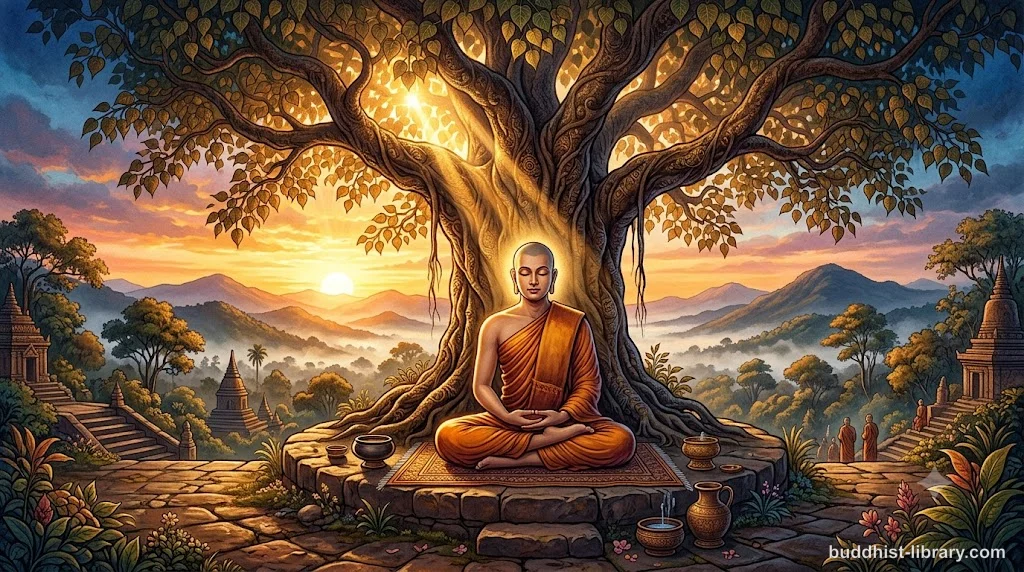
Right Effort (Sammā Vāyāma) is the intentional energy to prevent and abandon harmful mental states while cultivating and maintaining beneficial ones—the deliberate work of shaping the mind through the Four Right Exertions, forming the backbone of Buddhist practice.
You can sit in meditation for hours, study suttas for years, follow every precept. But without Right Effort, the path stalls.
Effort is what actually moves you forward. It’s the difference between knowing what’s wholesome and actually doing it, between understanding suffering and working to end it. Yet effort in Buddhism isn’t brute force—it’s intelligent energy, balanced persistence, the steady application of will guided by wisdom.
What Is Right Effort in the Noble Eightfold Path?
Right Effort (Sammā Vāyāma) is the sixth factor of the Noble Eightfold Path and the first element of the concentration (samādhi) group. The Buddha defined it through four specific exertions—four domains where effort applies:
The Four Right Exertions:
- Preventing unarisen unwholesome states — guarding the mind against greed, hatred, and delusion before they arise
- Abandoning arisen unwholesome states — letting go of harmful thoughts, emotions, and intentions that have already appeared
- Arousing unarisen wholesome states — cultivating beneficial qualities like kindness, concentration, and insight
- Maintaining and perfecting arisen wholesome states — sustaining and strengthening wholesome qualities once they’ve appeared
The Buddha describes this in the Saccavibhaṅga Sutta (MN 141): a practitioner “generates desire, endeavors, arouses energy, applies their mind, and strives” across these four domains.
Notice the balance. Two exertions work with the unwholesome, two with the wholesome. Right Effort isn’t just suppression—it’s active cultivation.
How Does Right Effort Differ from Ordinary Effort?
Most effort in daily life is mixed—sometimes wholesome, sometimes not. You work hard at your job, perhaps with ambition and comparison. You exercise regularly, maybe with vanity. You maintain relationships, often with subtle manipulation.
Right Effort is different in three ways:
Direction — always pointed toward liberation, not toward selfish gain, status, or pleasure.
Quality — balanced, neither straining nor lazy, adjusted to conditions.
Grounding — rooted in Right View and Right Intention, not in craving or aversion.
Thanissaro Bhikkhu puts it plainly: “Right effort is not the effort to make things be what they’re not. It’s the effort to see things clearly and to let go.”
Ordinary effort clings. Right Effort releases.
What Are the Four Right Exertions in Practice?
The Four Right Exertions aren’t abstract. They’re moment-to-moment choices.
1. Preventing Unarisen Unwholesome States
You’re scrolling social media. You feel the pull toward envy, comparison, anger at some post. Right here—before the unwholesome state fully forms—you close the app, take a breath, redirect attention.
This exertion is vigilance. It’s guarding the sense doors (eye, ear, nose, tongue, body, mind) so that harmful states don’t get a foothold.
The Buddha called this “sense restraint” (indriya-saṃvara)—not suppression, but wise discernment about what you expose yourself to.
2. Abandoning Arisen Unwholesome States
The unwholesome state is already here. Irritation. Resentment. Greed. Anxiety.
Right Effort doesn’t deny it or force it away. Instead, you recognize it clearly, understand it’s impermanent, refuse to feed it with attention or narrative. Let it fade.
Practical techniques:
- Replace the thought with its opposite (mettā for anger, generosity for greed)
- Investigate the underlying craving or aversion
- Redirect attention to the breath or body
- See the drawbacks of the unwholesome state
This exertion is active release, not passive waiting.
3. Arousing Unarisen Wholesome States
You’re not currently feeling compassion, concentration, or insight. Right Effort means choosing to cultivate them.
You sit down to meditate. You reflect on the kindness someone showed you. You contemplate impermanence. Each choice arouses a wholesome quality—concentration, gratitude, wisdom.
This is the creative, generative aspect of practice. The mind is trainable. You can grow wholesome qualities through deliberate attention.
4. Maintaining and Perfecting Arisen Wholesome States
You’re in a good meditation sit—calm, focused, clear. Right Effort means staying with it, deepening it, not abandoning it for restlessness or distraction.
You’ve been patient all day. Right Effort means carrying that patience into the evening, not letting one irritation break the continuity.
This exertion is sustainability—turning moments of wholesomeness into lasting qualities.
Why Is Balanced Effort Essential?
The Buddha told the story of Venerable Soṇa, a monk who was over-exerting in walking meditation until his feet bled. The Buddha asked him about tuning a lute: “When the strings are too tight, does it play well?” “No, Lord.” “When too loose?” “No, Lord.” “But when the strings are neither too tight nor too loose—then it plays well?” “Yes, Lord.”
The Buddha then said: “So too, Soṇa, over-aroused energy leads to restlessness; overly slack energy leads to laziness. Therefore, balance your energy.”
Signs your effort is unbalanced:
Too tight — restlessness, tension, impatience, burnout, striving for results.
Too loose — dullness, procrastination, drowsiness, lack of progress, complacency.
Right Effort adjusts. On a drowsy day, you energize. On a restless day, you calm. You tune the lute constantly.
How Does Right Effort Relate to the Other Path Factors?
Right Effort doesn’t work alone. It’s powered by and powers the entire path:
- Right View — shows you what to cultivate and abandon
- Right Intention — provides the direction (renunciation, goodwill, harmlessness)
- Right Speech, Action, Livelihood — are the ethical foundation that makes effort fruitful
- Right Mindfulness — recognizes what’s actually present in the mind
- Right Concentration — is the steady, focused result of balanced effort
Without Right View, you might exert tremendous energy in the wrong direction (like the ascetic practices the Buddha abandoned). Without mindfulness, you don’t even know what states are present.
Right Effort is the engine, but wisdom steers and mindfulness monitors.
Key Points: Right Effort in Daily Life
- Right Effort is deliberate energy applied to mental cultivation—preventing and abandoning the unwholesome, arousing and maintaining the wholesome
- The Four Right Exertions cover all domains of practice: guarding, releasing, cultivating, sustaining
- Balance is essential—effort that’s too intense burns out; too lax achieves nothing
- Right Effort applies everywhere: in meditation, speech, work, relationships, and solitary moments
- It’s the factor that transforms understanding into actual change
- Effort guided by wisdom becomes the path; effort driven by craving becomes suffering
This isn’t a one-time decision. It’s the continuous choice, moment after moment, to turn toward what liberates.
Read more:
- Right View (Sammā Diṭṭhi): The Foundation of the Buddhist Path — Right Effort needs Right View to know what to work on; this explores the wisdom foundation of the path.
- What Is Mindfulness (Sati) in Buddhism? — Mindfulness recognizes what states are present so Right Effort knows where to apply; discover how they work together.
- The Noble Eightfold Path: A Complete Guide — See how Right Effort fits into the entire structure of the path and interacts with all eight factors.
📖 Source / license: Saccavibhaṅga Sutta (MN 141), Sammādiṭṭhi Sutta (MN 9), and commentaries by Bhikkhu Bodhi in *The Noble Eightfold Path* (Access to Insight / BPS)
Frequently asked questions
What are the Four Right Exertions in Buddhism?
The Four Right Exertions are: (1) preventing unarisen unwholesome states, (2) abandoning arisen unwholesome states, (3) arousing unarisen wholesome states, and (4) maintaining and perfecting arisen wholesome states.
Is Right Effort the same as willpower?
Not quite. While willpower relies on force, Right Effort is balanced energy guided by wisdom—neither straining nor slacking, but applying steady, intelligent persistence on the path.
Can you practice Right Effort without meditation?
Yes. Right Effort applies to all aspects of life—speech, actions, thoughts, and intentions. Meditation sharpens it, but you practice it whenever you choose wholesome over unwholesome.
What happens if effort becomes too intense?
Excessive effort leads to restlessness and burnout. The Buddha taught balancing effort like tuning a lute—not too tight, not too loose—adjusting energy to conditions.