What Is Dukkha? Understanding Suffering in Buddhism
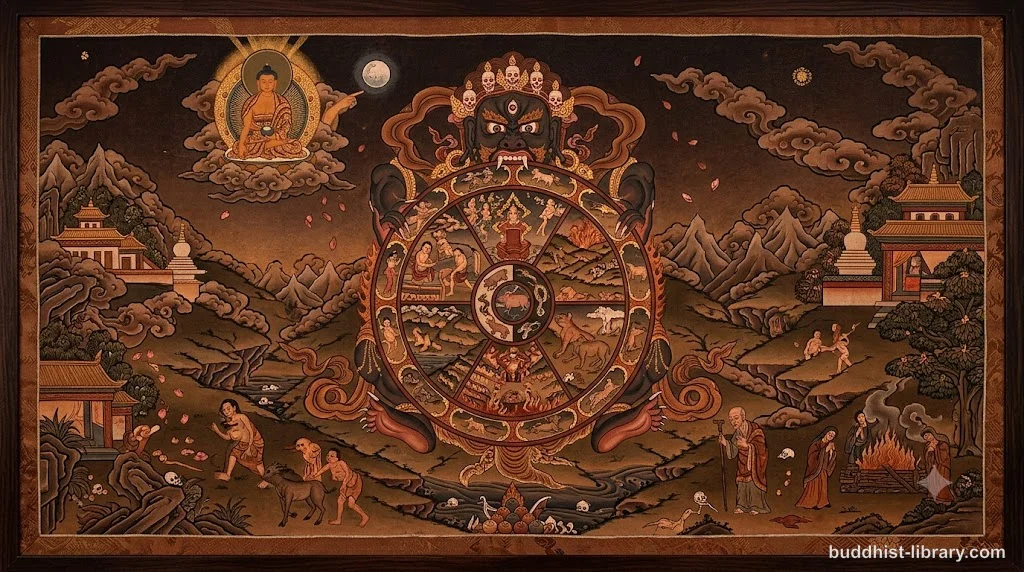
Dukkha is often translated as “suffering,” but the Buddha’s teaching encompasses much more: dissatisfaction, stress, unreliability, and the unsatisfactory nature of all conditioned things. It’s not that life is constant agony—it’s that even pleasant experiences are impermanent and cannot provide lasting fulfillment. Understanding dukkha is the essential first step on the Buddhist path.
Why Is Dukkha Central to Buddhism?
Dukkha is the cornerstone of the Buddha’s entire teaching. In his very first discourse after awakening—the Dhammacakkappavattana Sutta (Setting in Motion the Wheel of the Dhamma)—the Buddha presented the Four Noble Truths, and the first truth is simply this: there is dukkha.
The Pali word dukkha is notoriously difficult to translate. It’s often rendered as “suffering,” but that English word carries connotations of intense misery that don’t capture the full scope. The prefix du- means “bad” or “difficult,” and kha refers to the axle hole of a wheel. A wheel with a bad axle hole rides roughly, unevenly. This etymological sense—something off-center, unsatisfactory, unreliable—gets closer to what the Buddha meant.
Bhikkhu Bodhi, one of the foremost translators of the Pali Canon, explains that dukkha includes three levels: the dukkha of physical and mental pain (dukkha-dukkha), the dukkha of change (vipariṇāma-dukkha), and the dukkha inherent in all conditioned phenomena (saṅkhāra-dukkha). The third level is the most profound: even neutral or pleasant experiences are dukkha because they’re impermanent, lack independent existence, and can’t provide lasting satisfaction.
The Buddha wasn’t a pessimist. He simply observed reality clearly. He acknowledged that life contains pleasure, joy, and happiness. His point was subtler: because all these experiences arise from conditions and inevitably pass away, clinging to them—trying to make them permanent or treating them as a stable refuge—leads to suffering.
What Are the Three Types of Dukkha?
In the Abhidhamma and commentarial literature, dukkha is analyzed into three distinct categories:
1. Dukkha-dukkha (Suffering of Pain)
This is what most people immediately think of when they hear “suffering”: physical pain, illness, grief, fear, anger, despair. Birth is painful, aging is painful, sickness is painful, death is painful. Being separated from what you love is painful; being stuck with what you hate is painful. This level of dukkha is obvious and universal.
2. Vipariṇāma-dukkha (Suffering of Change)
This is the dukkha hidden in pleasant experiences. A delicious meal, a beautiful sunset, falling in love—all are pleasant in the moment, but they don’t last. When the pleasure fades, disappointment arises. Even while enjoying something, there’s an underlying anxiety: “Will this end? Can I hold onto this?” The Buddha taught that because all conditioned phenomena are impermanent (anicca), even happiness rooted in conditioned things is tinged with dukkha.
3. Saṅkhāra-dukkha (Suffering of Conditioned Existence)
This is the most subtle and philosophically significant type. Saṅkhāra means “formations” or “conditioned things”—everything that arises dependent on causes and conditions. The very fact that our existence is compounded, constantly changing, and lacking a permanent self means it’s dukkha. This level of dukkha isn’t about feeling bad; it’s about the ontological instability and unreliability of all phenomena.
Ṭhānissaro Bhikkhu points out that this third level is what distinguishes the Buddha’s teaching from simple common sense. Everyone knows pain hurts. The insight that even pleasant, neutral experiences are fundamentally unsatisfactory because they’re conditioned—that’s the radical heart of the first noble truth.
How Does Dukkha Relate to the Other Three Noble Truths?
The Four Noble Truths form a complete diagnosis and treatment plan:
- The truth of dukkha: There is suffering/unsatisfactoriness.
- The truth of the origin of dukkha (samudaya): Suffering arises from craving (taṇhā) and clinging.
- The truth of the cessation of dukkha (nirodha): Suffering can end; cessation is possible (nibbāna).
- The truth of the path leading to the cessation of dukkha (magga): The way out is the Noble Eightfold Path.
Understanding dukkha isn’t meant to make you depressed. It’s meant to diagnose the problem so you can apply the cure.
The Buddha compared himself to a physician: he identified the disease (dukkha), diagnosed its cause (craving), declared a prognosis (it can be cured), and prescribed the medicine (the Eightfold Path).
Without clearly understanding what dukkha is, you can’t recognize where it arises or understand how to end it. This is why the Buddha insisted on direct, personal investigation of dukkha in one’s own experience. Not as an abstract doctrine. As a lived truth.
For more on the complete framework, see The Four Noble Truths: The Heart of the Buddha’s Teaching.
What Did the Buddha Say About Dukkha in the Suttas?
The canonical sources are unambiguous. In the Dhammacakkappavattana Sutta (SN 56.11), the Buddha defines the first noble truth:
“Now this, bhikkhus, is the noble truth of suffering: birth is suffering, aging is suffering, illness is suffering, death is suffering; union with what is displeasing is suffering; separation from what is pleasing is suffering; not to get what one wants is suffering; in brief, the five aggregates subject to clinging are suffering.”
Notice the final phrase: the five aggregates subject to clinging are suffering. This points to the third, subtlest level of dukkha. The five aggregates (khandhas)—form, feeling, perception, mental formations, and consciousness—make up what we conventionally call a “person.” When we cling to these as “me” or “mine,” dukkha arises.
In the Alagaddūpama Sutta (MN 22), the Buddha emphasizes that all five aggregates are impermanent, suffering, and not-self (anicca, dukkha, anattā). Because they’re subject to change, they can’t be a reliable basis for lasting happiness.
The Anattalakkhaṇa Sutta (SN 22.59)—the second discourse the Buddha ever gave—directly links dukkha to the teaching of non-self (anattā). If the aggregates were truly “self,” we could control them: “Let my body be thus, let my body not be thus.” But we can’t. They arise and pass according to conditions, not according to our wishes. That lack of control, that unreliability, is dukkha.
For a deeper exploration of this connection, read Anattā (Non-Self): What the Buddha Really Meant.
Key Points to Remember
- Dukkha is broader than “suffering.” It includes dissatisfaction, stress, unreliability, and the unsatisfactory nature of conditioned existence.
- The Buddha wasn’t pessimistic. He acknowledged pleasure and happiness but taught that clinging to impermanent things causes suffering.
- Three levels of dukkha: the suffering of pain, the suffering inherent in change, and the suffering of conditioned existence itself.
- Dukkha isn’t inevitable forever. The Third Noble Truth promises cessation; nibbāna is the end of dukkha.
- Understanding dukkha is diagnostic, not depressive. It’s the first step toward freedom, not a reason to despair.
Frequently Asked Questions
Does dukkha mean all life is misery?
No. Dukkha doesn’t mean life is constant agony. It means that even pleasant experiences are ultimately unsatisfactory because they’re impermanent and subject to change. The Buddha acknowledged joy and happiness; he simply taught that clinging to them causes suffering.
Is dukkha the same as depression?
No. Dukkha is a philosophical description of the conditioned nature of existence, not a clinical mood disorder. While dukkha includes mental suffering, it’s broader—it describes the fundamental unsatisfactoriness built into impermanent phenomena, whether you’re happy or sad in any given moment.
Can dukkha ever be completely eliminated?
Yes, according to Buddhist teaching. The complete cessation of dukkha is nibbāna (nirvana). This doesn’t mean eliminating all sensation or experience, but rather ending craving, clinging, and ignorance—the root causes that turn ordinary experience into suffering.
Conclusion: Why Understanding Dukkha Matters
Dukkha is not a morbid obsession with the negative—it’s the Buddha’s realistic assessment of the human condition. Recognizing dukkha in your own experience is the gateway to the path. When you see clearly that clinging to impermanent things is what creates suffering, you naturally begin to loosen that grip.
The Buddha’s teaching is ultimately hopeful: dukkha exists, yes, but it’s not permanent, and it’s not who you are. By understanding its nature and its cause, you can walk the path toward its complete cessation. That path begins with seeing dukkha clearly, without denial and without despair—just as it is.
Read more:
- The Four Noble Truths: The Heart of the Buddha’s Teaching — The complete framework that begins with understanding dukkha and points the way to liberation.
- Impermanence (Anicca): Why Everything Changes — Explore the first mark of existence, which underlies the arising and passing of dukkha.
- The Five Aggregates (Khandhas): What We Mistake for ‘Self’ — Understand the five components of experience that the Buddha identified as the locus of clinging and dukkha.
📖 Source / license: SuttaCentral, Access to Insight, Bhikkhu Bodhi's translations
Frequently asked questions
Does dukkha mean all life is misery?
No. Dukkha doesn't mean life is constant agony. It means that even pleasant experiences are ultimately unsatisfactory because they're impermanent and subject to change. The Buddha acknowledged joy and happiness; he simply taught that clinging to them causes suffering.
Is dukkha the same as depression?
No. Dukkha is a philosophical description of the conditioned nature of existence, not a clinical mood disorder. While dukkha includes mental suffering, it's broader—it describes the fundamental unsatisfactoriness built into impermanent phenomena, whether you're happy or sad in any given moment.
Can dukkha ever be completely eliminated?
Yes, according to Buddhist teaching. The complete cessation of dukkha is nibbāna (nirvana). This doesn't mean eliminating all sensation or experience, but rather ending craving, clinging, and ignorance—the root causes that turn ordinary experience into suffering.